
How Often to Check a Newborn’s Diaper to Avoid Rash and Leaks
This post contains affiliate links. As an Amazon Associate, we learn from qualifying purchases
Check a newborn’s diaper at least every two hours. That’s the baseline from day one, backed by state childcare codes in Washington, Utah, and Pennsylvania. For a newborn, expect 8 to 12 diaper changes in a 24-hour period, with the number of wet diapers increasing from 1-2 on day one to 6-8 or more by day six.
The two-hour clock starts the moment you finish a change. It’s not a gentle suggestion. It’s the written standard because urine left longer turns to ammonia, and acidic newborn poop can cause a rash within a single missed check.
What follows is the breakdown of that rule: the state laws that enforce it, the physical why behind the timing, the exact wet-diaper counts by day from hospital guides, and the one conflict every parent faces between mandated checks and a sleeping baby’s rest.
Key Takeaways
- State childcare regulations like Washington WAC 170-296A-7300 legally mandate diaper checks at least every two hours, making it a standard, not just advice.
- Urine converts to skin-irritating ammonia, and newborn stool is highly acidic; both can initiate diaper dermatitis well before the two-hour mark in sensitive infants.
- A newborn should produce 6-8 wet diapers daily by day six; fewer than six after the first week is a potential sign of dehydration requiring a pediatrician call.
- Never wake a soundly sleeping baby solely to check a diaper unless it’s leaking; the risk of sleep disruption outweighs the benefit of a routine check.
- Use wipes free of alcohol and fragrance, per the European Roundtable Meeting on Best Practice Healthy Infant Skin Care, and apply a zinc-oxide barrier cream at the first sign of pinkness, not after a rash is established.
The 2-Hour Rule Isn’t Just a Suggestion. It’s Law
Open the licensing manual for any professional childcare facility and the directive is identical. The Washington state diaper changing code states staff must “check diapers at least every two hours.” Utah and Pennsylvania publish the same language. This frequency wasn’t chosen at random.
It’s the outer limit based on the chemistry happening inside the diaper. Urine breaks down into ammonia, a potent irritant. Newborn stool, especially in the first weeks, is particularly acidic. Combine moisture with these irritants against delicate skin, and the barrier breaks down fast. The two-hour rule is the public health line that keeps irritation from turning into a full-blown rash for most babies.
55 Pa. Code § 3270.135 requires a childcare provider to “check a child’s diaper at least every 2 hours and whenever the child indicates discomfort or exhibits behavior that suggests a soiled diaper.” This is the enforceable standard.
These regulations also dictate the environment. The diapering surface must be smooth, waterproof, and sanitized after every use. Soiled diapers go immediately into a hands-free, covered can. Staff must wash hands before and after. This isn’t just about timing; it’s a controlled hygiene protocol to prevent cross-contamination. When you check at home, you’re the entire staff. The principles are the same.
Newborn Wet Diaper Counts: Your Daily Checklist
The two-hour check is the method. The wet diaper count is the metric. It’s your best at-home indicator that your baby is taking in enough milk or formula. The numbers follow a very predictable ramp-up in the first week.
Forget the 8-12 number on day one. It starts slower. On the first day after birth, expect only 1-2 wet diapers. This is normal, especially for breastfed babies, as colostrum is dense but low in volume. By days two to three, that should climb to 2-4 wets. Day four typically sees 4-6.
| Day After Birth | Minimum Wet Diapers | Notes |
|---|---|---|
| Day 1 | 1-2 | Colostrum phase; urine may be concentrated. |
| Days 2-3 | 2-4 | Milk volume increases; watch for steady rise. |
| Day 4 | 4-6 | Established feeding pattern should be visible. |
| Day 6+ | 6-8+ | The new baseline; fewer than 6 warrants a call to your pediatrician. |
By day six and beyond, the target is 6-8 or more wet diapers every 24 hours. Some babies will hit ten. If your newborn consistently has fewer than six saturated diapers after the first week, it’s a primary sign of possible dehydration. Combine that with other cues like a sunken soft spot or no tears when crying, and you need to call the doctor.
This count is separate from bowel movements. A newborn might have several poops a day. The StatPearls newborn care guide notes that skin cleansing for diaper care should use “soft nonwoven wipes, water, and emollient cleansers” that are free of alcohol and fragrance. This matters because harsh wipes on already-frequent diaper areas can cause its own irritation, muddying your read on the cause of redness.
Signs a Diaper Needs Changing (Beyond the Nose)
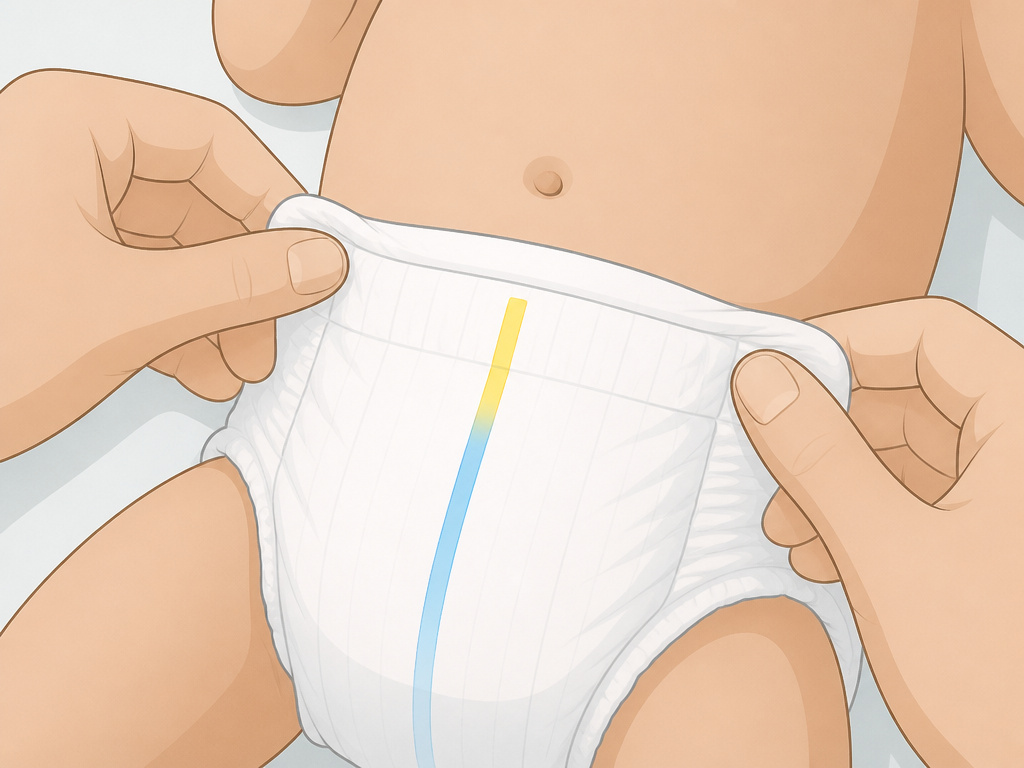 You’ll develop a sixth sense for a full diaper. Until then, rely on physical cues more reliable than smell alone, especially for wet diapers which can be odorless early on.
The most obvious sign is a color-changing wetness indicator. Nearly all major diaper brands have a line down the front that turns blue when wet. It’s a foolproof visual check. A sagging or noticeably heavy diaper is another clear signal. For older infants, a sudden fussiness or crying during play often traces back to discomfort from wetness.
Where this goes sideways: Assuming a diaper is fine because it doesn’t smell. New urine has little odor. By the time you smell ammonia, the irritant has been forming for a while and the skin is already under attack.
Poop is usually unmistakable. But for breastfed babies, stool is mustard-yellow, seedy, and can be surprisingly liquid. It’s easy to mistake a small amount for just gas. Always do a visual check during a two-hour interval if the baby seems unsettled. A proper diaper fit is also part of the equation. A diaper that’s too loose will leak, giving a false signal it’s full when it’s not. One that’s too tight can cause red marks and make checking the waistband uncomfortable for the baby.
The Sleep vs. Check Dilemma Every Parent Faces
Here is the conflict no state regulation solves. Your baby is finally asleep, and the two-hour clock ticks over. Do you wake them?
The consensus from pediatric sources is clear: do not wake a soundly sleeping baby to check a diaper. The restorative value of uninterrupted sleep outweighs the risk of a slightly longer wear time, provided the diaper was clean and dry at the start of the nap. The directive to check “as soon as the child awakens” in the Utah Admin Code R430-50-23 supports this, the check is timed to waking, not used to cause waking.
The exception is a poopy diaper. Stool is far more irritating than urine. If you know or strongly suspect a bowel movement, it’s worth a gentle, minimally disruptive change, even mid-sleep. For overnight, the goal is prevention. Using a highly absorbent diaper designed for extended wear is better than frequent checks that shatter everyone’s sleep. A diaper change right before a dream feed can also help reset the clock without a full wake-up.
How to Check a Diaper Correctly (It’s More Than a Peek)
A proper check is a quick but systematic process. It prevents leaks and catches early redness before it becomes a rash.
First, wash your hands. Place the baby on a safe, clean surface. Unfasten the diaper tabs and peek inside. For boys, lift the scrotum gently to check for hidden moisture. For girls, part the labia slightly to ensure no moisture is trapped in the folds. Look at the entire diaper area, thighs, buttocks, genitals, for any signs of stool or wetness. If the wet diaper indicator is blue or the diaper feels full, it’s change time.
If it’s just wet and you’re close to a feeding time, you can often leave it for a short period if the skin looks perfectly dry and healthy. The moment you see any pinkness or feel dampness against the skin, change it immediately. This is where your diaper change frequency becomes flexible around the rigid two-hour schedule. After the check, always reseal the diaper snugly to prevent diaper blowouts. A gap at the leg is an invitation for leaks.
Preventing Diaper Rash: The Real Reason for the Schedule
The entire protocol exists to prevent diaper dermatitis. Rash peaks between 8 and 10 months but can strike anytime. The strategy is three-part: limit exposure, clean gently, and protect the skin.
Limit exposure by following the two-hour check and changing promptly. Clean gently with those alcohol-free, fragrance-free wipes or a soft cloth with water. Pat dry; never rub. Protect with a barrier cream. Thick pastes containing zinc oxide are best. Apply a generous layer at the first sign of pinkness, not after a rash is established. It acts like a shield between the skin and the next wet or dirty diaper.
Easy to miss: The skin folds. Moisture and irritants get trapped where the thigh meets the torso and in the deep creases of the groin. During every change, gently open these folds, check them, and ensure they are dry before applying cream.
If a rash develops despite good care, it might be a yeast infection (bright red, defined patches) or a reaction to a new food, wipe, or detergent. Time for the pediatrician. Remember, the wide variation in hospital skin care practices noted in medical literature means you can’t assume the routine you saw at birth is the gold standard. Your consistent, gentle routine at home is what matters most.
Frequently Asked Questions
Does the 2-hour rule apply at night?
No, not in the same way. Do not wake a sleeping baby solely for a routine diaper check. The focus shifts to prevention: use a super-absorbent overnight diaper and apply a thick barrier cream before bed to extend protection. Change any soiled diaper you discover, but for just wet diapers, let sleep prevail.
What if my newborn has fewer than 6 wet diapers after a week?
This is your signal to contact your pediatrician. It is the primary indicator of potential dehydration or insufficient milk intake. Before panicking, ensure your count is accurate, a lightly wet diaper counts. But a consistent pattern of fewer than six warrants a professional evaluation.
How do I know if it’s a wet diaper or just sweat?
Feel the inside. The absorbent core of a wet diaper will be gel-like and cool to the touch, and the liner may feel damp. Sweat will only dampen the outside cloth-like cover or the baby’s skin, not the interior padding. The wetness indicator is the most reliable tool.
Can I use cloth diapers and follow the same schedule?
Yes, absolutely. The check frequency does not change. The Pennsylvania diapering requirements code specifically addresses cloth, requiring a waterproof barrier between diaper and clothing. With cloth, you may find you change slightly more often, as they lack the chemical absorbent gels of disposables and feel wet to the baby sooner, which is actually a useful feedback mechanism.
Why is my newborn’s poop so acidic?
Early stool is designed to clear meconium, the tar-like first poop. As the digestive system kicks in, the chemistry is simply harsh. This is why prompt changing is non-negotiable in the early weeks, the skin is brand new and the irritant is potent. It usually mellows as the gut flora establishes.
Before You Go
Check every two hours. Count the wets. Don’t wake a sleeper. That’s the short version of a long answer.
The schedule feels relentless at first. It is. But it’s grounded in skin chemistry and codified into law for a reason. Your nose isn’t a reliable early warning system. Your timer and your eyes are. Pair that vigilance with gentle wipes and a good barrier cream, and you’ll handle the vast majority of what the diaper zone throws at you. When in doubt, a clean diaper is almost never the wrong choice.
