
Do You Change Diaper During Dream Feed? The Definitive Guide
This post contains affiliate links. As an Amazon Associate, we learn from qualifying purchases
Do you change a diaper during a dream feed? The short answer is no, avoid it if the diaper is only wet. A full change wakes most babies, defeating the feed’s goal of extending sleep. The exception is a soiled diaper, which must be changed immediately to prevent rash. The 2007 Zotter study found babies sleep through wetness, but stool irritates skin within minutes.
That gap between wet and soiled is where the whole decision lives. A dream feed is a precision maneuver to buy sleep, not a standard diaper-change window.
What follows is the evidence that reshapes the standard advice: the study showing a 62-minute sleep gain, the burping research that changes the routine, and the specific steps for the one scenario where you must change the diaper mid-feed.
Key Takeaways
- Skip the diaper change for a wet-only diaper during a dream feed. A 2007 study confirmed most infants sleep through the sensation.
- Change a soiled diaper immediately, even if it wakes the baby. Stool contains enzymes that cause diaper rash quickly.
- Burping is optional and may increase spit-up. A 2015 randomized trial found burped babies regurgitated more often.
- Use overnight diapers for their superior absorbency. They are engineered to handle 10-12 hours of liquid.
- Stop dream feeds between 8 and 10 months, or when your baby sleeps through the feed consistently.
What a Dream Feed Actually Is (And Isn’t)
The term “dream feed” was coined by Tracy Hogg in 2001. It describes feeding a sleeping baby right before you go to bed, aiming to sync your longest sleep stretch with theirs. Some definitions involve gently rousing the baby; others insist the baby must stay asleep. The common thread is a focal feed, a big, tank-up meal timed for your benefit.
A dream feed is the practice of administering a large meal to an infant immediately before the caregiver’s bedtime, with the primary goal of extending the caregiver’s longest uninterrupted sleep period. This can be done while the infant is asleep or lightly roused.
This isn’t about the baby’s hunger schedule. It’s a tactical parental sleep intervention. That’s why the diaper question matters. Any action that fully wakes the baby, like a full diaper change with lights on and legs in the air, turns a tactical feed into a full wake window. You lose the sleep you were trying to gain.
The Evidence for Longer Sleep
The strongest support comes from a 2022 longitudinal study by Quante and colleagues. Researchers tracked over 70 mother-infant pairs. They found that babies who received a focal bedtime feed at one month old slept for an average of 62 additional minutes in their longest nighttime sleep bout at six months, compared to those who didn’t.
That’s a substantial gain. But the study bundled the feed with other sleep-promoting practices. The dream feed itself is likely one part of a larger puzzle that includes a calm routine and a drowsy-but-awake put-down.
The One Rule That Overrides Everything
This is non-negotiable. The distinction isn’t wet versus dry. It’s wet versus soiled.
You must change a soiled diaper immediately, even during a dream feed. Stool contains digestive enzymes and bacteria that break down the skin’s protective barrier. Diaper dermatitis, rash, can start within minutes of contact. Letting a baby sit in poop to preserve sleep trades a short-term win for a painful, multi-day problem.
A 2007 study by Zotter et al. Is the key piece of evidence on the other side. Researchers monitored infants’ sleep arousal responses to wet diapers. The conclusion: most sleeping infants do not wake up from a wet diaper alone. The sensation isn’t a significant sleep disruptor for them.
This changes the calculation completely.
| Diaper State | Change During Dream Feed? | Why |
|---|---|---|
| Soiled (Poop) | Yes — Immediately | Stool enzymes cause skin irritation and rash rapidly. Prevents diaper rash. |
| Wet Only | No | Infants typically sleep through wetness (Zotter et al., 2007). Changing risks a full wake-up. |
| Very Soaked | Maybe | If leakage is imminent and will wake the baby from discomfort, a stealth change may be needed. |
Where this goes sideways: Assuming all diapers are equal. A overnight diaper like Pampers Swaddlers Overnights or Huggies Overnites is built to absorb 10-12 hours of urine. A standard daytime diaper isn’t. Using the right tool changes the answer.
Your first step in any dream feed plan is ensuring a proper diaper fit with a high-quality overnight diaper. A leaky diaper guarantees a change and a wake-up. Get the diaper size guide right first.
A Quick, Stealthy Change (If You Must)
Sometimes a change is unavoidable. The diaper is soiled, or it’s so saturated that leakage is moments away. Your goal shifts from “avoid change” to “change with minimal disruption.”
This is a different skill from a daytime newborn diaper change. Speed and subtlety are everything.
The Stealth-Change Protocol:
- Gather everything within arm’s reach before you pick up the baby. That means the new diaper, wipes, and cream are open and ready on your diaper change pad. Fumbling in a drawer wakes a baby.
- Use the faintest light possible. A dimmable salt lamp or a closet light from another room is better than an overhead. Never use a phone flashlight directly on their face.
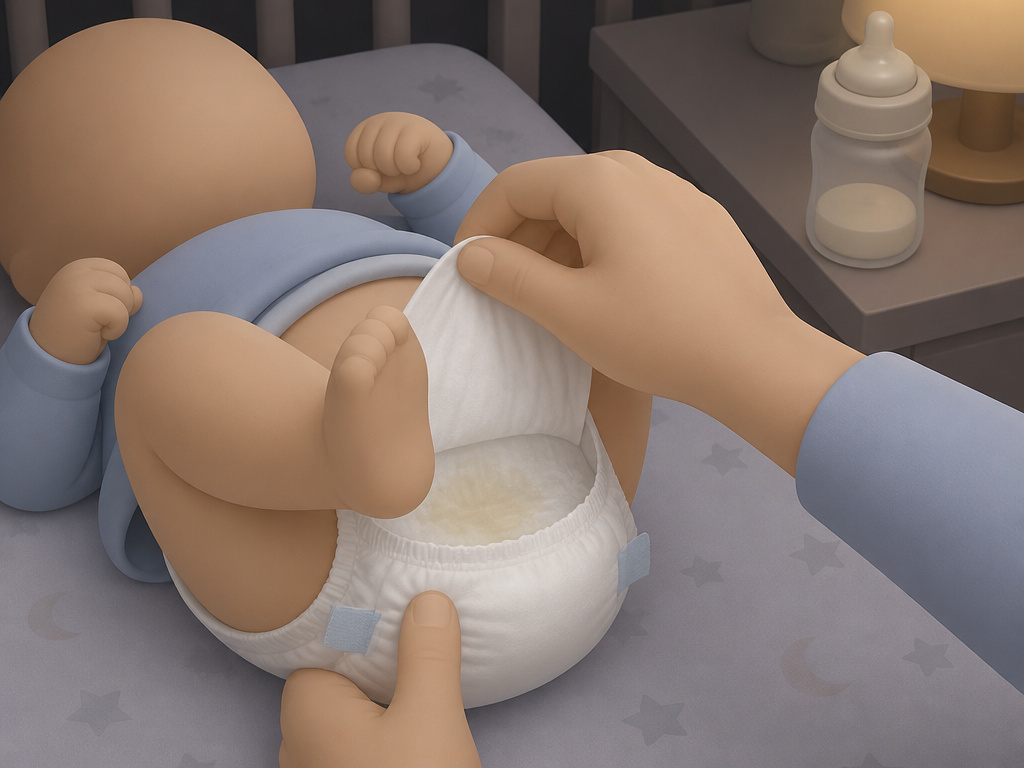
- Unfasten the diaper but leave it in place. Gently lift the baby’s legs by the ankles, one smooth motion, not a jiggle. Slide the soiled diaper out.
- Clean with pre-moistened wipes, not cold ones. If wipes are cold, hold them in your hand for 10 seconds first. Wipe front-to-back in one pass if you can. Multiple swipes increase stimulation.
- Slide the new diaper under. Avoid lifting the hips high. Fasten it snugly but not tight. The whole operation should take 90 seconds or less.
The baby might stir or even open their eyes. If you’ve been quiet and quick, they often drift back off when you begin feeding. If they fully wake, abandon the “dream” part. Feed them in a calm, dim room and put them back down drowsy. Forcing a sleepy feed on a now-alert baby usually backfires.
The Burping Debate and Other Dream Feed Adjustments
Here’s a fact most guides miss. A 2015 randomized controlled trial by Kaur et al. Studied burping’s impact on colic. The burped babies showed no reduction in colic symptoms but had an increased tendency to regurgitate.
Common mistake: Automatically burping a dream-fed baby. The Kaur et al. (2015) study found burping increased spit-up rates. For a sleepy baby who fed calmly, skipping the burp might mean less disruption and less mess.
If your baby gulps air or feeds quickly, a brief upright hold against your shoulder may help. But vigorous back-patting is a surefire wake-up call. For most dream feeds, especially with breastfed babies who latch well, you can skip the burp entirely.
Other Critical Adjustments
- For Reflux-Prone Babies: The “feed while asleep” position can be a problem. Acid can pool more easily when lying flat. For these babies, a modified approach works: do the feed while they’re still slightly awake, keep them upright for 15-20 minutes after, then put them down. This overrides the classic dream feed method but protects their comfort.
- The Self-Settling Trade-off: Some sleep experts argue that always feeding a baby to sleep (even in a dream feed) can delay their ability to self-settle. If teaching independent sleep is a priority for you, consider doing the dream feed as a “top-up” while the baby is still awake in the crib, then placing them down drowsy. It’s a different tactic with the same goal.
Your diaper and feeding schedule is personal. A baby who always poops after eating dictates a different routine than one who doesn’t.
When to Stop Dream Feeding
Dream feeding is a tool, not a permanent stage. It has a natural expiration date.
Most babies are ready to drop the dream feed between 8 and 10 months. By this age, they’re consuming enough solids and daytime milk to not need nighttime calories. The feed itself can start to disrupt their deeper, more mature sleep cycles.
Signs it’s time to stop:
- They consistently sleep through the dream feed time.
- They take only an ounce or nurse for a minute before turning away.
- The dream feed starts causing earlier morning wake-ups.
- You notice more night stirring after introducing the feed.
To drop it, simply offer less milk over 3-4 nights, or gradually move the feed earlier until it merges with the bedtime feed. If they wake at the usual time, comfort them without feeding. They’ll adjust within a week.
Frequently Asked Questions
What if my baby always poops during the dream feed?
Then your routine is set. You have a baby who follows the “feed-stimulates-digestion” pattern. In this case, plan for the change. Have your station prepped so you can execute the poopy diaper change swiftly after they finish eating. The feed becomes a two-part process: feed, then change. It’s less ideal for sleep extension, but it’s what your baby needs.
Can a wet diaper cause a diaper rash?
Urine alone is less irritating than stool, but prolonged wetness can break down skin barriers, especially if the diaper is tight. This is why recommended diaper change frequency for newborns is every 2-3 hours during the day. At night, a highly absorbent overnight diaper wicks moisture away from the skin, making a 10-12 hour stretch in a wet diaper safe for most babies. Using a barrier cream like Aquaphor or Bordeaux’s Butt Paste adds an extra layer of protection.
Should I wake my baby if the diaper is very full?
Not necessarily. First, check for leaks. If the diaper is holding and there’s no stool, let them sleep. If the pajamas are damp or leakage is imminent, then a stealth change is the lesser of two evils. A wet bed will wake everyone. This is a judgment call based on your baby’s diaper change frequency and the diaper’s capacity.
Is it okay to dream feed a newborn?
You can, but manage expectations. Newborns have tiny stomachs and need to eat every 2-3 hours around the clock. A dream feed might only give you a 3-hour stretch instead of a 2-hour one. For many parents, fully waking to feed a newborn is easier than the delicate dance of a dream feed. It often becomes more useful after 6-8 weeks when sleep stretches naturally lengthen.
How do I know if my baby is too awake during the dream feed?
If their eyes are open, they’re cooing, or their limbs are moving actively, they’re awake. At this point, don’t force the “sleepy feed.” Finish feeding them in a calm, dim environment and practice putting them down drowsy but awake. It becomes a different, but still valuable, bedtime feed. The skill of changing a sleeping baby is hardest when they’re in this semi-awake state.
The Bottom Line
The goal is more sleep, not a perfect technique. If skipping a wet diaper change gets you a 62-minute longer stretch, that’s a win backed by science. If a soiled diaper demands a change, do it fast and without guilt, you’re preventing pain.
Use overnight diapers. Question the automatic burp. Watch for your baby’s natural stopping point around 9 months. The dream feed is a short-term strategy, not a lifestyle. Your diaper change basics apply, but with the lights low and the moves smooth. That’s the real night shift.
