
How to Wipe a Baby Boy Correctly for Comfort and Hygiene
This post contains affiliate links. As an Amazon Associate, we learn from qualifying purchases
To wipe a baby boy, follow two rules: always wipe front to back, and never retract the foreskin if he is uncircumcised. Use a gentle, damp cloth or wipe to clean from the penis down over the scrotum and then the anus. For uncircumcised boys, clean only what is visible; the foreskin will separate naturally over years. Pat the area completely dry before applying barrier cream and a fresh diaper.
That front-to-back rule isn’t just for girls. For a boy, it stops bacteria from the anal area from being smeared forward onto his genitals, which is a direct path to urinary tract infections and skin irritation. The mechanics are different, but the principle is identical.
What follows is the full breakdown: the two non-negotiable rules, the exact step-by-step motion that works on a wiggling newborn, how to handle an erection without panicking, and what to look for on a wipe’s ingredient list that most parents miss.
Key Takeaways
- The front-to-back wiping rule is critical for boys to prevent UTIs; always wipe from the penis downward.
- Never force back an uncircumcised baby’s foreskin; clean only the outside, as the inner layers are fused at birth and separate naturally.
- Pat, don’t rub, the skin completely dry before applying any barrier cream—trapped moisture under cream causes rash.
- Choose wipes with a short, simple ingredient list; national standards like China’s GB/T 27728.2-2024 advise minimizing raw materials for safety.
- An erection during a change is a normal reflex; wait a moment for it to subside, then clean gently along the shaft.
The Two Non-Negotiable Rules for Boys
These rules override every shortcut. Get them wrong, and you’re managing a rash or infection within a week. Get them right, and most skin problems never start.
Common mistake: Wiping in a circular motion or back-to-front. This drags fecal bacteria over the urethral opening and scrotum. The first sign is redness around the penis base within two days.
Rule 1: Wipe Front to Back, Always. This isn’t about vaginal anatomy. It’s about bacterial migration. The anus is a source of E. Coli and other gut bacteria. Wiping from the penis, over the scrotum, and finally past the anus carries debris away from the body. Wiping in any other direction introduces it to the urinary tract and delicate skin folds. The motion is a single, downward pass—don’t scrub back and forth.
Rule 2: Never Retract the Foreskin. If your son is uncircumcised, the foreskin is attached to the glans (head of the penis) by natural adhesions. It is not meant to retract. Forcing it can cause painful tearing, scarring, and infection. – What to do: Gently wipe the outside of the penis and foreskin. Clean any visible surface. That’s it. – What happens naturally: The foreskin gradually separates from the glans over childhood, often not fully retractable until puberty. You are not “cleaning under it” because there is no “under” to access yet.
What You Actually Need on Your Changing Table
A cluttered station slows you down. You need four things within arm’s reach for a smooth, safe change.
- A Clean, Flat Surface. The changing pad on a secured dresser or a portable mat on the floor. Never leave a baby unattended, even for a second.
- Gentle Cleansing Agents. Your choice: a stack of plain, warm water washcloths or a pack of trusted baby wipes. Have a dedicated, lidded hamper for dirty cloths.
- Barrier Cream. A zinc oxide or petroleum jelly-based cream. Apply a thin layer to completely dry skin after every change as a preventative shield.
- Fresh Diaper & Secure Fasteners. Open it and have it ready under the baby before you start cleaning.
I keep a stack of cheap white washcloths and a thermos of warm water next to the changer. For a really messy poopy diaper, the cloth gets the bulk off before I even reach for a wipe. It cuts wipe usage in half and feels gentler on a newborn’s skin.
Step-by-Step Wiping Technique
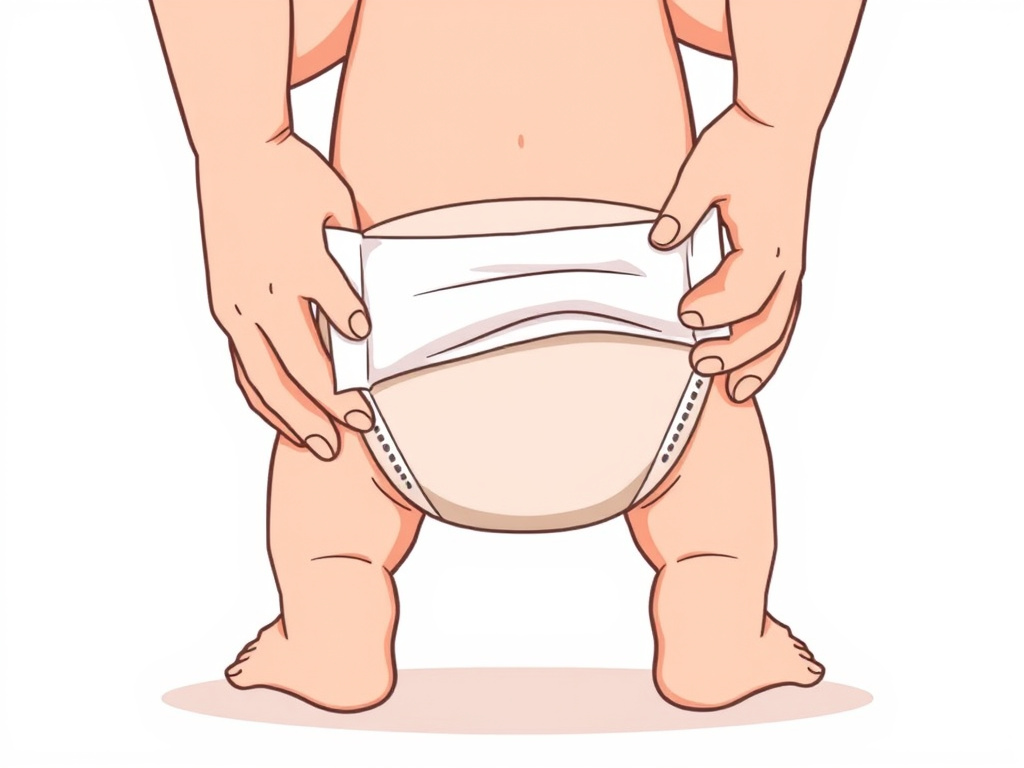 This is the physical sequence. Read it once, then do it. Hesitation is what leads to messes.
Step 1: Open & Assess. Unfasten the diaper but don’t remove it yet. Fold the front half down. Use the inside of the diaper to gently blot away any excess poop from the stomach and penis area. This contains the mess.
Step 2: Secure the Ankles. Gently grasp both of the baby’s ankles with one hand and lift his bottom up. His knees will naturally bend. This elevates the entire diaper area for access. Place the dirty diaper underneath him, out of the way.
Step 3: The Front-to-Back Pass. With your free hand, take a fresh wipe or damp cloth. Start at the lowest point of his abdomen. Wipe in one smooth, downward stroke over the penis, down the length of the scrotum, and continue past the anus. – If he’s circumcised: Clean the entire penis, including the glans. Check for any lint or residue in the folds where the shaft meets the body. – If he’s uncircumcised: Wipe the shaft and the outside of the foreskin only. Do not attempt to clean underneath.
Step 4: Clean the Creases. Use a new section of the wipe or a fresh cloth. Gently lift the scrotum and wipe the skin folds underneath. Then, wipe each inner thigh and the crease where leg meets torso. These are major rash zones.
Step 5: Address the Anus. Finally, focus on the anal area. Wipe from the center outward, using as many clean wipes as needed until the cloth comes away clean. Discard each dirty wipe into the open diaper.
Step 6: Dry Thoroughly. This step is non-negotiable. Use a soft, dry burp cloth or a paper towel to pat the entire area completely dry. Feel for dampness in the scrotal folds and between the buttocks. Moisture left under barrier cream creates a perfect environment for rash.
Step 7: Cream & Re-diaper. Apply a thin layer of barrier cream. Slide the clean diaper under his bottom, lower his legs, and fasten securely.
| Area | Technique | Risk If Skipped |
|---|---|---|
| Penis & Scrotum | One front-to-back downward stroke | Fecal bacteria introduced to urethra, leading to UTI risk |
| Scrotal Creases | Lift and wipe folds underneath | Trapped moisture and debris cause red, angry rash in 24-48 hours |
| Inner Thighs | Wipe from torso downward | Chafing and yeast rash from skin-on-skin contact |
| Anal Area | Wipe from center outward | Incomplete cleaning leads to residual bacteria and smell |
Navigating Special Situations
Books don’t cover this. Experience does.
If He Has an Erection. This is a normal neurological reflex, especially common during a newborn diaper change. It doesn’t mean he needs to urinate. Do not try to force the penis down. Pause for 10-15 seconds, keep him covered with a cloth, and it will usually subside. Then proceed with cleaning along the shaft as usual.
During and After Circumcision. Follow your pediatrician’s post-op care instructions to the letter. You will typically be told to clean with warm water on gauze and apply petroleum jelly (like Vaseline) with every diaper change to keep the healing wound from sticking to the diaper. Avoid commercial wipes until the area is fully healed.
Dealing with a Major Blowout. When poop is everywhere, up the back and down the legs, your first job is containment. Use the dirty diaper as a scraper to remove the bulk. Then, consider a quick, lukewarm sink rinse instead of endless wiping. Pat dry meticulously afterward. This is far gentler than aggressive rubbing.
Where this goes sideways: Using a wipe that stings on already irritated skin. If a rash is present, switch to plain water and soft cloths immediately. Many wipes contain preservatives that can burn broken skin.
Choosing Your Cleaning Tools: Wipes vs. Cloths
The debate isn’t about which is “better.” It’s about which is better for your situation. Each has a specific job.
Disposable Baby Wipes are for speed and convenience. The good ones clean effectively without requiring a laundry cycle. The key is reading the ingredient list, not the marketing on the front.
| Wipe Type | Best For | Ingredient Red Flag |
|---|---|---|
| Water-Based (e.g., WaterWipes) | Newborns, sensitive skin, active rash | Few to none—often just water and a drop of fruit extract. |
| Hypoallergenic (e.g., Huggies Natural Care) | Daily use, general diaper changing | Parabens, phthalates, formaldehyde-releasing preservatives. |
| Cloth-Compatible (e.g., Pampers Aqua Pure) | Eco-conscious parents who use cloth diapers | Alcohol (dries skin), strong synthetic fragrance. |
National standards are now codifying this. China’s GB/T 27728.2-2024 standard for baby wipes explicitly advises manufacturers to “minimize the types of raw materials used in the formula and use raw materials with a long history of safe use.” When you’re evaluating the best baby wipes, a short ingredient list is a feature, not a lack of one.
Reusable Cloths & Warm Water are the gold standard for gentleness. They generate zero waste and cost almost nothing. The downside is the constant laundry. Use them when: – Your baby has a active diaper rash. – You are at home and have a sink nearby. – You want to minimize your baby’s chemical exposure.
The Nuvita Baby product manual warns that leaving items in disinfectant solution longer than recommended can weaken them. The same logic applies to skin: prolonged contact with any solution, even a gentle one, can strip natural oils. Clean, then remove the cleanser.
The Connection to Diaper Rash Prevention
Wiping is the first half of diaper rash prevention. The second half is what you do immediately after.
Moisture is the Enemy. The single biggest cause of rash is wet skin sealed against a diaper. Your wiping job isn’t done until the skin is bone-dry to the touch. This is why air-drying time is a powerful tool. After cleaning, let him kick diaper-free on a waterproof mat for 5-10 minutes if you can.
Barrier Cream is a Shield, Not a Moisturizer. It sits on top of dry skin to block urine and feces from making contact. If you apply it to damp skin, you trap that moisture underneath. The result is often worse than using no cream at all.
Frequency Matters. A newborn diaper change routine means checking every 2-3 hours, or immediately after a bowel movement. Prolonged contact with even a wet diaper softens the skin, making it more vulnerable to irritation from wiping.
Frequently Asked Questions
Should you wipe a baby boy after he pees?
Yes, you should gently blot or wipe after a pee. While urine is sterile, it’s still moisture left on the skin. Combined with the warm, occlusive diaper environment, this moisture can break down the skin’s protective barrier, leading to irritation. A quick pat with a dry cloth or a single wipe is sufficient. For more, see our guide on wiping after urination.
What’s the biggest mistake parents make wiping a boy?
The most common error is wiping back-to-front or in a circular motion. This seems harmless, but it’s the most direct way to cause a urinary tract infection by spreading bacteria. The second is aggressively cleaning an uncircumcised penis, trying to retract the foreskin before it’s naturally ready.
How do you clean an uncircumcised baby boy?
Clean only what you can see. Wipe the outside of the penis and foreskin with your front-to-back stroke. Do not pull the foreskin back. During bath time, wash the area like any other body part—with soap and water on the exterior. The inner layers will separate on their own over years.
Are all baby wipes safe for boys?
No. You must read the ingredient list. Avoid wipes containing alcohol, fragrance, parabens, or strong preservatives, especially if your son has sensitive skin. Look for wipes marketed as “water-based” or “sensitive” with the shortest ingredient list possible. The principles of hygiene for girls regarding gentle ingredients apply equally here.
Why is the front-to-back rule important for boys?
It prevents the transfer of bacteria from the rectal area to the urethra (the opening at the tip of the penis). While boys have a longer urethra than girls, making UTIs less common, they are still possible and painful. The rule also prevents bacterial skin infections on the scrotum and penis.
Before You Go
Wiping a baby boy boils down to consistent, gentle mechanics. Front to back, every time. Never force the foreskin. Dry the skin completely before sealing it up.
For a severe, blistering rash that doesn’t improve with air and cream, or if you see signs of a UTI (fever, foul-smelling urine, excessive fussiness), stop home care and call your pediatrician. Otherwise, stick with the routine. His skin will thank you.
