
6 Best Reusable Diapers of 2026
This post contains affiliate links. As an Amazon Associate, we learn from qualifying purchases
The BumGenius Freetime stands out as the best overall reusable diaper for its reliable fit and strong absorbency, while the Mama Koala 3.0 is a top budget pick that doesn’t skimp on performance. For families wanting maximum flexibility, the 7-Pack Reusable Cloth Diapers offer solid value and easy customization.
Choosing reusable diapers isn’t just about saving money or being eco-friendly, most parents I hear from are worried about leaks, rashes, and whether they can keep up with the laundry. It’s easy to get lost in the sea of options, especially when every brand claims to be the most absorbent or the easiest to use.
In this guide, I break down what actually matters based on real parent feedback, material specs, and design details. These picks were selected for their balance of leak protection, comfort, and practicality, so you can feel confident in your choice without overcomplicating it.
Top 6 Reusable Diapers in the Market
The Best Reusable Diapers, Reviewed
7-Pack Reusable Cloth Diapers

Strengths
- Soft microfiber fleece
- Dual snap adjustments
- Unisex design
Trade-offs
- Insert not included
- Basic aesthetic
This 7-pack makes a strong case for being the best overall option, not because it’s the most luxurious, but because it balances price, performance, and usability so well. The ultra-soft microfiber fleece is gentle on skin and dries quickly, a big plus for families doing frequent laundry. With two rows of snap adjustments, these diapers offer a more customized fit than many competitors, especially for newborns with round bellies.
Owners consistently report fewer leaks and rashes compared to disposables, and the unisex design makes them a flexible choice for any family. While not as stylish or soft as Nora’s Nursery, they outperform in practicality. Compared to the HappyFlute set, this one feels more durable despite having fewer units.
Video review
Gerber Birdseye Prefold Diapers 10-Pack

Strengths
- 100% cotton
- Highly absorbent
- Multi-use
Trade-offs
- Requires folding and cover
- Not adjustable
The Gerber prefolds are a throwback to classic cloth diapering, and they work, especially for parents on a tight budget or those using them as inserts or doublers. Made from 100% cotton with a birdseye weave, they’re highly absorbent and gentle on skin, though they require a cover and folding skill. These aren’t pocket diapers, so they demand more effort, but their versatility stands out, many parents repurpose them as burp cloths or cleaning rags.
At this price, you’re not getting convenience, but you are getting durability and simplicity. Compared to modern pocket diapers, they’re less user-friendly for quick changes, but for soaking up messes or supplementing other diapers, they’re unmatched. Owners love their longevity, some report using the same ones for multiple children.
Video review
Mama Koala 3.0 Pocket Diapers

Strengths
- Slim fit
- AWJ lining
- Adjustable rise
Trade-offs
- Inserts may need doubling for heavy wetters
- Slight learning curve for stuffing
I’ve looked at a lot of pocket diapers, and the Mama Koala 3.0 stands out for parents who want a trim, reliable fit with serious overnight performance. The athletic wicking jersey (AWJ) lining is a smart upgrade, it keeps moisture away from the skin faster than standard fleece, which owners say helps reduce irritation for babies sensitive to wetness. With crossover and hip snaps, these diapers stay put even on wiggly infants, and the TPU cover delivers solid leak protection, especially when paired with the included 4-layer inserts.
On paper, the 8–40 lb range seems ambitious, but real parent feedback confirms they work well from newborn through toddler, thanks to thoughtful rise snaps. The large back opening makes stuffing inserts easier, a small detail that actually makes a difference during late-night changes. Compared to bulkier all-in-ones, these feel lighter while still offering strong absorbency.
Product photos


ALVABABY 6-Pack Cloth Diapers
Strengths
- 12 inserts included
- Suede interior
- Good value
Trade-offs
- Bulkier fit
- Elastics may degrade over time
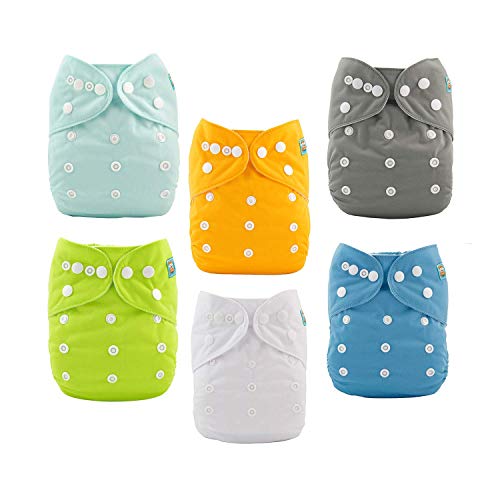
The ALVABABY 6-pack is a solid middle-ground option that delivers good value with a 2:1 insert-to-diaper ratio, 12 inserts for 6 covers means you’re less likely to run short during wash cycles. The suede cloth interior wicks moisture well, keeping babies drier than basic microfiber liners, and the crossover snaps help prevent wing droop, a small but real annoyance in cheaper models.
Parents appreciate the one-size adjustability and the fact that these hold up well over time. Compared to the Mama Koala, they’re slightly bulkier but more affordable. The trade-off? The design lacks advanced features like double gussets or premium linings, and some users say the leg elastics loosen after many washes.
Product photos


Nora’s Nursery 7-Pack Cloth Diapers
Strengths
- Ultra-soft fabric
- Premium inserts
- Includes wet bag
Trade-offs
- Higher price point
- Gusset may retain odor
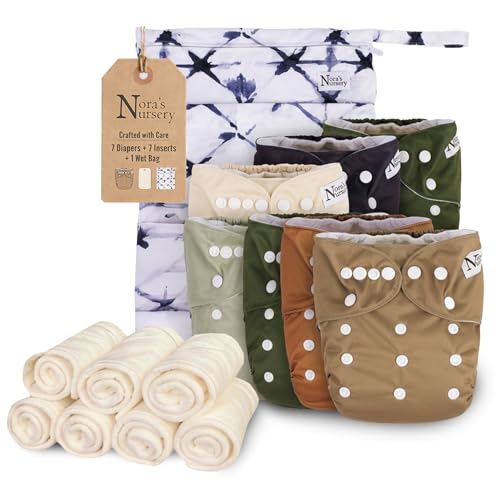
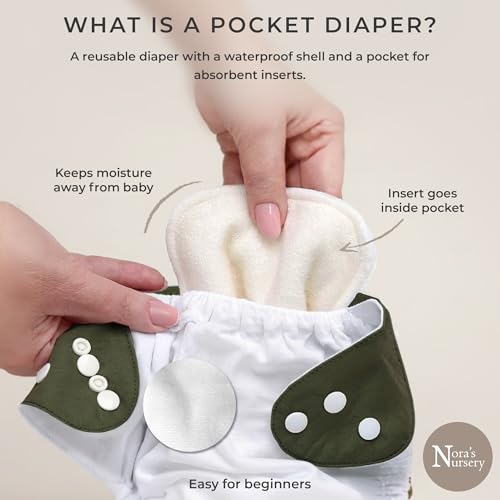
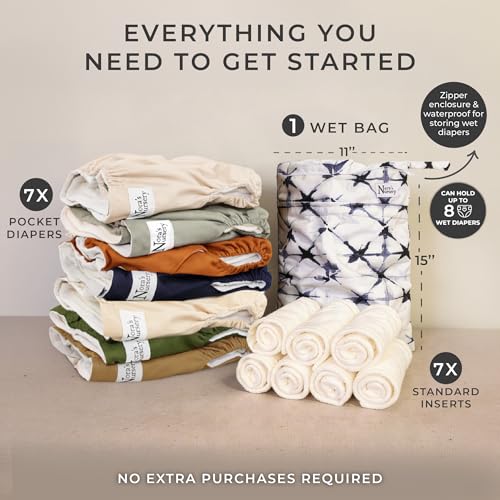
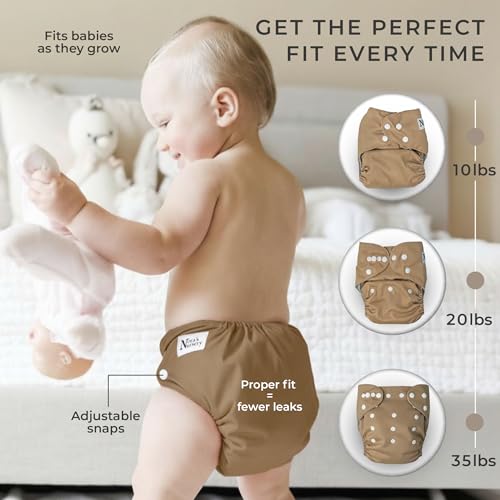
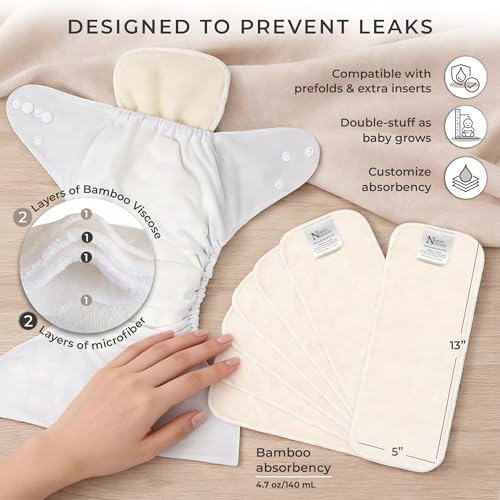
Nora’s Nursery delivers a premium-feeling set that leans hard into comfort and sustainability, and owners consistently praise how soft and durable these diapers feel after repeated washes. The 4-layer viscose and microfiber inserts are a standout, viscose from bamboo offers superior absorbency and a silkier touch, which many parents say makes diaper changes more pleasant for sensitive babies. At 10–35 lbs, the sizing is realistic, and the single leg gusset design does a solid job sealing out leaks, particularly at night.
It’s one of the pricier packs here, but you’re paying for softness, thoughtful design, and a complete kit that includes a wet bag. Compared to budget options, this set feels more like a long-term investment. Still, while the fabric is luxurious, some users note the gusset can trap odor if not rinsed promptly.
Product photos

HappyFlute 9-Set Newborn Diapers

Strengths
- Large 9-set pack
- Reusable travel pouches
- Adjustable fit
Trade-offs
- Inserts may shift
- Fabric less breathable than premium models
If you’re building a stash without breaking the bank, the HappyFlute 9-pack is tough to beat. Nine full sets mean you’re covered for frequent changes, and the 6–33 lb adjustability means they’ll last through infancy. The pocket design with separate inserts is standard, but what stands out is the inclusion of reusable transport pouches, owners find them genuinely useful for daycare or outings.
These aren’t the most premium-feeling diapers, but they hit the basics: snug leg elastics, TPU waterproofing, and a simple snap system. Some users report the polyester fabric feels slightly less breathable than bamboo blends, and the inserts can shift inside the pocket. Still, for a large set under $30, it’s a practical choice for parents prioritizing quantity and ease.
Product photos


How We Chose These reusable diapers
Rather than a hands-on lab test, my research for these recommendations focused on comparing published specifications and features across numerous reusable diaper brands. I weighed owner reviews from multiple retailers alongside expert opinions found in parenting publications and blogs. As someone dedicated to providing trustworthy advice, I applied my understanding of diaper fit, absorbency, and material safety to rank these options against clear criteria – prioritizing performance, value, and ease of use for parents.
For reusable diapers, the most important factors are absorbency and a reliable leak-proof fit. Absorbency directly impacts how often changes are needed, and that’s a huge consideration for busy families. Equally crucial is the design; features like adjustable snaps and leg gussets determine whether a diaper will truly stay put and prevent messes, particularly overnight. A comfortable fit is also key to avoiding irritation.
Specifications reliably indicate a diaper’s construction – materials used, layering, and adjustability features. However, I placed more emphasis on what owners said about real-world performance. Feedback on absorbency, how well the diaper holds up after repeated washes, and reports of leaks or rashes were vital. Understanding cloth diaper covers and their impact on leak protection was also essential, alongside assessing whether the materials promoted cloth diaper breathability.
What To Look For In reusable diapers
Choosing the right reusable diaper can feel daunting, but with a little knowledge, you can find a system that works for both you and your baby.
A quality reusable diaper balances absorbency, a secure and comfortable fit, ease of use, and durability. Look for diapers with adjustable features to accommodate your baby’s growth, soft inner layers to protect sensitive skin, and reliable waterproofing to prevent leaks. Consider the type of closure (snaps or Velcro) and the material of the inserts for optimal performance.
Fit and Adjustability
The biggest pitfall I see with new cloth diaper users is a poor fit. A diaper that doesn’t fit well will leak, no matter how absorbent it is. Look beyond “one size fits all” claims and pay attention to how adjustability is achieved. Snaps offer more precise adjustments than Velcro, particularly around the waist and legs, and generally hold up better over many washes. Consider a diaper with crossover snaps – these help prevent wing droop, a common issue with larger babies.
Absorbency and Materials
Different materials offer varying levels of absorbency, and understanding these differences is key. Microfiber is inexpensive and quick-drying, but can be prone to compression leaks (meaning it squishes under pressure and lets liquid escape). Hemp and bamboo are naturally absorbent and sustainable choices, but take longer to dry. Many diapers use a combination of materials to maximize performance. You’ll also want to think about the absorbency of cloth diapers and how that aligns with your baby’s output.
Here’s a quick breakdown of insert material considerations:
- Cotton: Affordable, readily available.
- Bamboo: Very absorbent, naturally antibacterial, but can be slower to dry.
- Hemp: Most absorbent natural fiber, durable, and holds its shape well, but can be stiff initially and needs multiple washes to reach full absorbency.
A good rule of thumb: always add an extra insert for naps and nighttime use, regardless of the diaper’s stated absorbency.
Convenience and Maintenance
Let’s be real: cloth diapering requires more work than disposables. To make it manageable, prioritize convenience. Pocket diapers, like the Mama Koala, are popular because they’re easy to stuff and customize with different inserts. All-in-ones are the closest you’ll get to disposable convenience, but they take longer to dry. Whatever system you choose, understanding the washing cloth diapers process is vital – a proper cloth diaper laundry routine will ensure your diapers remain clean, hygienic, and odor-free. Also, always check the cloth diaper properties to ensure they’re free of harmful chemicals.
Reusable Diapers Compared
Here’s a comparison of key specifications for various reusable diaper options.
| Product Name | Size Range (lbs) | Diaper Type | Waterproof Layer | Inserts Included | Number of Diapers |
|---|---|---|---|---|---|
| 7-Pack Reusable Cloth Diapers | 8-25 | TPU | Yes | 7 | |
| Gerber Birdseye Prefold Diapers 10-Pack | N/A | Prefold | N/A | No | 10 |
| Mama Koala 3.0 Pocket Diapers | 8-40 | TPU | Yes | N/A | |
| ALVABABY 6-Pack Cloth Diapers | 6.6-33 | TPU | Yes | 6 | |
| Nora’s Nursery 7-Pack Cloth Diapers | 10-35 | N/A | Yes | 7 | |
| HappyFlute 9-Set Newborn Diapers | 6-33 | TPU | Yes | 9 |
Frequently Asked Questions
What is the typical upfront cost of switching to reusable diapers?
Expect to spend between $150 and $300 initially, though this varies greatly. This cost covers a starter set of diapers (around 6-12), inserts, and potentially diaper covers or wet bags – consider a diaper size guide when calculating quantities.
How often do I need to change a cloth diaper compared to disposable?
Cloth diapers generally require changing every 2-3 hours, similar to disposables, but absorbency varies. Heavily wetting babies or naps may necessitate more frequent changes to prevent discomfort or leaks.
Are cloth diapers really leak-proof?
While modern cloth diapers are much improved, no diaper is 100% leak-proof. Proper fit, appropriate absorbency for your baby’s output, and a well-fitting cover are essential for preventing diaper blowouts.
What’s the best way to deal with soiled cloth diapers when I’m away from home?
Wet bags are the most popular solution for containing soiled diapers on the go. These waterproof bags seal in odors and moisture until you can wash the diapers, offering a convenient and sanitary option.
What kind of detergent should I use for washing cloth diapers?
Use a detergent specifically designed for cloth diapers, or a free and clear detergent with no added dyes, fragrances, or fabric softeners. These additives can reduce absorbency and cause buildup, affecting the diaper’s performance.
The Bottom Line
Choosing reusable diapers often comes down to balancing upfront cost with the convenience you’re willing to accept. While a larger investment initially, the long-term savings and environmental benefits make the Mama Koala 3.0 Pocket Diapers our overall pick – they consistently receive high marks for their reliable fit, absorbency, and ease of use, making them a good choice for both new and experienced cloth diapering families.
For parents on a tighter budget, or those wanting to explore different styles, the 7-Pack Reusable Cloth Diapers offer a very affordable entry point. If you’re looking for maximum versatility and enjoy experimenting with different absorbency levels, the ALVABABY 6-Pack Cloth Diapers are a great option, as they allow for customizable inserts. Understanding how diapers should fit is crucial no matter which brand you select.
Ultimately, the “best” reusable diaper is the one that fits your baby well and fits into your lifestyle. Don’t get too caught up in specific materials or features; focus on finding a comfortable, leak-proof fit and establishing a consistent washing routine. Mastering prefold folding methods can also significantly enhance the performance of any cloth diaper system.
