
What Is a Diaper Service | The Easiest Way to Cloth Diaper
This post contains affiliate links. As an Amazon Associate, we learn from qualifying purchases
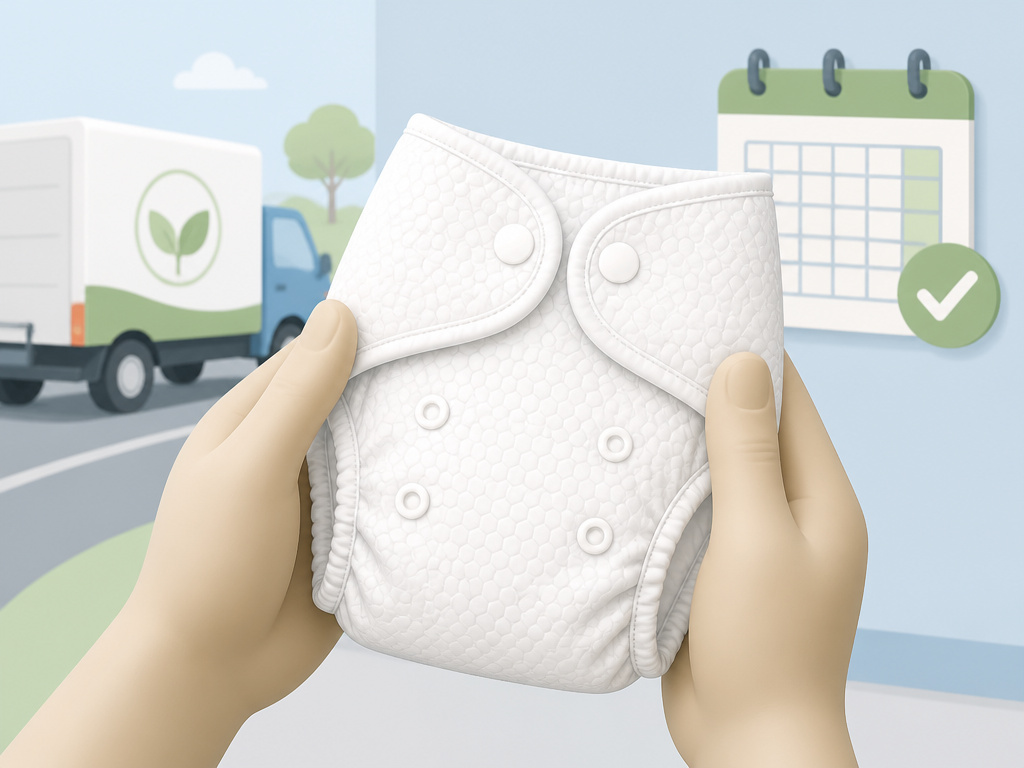
A diaper service is a weekly subscription that delivers clean cloth diapers to your home and picks up the soiled ones to wash them professionally. It removes the need for you to own, wash, or store a large personal stash, offering the environmental and skin benefits of cloth diapering without the laundry labor.
The core mechanics are simple, but the specifics, like what style of diaper you get, how many, and what happens to the waste, vary by provider. Some services stick to 100% cotton prefolds, while others, like the 80-year-old Baby Diaper Service in Seattle, have pivoted to a hybrid model, delivering plant-based disposable diapers and recycling the waste into energy.
What follows: a breakdown of the weekly cycle, the two main service models (traditional cloth vs. Modern hybrid), what it actually costs beyond the monthly fee, and how to decide if the convenience is worth the investment for your household.
Key Takeaways
- Services typically deliver 70–90 diapers weekly, enough for 10–12 changes a day, and can adjust amounts as your baby grows.
- You must sign up 2–4 weeks before your due date, but billing only starts once your baby arrives and you begin using the diapers.
- The traditional model uses cotton prefolds; a newer “waste-to-energy” model provides compostable/disposable diapers that are collected and industrially processed.
- Beyond the monthly fee, factor in the cost of diaper covers, wipes, and any additional absorbency boosters you might need for overnight.
- The service is most valuable during the newborn phase, when laundry frequency is highest and parent sleep is lowest.
How a Diaper Service Works: The Weekly Cycle
Forget the image of a parent boiling diapers on a stove. A modern diaper service operates on a tight, predictable rotation designed to make cloth diapering as hands-off as possible.
The process begins with a pre-birth delivery. You’ll sign up about two to four weeks before your due date. The service will then drop off a starter kit. This almost always includes a diaper pail, a waterproof pail liner, a week’s supply of clean diapers, and a deodorizing disc for the pail. Companies like Mother Nature’s Diaper Service in Madison also include a few diaper covers and a Snappi fastener in their kits. You set up your changing station, place the empty liner in the pail, and wait for baby.
Once your baby is home, you use the provided diapers. For a breastfed newborn, soiled diapers go directly into the pail, no rinsing. Once solids are introduced, you shake or plop solid waste into the toilet first. The pail holds the week’s worth of smells.
A typical service assigns twice as many diapers to your family as you receive weekly. If you get 90 clean ones, they have 180 in rotation under your name. This buffer means you can keep leftover clean diapers if you have a light week, and the service tracks the count.
On your scheduled pickup day, you simply remove the full liner from the pail and place it at your agreed spot, your porch, doorstep, or building lobby. You do not need to be home. The driver swaps your bag of dirty diapers for a fresh bag of clean ones. The soiled linens are taken to a commercial facility where they are washed at high temperatures with industrial detergents, then dried and prepared for the next family in the rotation.
| Day | Your Action | Service Action |
|---|---|---|
| Sign-up (2-4 weeks pre-due date) | Schedule first delivery. | Drop off pail, liner, clean diapers, covers. |
| Baby Arrives | Start using diapers; notify service. | Begin weekly billing and add you to the route. |
| Daily Use | Change diapers; place soiled ones in lined pail. | — |
| Night Before Pickup | Place full liner at pickup spot. | — |
| Pickup Day | (No action needed) | Driver swaps dirty bag for clean bag. |
What Do You Actually Get? Cloth vs. Hybrid Models
Not all diaper services are the same. The biggest divide is between traditional cloth-only services and newer hybrid or “waste-to-energy” services. Your local options will dictate what lands on your doorstep.
The Traditional Cloth Model is what most people picture. You receive a weekly supply of cloth diapers, almost always prefolds. These are rectangular cotton diapers with multiple layers sewn into the center for absorbency. They require a separate waterproof diaper cover to contain moisture. Some services, like Mother Nature’s, offer premium tiers that might include fitted diapers or all-in-two systems, but prefolds are the industry standard for their durability and ease of industrial washing.
The Modern Hybrid Model is a newer twist. A service like Baby Diaper Service in Seattle, operating since 1946, now delivers Bambo Nature plant-based disposable diapers. They provide the convenience of a disposable, but with a key difference: they pick up the used diapers each week. The waste is then sent to a facility where it is converted into energy, diverting it from landfills. This model targets parents who want an eco-conscious option but cannot commit to cloth.
Where this goes sideways: Assuming a service will provide everything. Even a full-service cloth provider usually gives you the diapers and a pail. You typically need to supply your own diaper covers (plan for 4-6), cloth wipes, and any overnight booster pads. Not budgeting for these extras is a common first-month surprise.
The style of diaper matters for your daily routine. With prefolds, you’ll need to learn a few basic cloth diaper folding techniques or simply tri-fold the diaper into a cover. A hybrid service requires no folding, you use it like any disposable. Your choice here hinges on your commitment to cloth and your local service’s offerings.
The Real Cost: More Than a Monthly Fee
When evaluating a diaper service, the advertised weekly or monthly rate is just the starting point. The true cost includes necessary accessories and varies with your baby’s age and consumption.
First, the service fee itself. This covers the rental of the diapers, the washing, and the delivery. Prices fluctuate by region, but you can generally expect a cost comparable to mid-range disposable diapers. The fee often scales with the number of diapers you need; a newborn going through 12+ diapers a day will cost more than a toddler using 6-8.
Second, the ancillary costs. For a cloth service, you must purchase diaper covers. You need enough to rotate through while others are air-drying, as the service does not wash these. A service might include 2-3, but 5-6 is more practical. You’ll also need cloth wipes and a solution. For a hybrid service, you may need to buy your own wipes, but the diapers themselves are all-inclusive.
| Cost Factor | Traditional Cloth Service | Hybrid (Waste-to-Energy) Service |
|---|---|---|
| Weekly/Monthly Fee | Covers diapers, washing, delivery. | Covers disposable diapers, pickup, recycling. |
| Diaper Covers | Required purchase (4-6 recommended). | Not applicable. |
| Wipes | Usually a separate purchase (cloth wipes). | Usually a separate purchase. |
| Overnight Boosters | May be needed; separate purchase. | Typically not needed; use diaper as-is. |
| Long-Term Value | Cheaper than disposables over 2+ years; diapers fit from newborn to potty training. | Price-competitive with premium disposables; environmental cost is lower than landfill. |
Finally, consider the cost of time. This is the service’s primary value proposition. Washing cloth diapers at home requires a dedicated routine every 2-3 days. You must strip cloth diapers periodically to remove detergent and mineral buildup. A service eliminates this time, which for a family with a newborn or dual working parents, can be worth the premium.
Is a Diaper Service Right for Your Family?
 The math isn’t just financial. It’s about logistics, lifestyle, and what you value during the intense early months of parenting. A service isn’t a universal good deal, but it solves specific, common problems.
Choose a service if:
- You lack in-unit laundry. Shared, coin-operated facilities make washing diapers a costly and cumbersome chore.
- The newborn phase feels overwhelming. The first three months are the most labor-intensive for diaper changes. A service gives you one less task during a sleep-deprived time.
- You want to try cloth without commitment. It lets you test the core properties of cloth diapers, like breathability and reduced rash, without investing hundreds in a personal stash.
- Environmental impact is a priority. Even the hybrid model significantly reduces landfill waste compared to standard disposables.
Skip a service if:
- You have a tight, single-income budget. The ongoing weekly fee is a fixed cost that, over 2.5 years, will exceed the one-time cost of building a cloth diaper stash.
- You enjoy DIY and laundry routines. Some parents find washing diapers a satisfying, simple chore.
- You live far outside a service’s delivery zone. These are hyper-local businesses. Baby Diaper Service covers Puget Sound; Green Diaper Babies serves Chicagoland. If you’re in a rural area, your only option might be a mail-order rental service, which changes the cost structure.
The part nobody mentions: Your baby’s sensitivity matters. If your child reacts to the specific detergent or fabric softener the service uses, you’re out of luck. You cannot request a special wash for your batch. This is rare, but it’s a risk you don’t have when washing at home.
For many, the ideal compromise is to use a service for the first 3-6 months, then transition to a personal stash once the diaper change frequency slows and a routine is established. This leverages the service when its value is highest.
How to Find and Choose a Local Service
 You can’t just pick a national brand. Diaper services are local operations. Finding a good one requires a bit of old-fashioned digging.
Start with a simple “[your city] diaper service” search. Look for companies with a professional website that clearly states their service area, contract terms, and pricing. Check their social media for recent activity and customer interaction. Longevity is a positive signal, a company like Baby Diaper Service, founded in 1946, has weathered economic shifts and proven its reliability.
Once you have 1-2 options, call or email them. Your questions should go beyond price.
- What is your weekly diaper count and can it be adjusted? Newborns need more than the standard 80.
- What style and brand of diapers do you use? Are they 100% cotton prefolds, or do you offer fitted options?
- What is your wash process? Do you use bleach? What detergents? (This is crucial for babies with eczema or sensitivities).
- What is your policy for vacations or missed pickups? Most will credit you for paused weeks.
- Do you offer a trial period or a short-term newborn package?
Listen to how they answer. A good service will be patient, detailed, and happy to explain their process. They understand they’re not just selling diapers; they’re selling peace of mind during a chaotic life stage.
Frequently Asked Questions
How many diapers will a service provide per week?
Most services provide a base of 70 to 90 diapers per week, which covers approximately 10 to 12 changes per day. This amount is adjustable. You can request more diapers if your baby is a heavy wetter or you change more frequently, and you can decrease the count as your baby grows and wets less often. The service tracks your usage and adjusts deliveries accordingly.
Do I have to rinse the diapers before putting them in the pail?
No, you do not rinse diapers for a service. For exclusively breastfed babies, soiled diapers can go directly into the provided pail. Once your baby starts eating solid foods, you should shake or plop solid poop into the toilet before disposing of the diaper. The service’s industrial wash process handles the rest.
Can I use a diaper service for a newborn?
Yes, and it’s often the most popular time to use one. You typically sign up 3-4 weeks before your due date. The service will deliver your starter kit before the birth, and billing only begins once your baby arrives and you start using the diapers. It’s an excellent way to manage the 12+ daily diaper changes of the newborn period without the laundry burden.
What’s the difference between a diaper service and buying my own cloth diapers?
The key difference is ownership and labor. With a service, you rent the diapers and outsource the washing. When you buy your own, you own the diapers for the long term and are responsible for the entire process of stripping cloth diapers and maintaining them. A service has higher recurring costs but no upfront investment and no laundry work.
Are the diapers sanitized between different families?
Absolutely. Services use commercial-grade washing machines and industrial detergents, washing at high temperatures that far exceed what a home machine can achieve. The diapers are thoroughly sanitized between each use. This system has been standard for decades and is considered hygienically safe.
Before You Go
A diaper service is a tool, not a necessity. It solves the laundry problem for cloth diapering, making the environmental and skin-health benefits accessible to parents who are short on time, lack laundry access, or simply don’t want another chore. The traditional model with cotton prefolds is a time-tested system, while newer hybrid models offer a unique waste-to-energy solution for the disposable-minded.
Your decision hinges on local availability, your budget for an ongoing subscription, and how much you value reclaiming those hours spent doing laundry. For the right family, especially in the blur of the newborn months, it’s not an expense, it’s a sanity saver.
