
At What Age Do Kids Wipe Their Own Poop? The Key Milestone
This post contains affiliate links. As an Amazon Associate, we learn from qualifying purchases
Children typically begin wiping themselves between ages 4 and 6, but the skill hinges on physical dexterity, not a calendar. A 2002 study found only half of kids could do it by age 4, and for children with developmental disabilities like Down syndrome, independent wiping may not be reliably achieved until age 10 or later.
That gap, four years versus ten, isn’t about effort. It’s about the complex physical maneuver required. Wiping demands a child can reach behind their back, rotate their wrist, apply the right pressure, and understand when they’re clean, all without looking. Most toddlers simply don’t have that coordination.
What follows is a breakdown of the physical why, the realistic timelines backed by pediatric studies, and the proven teaching strategies that move beyond simple encouragement. You’ll learn why wet wipes are a legitimate training tool, how to break the skill into tiny steps, and what to do if your child’s preschool has a strict independence policy.
Key Takeaways
- The core challenge is dexterity and spatial awareness, not willingness. A child must be able to twist, reach, and feel cleanliness.
- Half of typically developing children master wiping by age 4, but many aren’t fully independent until 5 or 6. Expect a wide range.
- For children with Down syndrome or Fragile X syndrome, studies show independent toileting, including wiping, often isn’t achieved until ages 6-10 or later.
- Wet wipes and hands-on guidance are critical training aids because they provide better sensory feedback than dry toilet paper.
- Schools may expect independence, but it’s a developmental milestone, not a discipline issue. Collaborate with teachers on a plan.
The Typical Age Range (And Why It’s So Wide)
Forget a single magic number. Independent wiping is the last major skill in the potty training sequence because it’s physically the most demanding.
A 2002 developmental study, still cited as a key reference, tracked when children achieved various toileting skills. It found that about 50% of kids could wipe themselves by 48 months, age 4. The researchers didn’t follow the cohort long enough to record when the remaining half learned, but anecdotally, many pediatricians and parents report children mastering it between ages 5 and 6. This wide spread is normal. It reflects differences in core strength, hip flexibility, fine motor control, and a child’s personal comfort with the task.
This 2002 study is the most comprehensive timeline available, but its data may skew early. Modern potty training trends start later, which likely pushes the average age for independent wiping later as well.
The skill has less to do with knowing they should wipe and everything to do with whether they can. Can they stabilize their body on the toilet while reaching back? Can they rotate their wrist to cover the area? Can they gauge pressure through a wad of paper? For a young child, this is like asking them to write their name with their non-dominant hand while balancing on one foot.
Where this goes sideways: Assuming a child is being lazy or resistant. If they are genuinely trying but coming out with messy hands or underwear, the problem is almost certainly mechanical, not motivational. Punishment or frustration only adds anxiety to an already tricky physical task.
Why Dexterity is the Real Gatekeeper
Wiping cleanly is an advanced fine motor sequence. Breaking it down shows why it’s often the final frontier of bathroom independence.
First, a child needs sufficient trunk rotation and shoulder flexibility to get their hand behind them. Then, they need the pincer grasp and hand strength to tear off an appropriate amount of paper, usually three to four squares, as recommended by NHS guidance. Next comes the precision: folding the paper, positioning it, and using a front-to-back wiping motion (crucial for girls to prevent UTIs) with enough pressure to clean but not so much it’s uncomfortable or causes tears. Finally, they must check the paper visually, understand what “clean” looks like, and repeat the process until it’s clear.
Children with developmental delays face additional layers. A guide from the Children’s Hospital of Philadelphia notes that kids with Down syndrome may struggle due to low muscle tone (hypotonia), which affects the strength and control needed for wiping. Similarly, a study on Fragile X syndrome published in PubMed Central indicated that independent wiping remains a challenge into later childhood, often requiring continued support.
| Developmental Factor | Impact on Wiping | A Sign You Might See |
|---|---|---|
| Core Strength & Balance | Reaching behind without falling | Child holds onto toilet seat or wall for support. |
| Wrist Rotation & Dexterity | Getting the wipe into position | Wiping only in one direction, missing parts of the area. |
| Sensory Processing | Feeling when they are clean | Over-wiping (causing irritation) or under-wiping (leaving residue). |
| Motor Planning | Sequencing the steps | Knowing what to do but doing steps out of order (e.g., flushing before wiping). |
This is why the journey to bathroom independence is a marathon. The cognitive understanding often comes years before the physical ability executes it flawlessly.
Step-by-Step: How to Build the Skill
You can’t just tell a child how to wipe. You have to build the underlying physical skills through play and guided practice. Think of it as occupational therapy at home.
Start with the basics long before you expect results. Ensure your child’s feet are firmly supported on a stool when they sit on the toilet. An unstable base makes the reaching motion impossible. Keep the toilet paper within easy reach.
The training phases:
- Teach the “How Much” First. Show them how to tear off three or four squares. You can even mark the perforations with a pen. A common mistake is letting them grab a huge, unmanageable clump that provides zero sensory feedback.
- Practice the Motion Off the Toilet. NHS resources suggest playful drills. Stick a sticker on the back of their pants and have them reach back to find and remove it. Smear a dab of lotion or peanut butter on a plastic plate and have them wipe it clean with a paper towel, practicing folding the towel after each pass.
- Use Hand-Over-Hand Guidance. When it’s time for a real bowel movement, place your hand over theirs and guide them through the wipe. Let them feel the pressure and the arc of the motion. Over time, lighten your touch until you’re just spotting them.
- Introduce Wet Wipes as a Training Tool. This is a pro tip from pediatric occupational therapists. Wet wipes are thinner than a wad of dry paper, so they provide clearer tactile feedback against the skin. They also clean more effectively with less precision. Use them for the final “polish” after toilet paper, or as the primary tool while learning. Just remember, most aren’t flushable.
- Work on Checking. Teach them to look at the paper after each wipe. Make it a game: “Is it clean? No? Okay, fold the dirty part in and wipe again.”
Common mistake: Rushing the process after the child has a few successes. Consistency for a full week without accidents is a better indicator of mastery than a single clean wipe.
This structured guide to teaching wiping turns an overwhelming task into a series of small, achievable wins. It’s the same principle of breaking down a routine that the Autism Ontario Toileting Guide recommends, called a task analysis.
When Development Follows a Different Timeline
For children with diagnosed developmental conditions, the standard age ranges are not just extended, they are fundamentally different. This isn’t a delay in teaching; it’s a difference in the child’s physical and neurological readiness.
Research paints a clear picture. A study cited by the Children’s Hospital of Philadelphia found children with Down syndrome, on average, complete toilet training around age 6.6, and even then may need ongoing help with wiping. The 2022 PubMed Central study on Fragile X syndrome reported that independent toileting is typically achieved between ages 6 and 10, with wiping often being the last component mastered.
Worth knowing before you start: Regression is common and not a failure. A child with Down syndrome who was wiping independently may backslide after a hospitalization, a change in routine, or a growth spurt. The skill will come back with calm, consistent re-training.
If your child has a developmental disability, collaboration with professionals is key. An occupational therapist (OT) can assess specific barriers like low muscle tone or motor planning issues and provide tailored exercises. They might recommend adaptive tools or techniques. Your potty training at daycare plan must be shared and synchronized with all caregivers to maintain the consistency these children rely on.
The goal shifts from achieving independence by a certain age to making steady progress toward self-care within the child’s unique timeline. This perspective reduces pressure on both you and your child.
Navigating School and Social Expectations
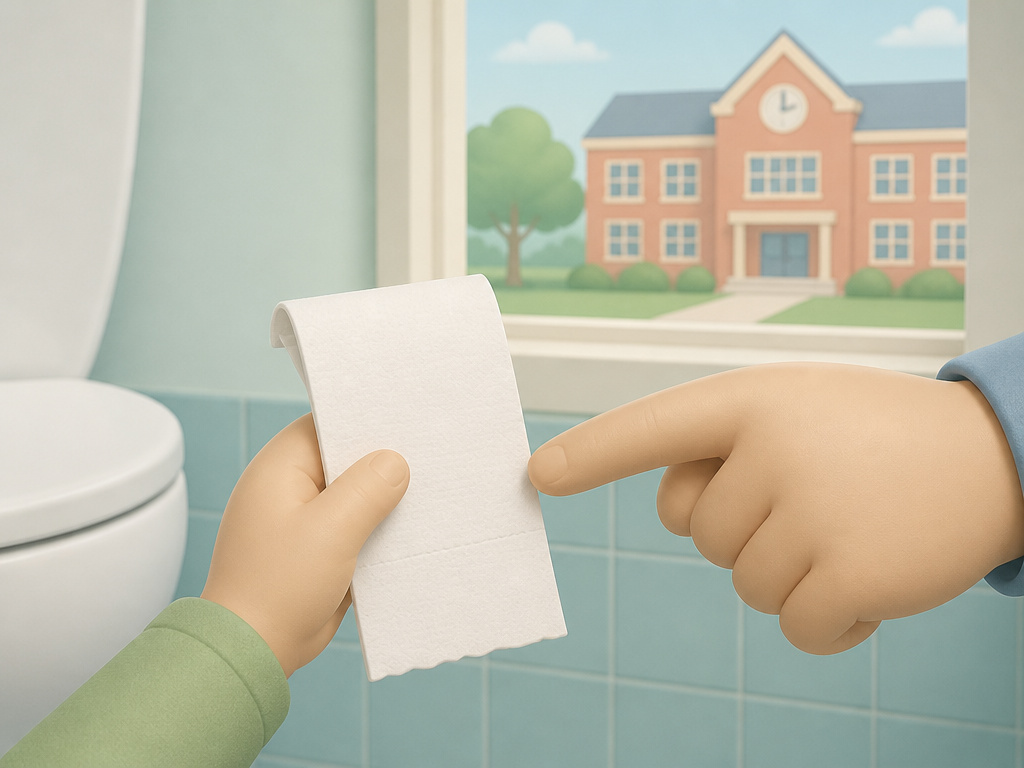
This is where theory meets a messy reality. Many preschools and kindergartens have policies requiring children to be “fully bathroom independent.” For a parent of a 4-year-old who is still mastering proper wiping technique, this can cause significant stress.
First, know your child’s rights. While a school can set general expectations, they are typically required to provide reasonable accommodations for a child who is still developing a skill, especially if there is an underlying developmental reason. A blanket “no help” policy is often impractical and developmentally inappropriate.
How to approach the conversation:
- Be Proactive. Don’t wait for an accident. At enrollment or before the school year, have a calm conversation with the teacher. “Zoe is doing great with using the toilet, but she still needs a quick check after a bowel movement to make sure she’s clean. What’s the best way for us to handle that here?”
- Propose a Solution. Suggest practical steps. Can you pack a pack of wet wipes in her backpack? Can an aide or teacher give a verbal reminder to check the paper? Could she have a discreet signal if she needs help?
- Frame it as a Partnership. You’re both on the same team working toward the same goal: your child’s confidence and hygiene. Share what works at home.
The pressure to meet an arbitrary deadline can backfire. Anxiety about getting it wrong or asking for help can lead to withholding bowel movements, which creates a whole new medical problem. A supportive, collaborative approach between home and school, as outlined in resources like this ParentData child development guide, is what ultimately helps a child cross the finish line.
Frequently Asked Questions
What if my 5-year-old still can’t wipe properly?
This is very common. Focus on the physical skills, not age. Use the off-toilet games to build dexterity and hand-over-hand guidance during real events. Ensure they are using an adequate amount of paper and checking it. If there’s no progress or you suspect underlying coordination issues, discuss it with your pediatrician. A referral to an occupational therapist can be transformative.
Are wet wipes okay to use for training?
Yes, and they are often recommended by therapists. Wet wipes provide better cleaning with less mechanical skill, reducing the chance of irritation from incomplete wiping. They also give clearer sensory feedback. The main caveat is that most should be placed in a trash bin, not flushed, to avoid plumbing issues. They are a fantastic bridge to independence.
How do I teach front-to-back wiping to a girl?
Use clear, simple language and direct demonstration. Say, “We always wipe from the front (where your pee comes out) to the back (where your poop comes out) to keep germs away.” You can demonstrate on a doll or using your hand-over-hand technique. This is a non-negotiable hygiene rule to prevent urinary tract infections, so consistency is key. A Johns Hopkins toilet training guide will emphasize this critical technique.
My child’s preschool says they must be independent. What do I do?
Schedule a meeting with the teacher or director. Calmly explain where your child is in the process and the specific skills they are still developing. Ask what their policy looks like in practice, is there absolutely no adult assistance available? Propose a temporary plan, like you providing a pack of wipes and the teacher giving a verbal prompt. Most educators prefer a collaborative plan over dealing with frequent accidents.
Could late wiping be a sign of something else?
In most cases, it’s simply a variation in normal development. However, if your child is significantly struggling with other fine motor tasks (like buttoning, using utensils, or holding a crayon), or if they seem to have a very poor sense of where their body is in space (frequent clumsiness), it’s worth mentioning to your pediatrician. It could indicate a need for occupational therapy to address broader coordination challenges.
The Bottom Line
The age a child wipes their own poop is less about a birthday and more about the intricate dance of muscle, coordination, and spatial awareness. Half of kids get there around four, many take until five or six, and for children with developmental differences, the path is longer and requires targeted support.
Your job is to be the coach, not the clock-watcher. Provide the physical tools, the stool, the wet wipes, the hands-on guidance. Break the skill down into play-based drills. And advocate for your child in settings where unrealistic expectations loom. Mastery will come when their body catches up to their understanding. Until then, patience and practice are the only tools that actually work.
