
Using Diaper Rash Cream for Chafing: The Zinc Oxide Answer
This post contains affiliate links. As an Amazon Associate, we learn from qualifying purchases
Diaper rash cream can help chafing because its active ingredients, zinc oxide or petroleum jelly, create a physical, waterproof barrier on the skin. This barrier reduces friction and shields damaged skin from further moisture and irritation. For mild to moderate chafing, a cream with 10-40% zinc oxide or pure petrolatum applied to clean, dry skin provides effective relief within a day or two.
The barrier is the whole game. Chafing breaks down the skin’s outer layer through repeated rubbing and moisture. A thick layer of ointment sits on top of that damaged layer, letting the skin underneath repair itself without being scraped raw with every movement.
What follows: the specific zinc oxide percentages that matter, the one ingredient that a 2023 review found ineffective for severe rashes, the exact application mistake that makes the cream useless, and when you must reach for an antifungal instead.
Key Takeaways
- Zinc oxide creams (10-40% concentration) and pure petrolatum ointments work by forming a durable, water-repellent shield over chafed skin.
- A 2023 systematic review found petroleum jelly alone showed no efficacy for managing established, severe diaper dermatitis, suggesting its limits for broken skin.
- The cream must be applied in a thick, visible layer to clean, completely dry skin; a thin smear rubs off immediately and provides zero protection.
- Stop use and see a doctor if the chafed area shows signs of infection: spreading redness, pus, blisters, or if it doesn’t improve within 3-4 days.
- For chafing in skin folds (like the groin or under breasts), a zinc oxide paste is superior to lotions or powders, which can trap moisture and worsen the problem.
How Does Diaper Rash Cream Work on Chafed Skin?
Chafing is a friction burn. Skin rubs against skin or clothing, the outer protective layer wears away, and moisture from sweat keeps the wound wet and irritated. Healing requires a break from that cycle.
Diaper rash creams classified as skin protectants by Health Canada create a hydrophobic (water-repellent) film. This film reduces the coefficient of friction between the skin surface and contacting materials, while simultaneously blocking transepidermal water loss and irritant penetration.
This is why a generic moisturizer fails. Lotions absorb. A proper barrier cream, like Desitin Maximum Strength or Aquaphor Healing Ointment, sits on top. The zinc oxide or petrolatum doesn’t heal the skin, your body does that. It provides a stable, slippery environment for that healing to happen.
The physical texture matters. A zinc oxide paste is thick and stays put. When you apply it to a chafed thigh, it fills the microscopic grooves in the damaged skin, creating a flat, smooth surface. The next time your thighs rub together, the paste layers slide, not your skin.
Apply it to bone-dry skin. Any residual moisture gets trapped under the barrier, which softens the skin further and can accelerate breakdown. Pat the area dry, then wait a full minute. If the skin feels cool or damp, wait longer.
Which Ingredients Actually Work?
Not all diaper creams are equal for chafing. You need an occlusive agent, something that doesn’t absorb. The two proven categories are metal oxide pastes and hydrocarbon-based ointments.
| Ingredient | How It Works on Chafing | Best For | Drawback |
|---|---|---|---|
| Zinc Oxide | Forms a thick, adherent paste that physically blocks moisture and friction. | Moderate to severe chafing, broken skin, areas prone to wetness. | Can be messy, stains clothing, requires thorough washing to remove. |
| Petrolatum (Petroleum Jelly) | Creates a slick, water-impermeable seal over the skin surface. | Mild chafing, prevention, sensitive skin that reacts to other ingredients. | Can feel greasy, may not stay in place as well as a paste during high activity. |
| Dimethicone | A silicone-based barrier that spreads easily and is less greasy. | Mild, early-stage chafing or for use under clothing where feel matters. | Barrier is less robust than zinc oxide; may need more frequent reapplication. |
The concentration of zinc oxide is a real spec. Health Canada’s monograph for diaper rash products lists zinc oxide concentrations from 1% to 25% for standard creams, and 25% to 40% for zinc oxide ointments. A 10% zinc oxide cream provides a solid barrier; a 40% paste, like Triple Paste, is like laying down armor. For adult chafing that has to survive a full day’s movement, lean toward the higher percentages.
Where this goes sideways: Using a cream with added botanicals, fragrances, or “cooling” agents like menthol on already broken skin. These additives can cause stinging and increase inflammation, turning a simple friction burn into a chemical irritation. Stick with the simplest formula you can find.
The research isn’t uniformly glowing for all barriers. A 2023 meta-analysis of diaper dermatitis treatments in the journal Cureus reported that one study found petroleum jelly alone showed no efficacy in reducing the severity and incidence of dermatitis symptoms in a clinical setting. This doesn’t mean Vaseline is useless for mild chafing, it’s a great preventative. But it highlights that for established, angry chafing, a more substantive barrier like zinc oxide has stronger evidence.
Step-by-Step: How to Use Diaper Cream for Chafing
This process fails if you rush the drying step. The cream will slough off on contact.
- Clean gently. Use lukewarm water and a fragrance-free cleanser. Avoid scrubbing. Rinse thoroughly. Soap residue left under the barrier will irritate.
- Dry completely. Pat the area with a clean, soft towel. Then, let it air-dry. Fan the area or just sit for five minutes. The skin should feel dry to the touch, not tacky.
- Apply a thick layer. Glop it on. You should see a visible white or translucent coat. If your skin shows through, you didn’t use enough. This isn’t a moisturizer; it’s a dressing.
- Let it set. Give the barrier a minute to adhere before putting on clothing. For zinc oxide pastes, it will form a bit of a crust, that’s the point.
- Reapply after washing. The barrier washes off. After a shower or if you’ve been sweating heavily, repeat the entire process: clean, dry, glop.
Skipping step two is the most common error. Applying cream to damp skin creates a humid microclimate under the barrier. The skin macerates, it turns white, soft, and gets even more fragile. You’ll be worse off in six hours.
For clothing, choose loose, soft fabrics. Tight spandex or rough seams will scrape the cream right off. At night, apply a heavy layer and sleep without tight clothing to let the area breathe.
When Diaper Rash Cream Is the Wrong Choice
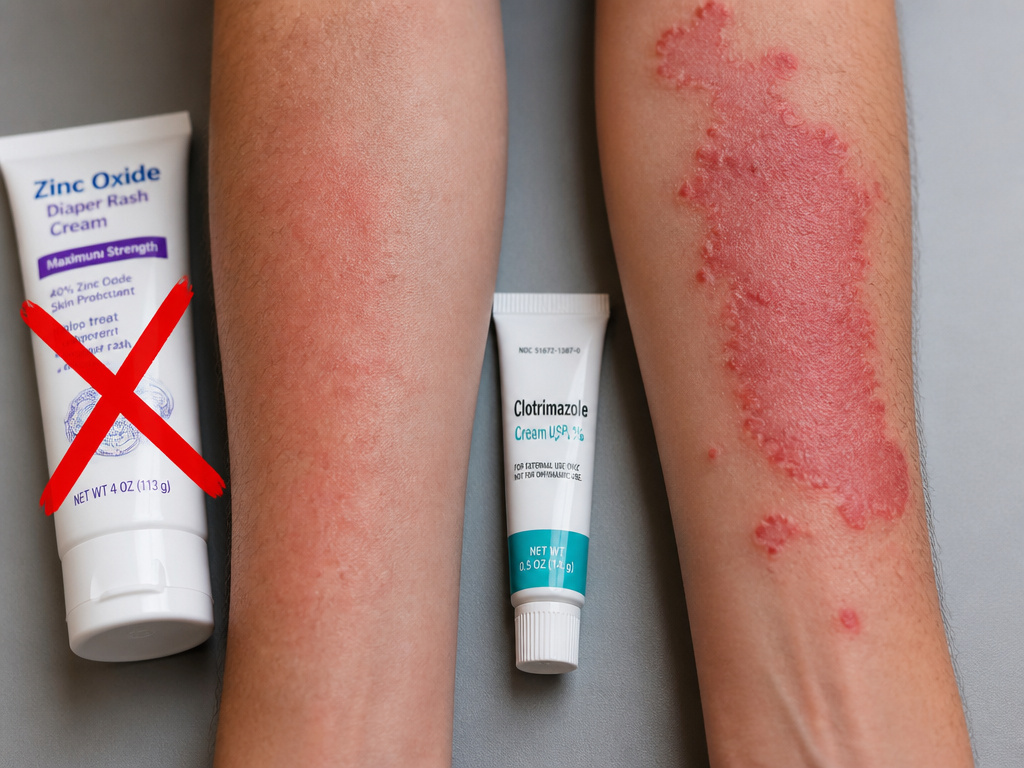
Barrier creams treat a mechanical problem: friction and wetness. They do not treat infections. If your chafing has been present for a while or looks unusual, you might be dealing with something else.
Stop use and consult a healthcare professional if symptoms worsen, last for more than 7 days, or re-occur within a few days. – Health Canada Diaper Rash Products Monograph
This official warning is your off-ramp. Here are the specific signs that mean “stop the cream and get a diagnosis”:
- The rash is bright red with sharp borders and maybe red spots just outside the main area. This is the classic presentation of a fungal infection (Candida). Fungi thrive in warm, damp folds. A diaper rash cream antifungal might help, but often you need a dedicated antifungal cream like clotrimazole.
- There are blisters, pustules, or honey-colored crusts. This suggests a bacterial infection (like impetigo), which requires antibiotic treatment.
- The rash is intensely itchy or weepy and spreads quickly. This could be an allergic contact dermatitis, possibly to an ingredient in the cream itself or your detergent.
- No improvement after 3-4 days of consistent, correct application. The mechanical barrier should provide noticeable relief within a day. If it doesn’t, the diagnosis is wrong.
The 2023 Cureus systematic review on barrier preparations noted that clotrimazole (an antifungal) emerged as an effective management strategy where fungal overgrowth was suspected. This is a critical distinction. Smearing zinc oxide on a fungal rash just feeds the fungus.
Diaper Cream vs. Dedicated Anti-Chafe Products
Walk down the skincare aisle and you’ll see sticks, powders, and balms marketed for chafing. How do they stack up against a tube of Desitin?
| Product Type | Primary Ingredient | Pro | Con |
|---|---|---|---|
| Zinc Oxide Diaper Cream | Zinc Oxide (10-40%) | Maximum barrier protection, therapeutic for broken skin, long-lasting. | Messy, visible, can stain fabrics. |
| Anti-Chafe Balm/Stick | Synthetic Waxes, Silicones | Clean application, invisible, designed for high-motion areas. | Barrier is often thinner, may need frequent reapplication on severe chafing. |
| Petroleum Jelly | Petrolatum | Excellent moisture seal, cheap, widely available. | Can feel greasy, may not adhere well during intense activity. |
| Anti-Chafe Powder | Cornstarch, Talc-Alternatives | Reduces moisture and friction between skin folds. | Can clump and create abrasive grit if it gets wet, ineffective on broken skin. |
For prevention, a dedicated anti-chafe stick like Megababe’s or a silicone-based gel is often more comfortable and socially discreet. For treatment of active, painful chafing, the raw protective power of a zinc oxide paste is unmatched. It’s the difference between a bandage and a preventative cushion.
Think of it in terms of damage control. If your skin is intact but you’re going for a long run, use a stick. If you come back from that run with a raw, stinging patch, wash up and apply a thick layer of diaper rash cream. It’s a heavier tool for a heavier job.
FAQs on Using Diaper Rash Cream for Chafing
Can I use diaper rash cream on intimate areas for chafing?
Yes, but with extreme caution. Only use plain zinc oxide or petrolatum creams on unbroken skin in the bikini line or groin area. Avoid any product with added fragrance, menthol, or botanical extracts. If the skin is broken or the chafing is inside a fold, it’s safer to see a doctor to rule out a fungal infection first, as these areas are prone to them.
How long does it take for diaper rash cream to work on chafing?
You should feel immediate relief from friction after a proper application. Significant improvement in redness and soreness is typically seen within 24-48 hours. If there’s no change after three days, the cream isn’t working and you should reassess the cause.
Is it safe to use diaper rash cream for chafing every day?
For short-term treatment of an active chafing wound, yes. For long-term daily prevention, it’s overkill and messy. A dedicated anti-chafe product or even a simple layer of Vaseline help diaper rash prevention is more appropriate for daily use on intact skin.
Will diaper rash cream stain my clothes?
Zinc oxide creams, especially the high-percentage white pastes, can leave white stains on fabric. These stains are often treatable with pre-wash stain removers and hot water. To minimize staining, ensure the cream is fully dry before dressing, and wear older, dark-colored clothing during treatment. Petrolatum-based ointments are less likely to stain visibly but can leave greasy marks.
Can diaper rash cream help with chafing from sanitary pads?
Absolutely. This is a common and painful form of chafing. Apply a zinc oxide cream to the irritated area on the inner thigh or labia majora (external skin only) where the pad edge rubs. It creates a protective buffer. For prevention, some people find switching to a different pad style or brand, or using a pantyliner with a soft, woven cover, eliminates the need for cream.
If creams don’t work, what helps severe chafing?
If a proper barrier cream isn’t helping, you’ve likely moved beyond simple friction. The next steps are: 1) Stop all activity that causes the rubbing to allow healing. 2) Keep the area clean and dry with air exposure. 3) Consider an antifungal or antibacterial cream if signs of infection are present. 4) See a doctor or dermatologist. They can prescribe stronger topical steroids for inflammation or antibiotics for infection, and confirm the diagnosis. Sometimes what looks like chafing is eczema, psoriasis, or a contact allergy.
The Bottom Line
A zinc oxide diaper cream is a highly effective, affordable tool for treating chafing. It works through simple, physical barrier protection, the same principle that makes it good for a baby’s diaper rash. The key is using the right type (a high-percentage paste for broken skin), applying it correctly to dry skin, and knowing when to stop because you’re dealing with an infection, not just friction.
For a one-time fix on raw skin, grab a tube of Desitin or Triple Paste. For daily prevention on intact skin, a dedicated anti-chafe stick is less messy. And if the problem persists beyond a few days or looks infected, put the tube down and pick up the phone to your doctor. No cream can solve every skin problem, but for straightforward chafing, this humble baby product often gets the job done.
