
What Is EC Potty Training? The Parent-Infant Communication Method
This post contains affiliate links. As an Amazon Associate, we learn from qualifying purchases
EC potty training is not training at all. It’s a parent-led communication practice where you learn your baby’s elimination cues and offer a potty, a sink, toilet, or bowl, instead of defaulting to a diaper. The goal is connection and awareness, not dryness or early independence. You start by observing, then offering at predictable times like after waking, treating the diaper as a backup, not a toilet.
That definition is the whole game. Calling it “training” sets the wrong expectation and is why most guides on the topic confuse parents before they even begin. The method hinges on your ability to read a newborn’s signals, not the child’s ability to control anything.
What follows is the breakdown that matters: the philosophical split from conventional potty training, the practical starter moves that actually work, and the honest timeline that keeps you from burning out. You’ll see where the communication part lives, why the six-month mark is a real pivot point, and how to weave this into a day without it taking over your life.
Key Takeaways
- EC is a communication practice, not a potty training method. The goal is responding to your baby’s cues, not achieving daytime dryness.
- You can start part-time. Aim for a few “catches” a day, like after naps or during diaper changes, without the pressure of going diaper-free.
- The most effective window starts early, from birth to about six months, before a baby becomes “diaper-trained” to eliminate in a diaper.
- Success is measured in preserved awareness and fewer dirty diapers, not in accident-free days. A miss is just information, not a failure.
- This approach often leads to easier, earlier conventional potty learning, but that’s a side effect, not the primary aim.
Is EC the Same as Potty Training?
No. This is the single most important line to draw, and most search results blur it. Potty training teaches a child who is developmentally ready to recognize the urge, hold it, and use the toilet independently. Elimination Communication asks a parent to recognize the baby’s pre-elimination signals and facilitate the release in an appropriate place. The baby is not in control; you are.
Elimination Communication is not potty training, it is about communication. The goal is not potty-independence; it is connection. However, being potty independent is something that does happen at the end.
Conventional training happens around ages 2 to 4, when a child has the physical and cognitive readiness. EC can start at day one. Mixing the two up leads to frustration, because you’ll be waiting for readiness cues that never come, or you’ll be pushing for control a six-week-old simply doesn’t have. If you approach EC as “early potty training,” you will quit. The mindset is everything.
How Elimination Communication Actually Works (The Why-Layer)
The mechanism is simple pattern recognition paired with a conditioned response. You are the pattern recognizer. Your baby, from birth, has natural rhythms and subtle signals before they pee or poop, a certain fuss, a stillness, a particular look. You learn these by watching.
When you see the signal, you hold them in a supported position over a receptacle and make a consistent sound cue (like “ssss” or “psshh”). The association forms: this position and sound mean it’s time to go. The diaper is there for when you miss the cue or aren’t in a position to offer. You are not teaching bladder control. You are creating a communication loop that keeps the baby aware of the elimination sensation, an awareness that is often lost when a diaper is always present.
This is why starting early has an advantage. Before six months, a baby hasn’t fully learned to ignore the feeling of elimination because a diaper is always there to catch it. After that point, as one parent-researcher notes, they become “diaper-trained.” Any EC after six months is more accurately early potty learning and requires a different, often more patient, approach.
A Realistic Starter Framework: Part-Time EC
The idea of watching your baby every second for signals is a fantasy. It’s also the fastest way to make a parent resentful. Part-time EC is the only sustainable path for most families. You commit to a few specific, high-probability times each day. The rest of the time, you use diapers normally.
Where this goes sideways: Trying to go full-time from the start. You’ll exhaust yourself looking for cues, mistake every fuss for a potty need, and likely give up within a week. Start with one or two easy catches a day.
Your first week should be about observation, not execution. Spend 15-30 minutes a day with your baby diaper-free on a waterproof mat. Watch what they do right before they go. Note the time since they last fed or woke up. You’re gathering data, not performing.
The 4 Easy Catches to Start With
These four moments have the highest success rate for beginners. Pick one or two to focus on initially. 1. After waking. A full bladder after a nap or night sleep is almost a guarantee. This is your easiest, most consistent catch. 2. During diaper changes. The sensation of cool air on the skin often triggers a pee. Have your potty bowl ready before you undo the diaper. 3. After feeding. The gastrocolic reflex means a feed often stimulates a bowel movement, especially in young infants. 4. Before/after leaving a container. Moving a baby from a car seat, swing, or high chair is a natural transition point to offer.
Tools You Actually Need (And What to Skip)
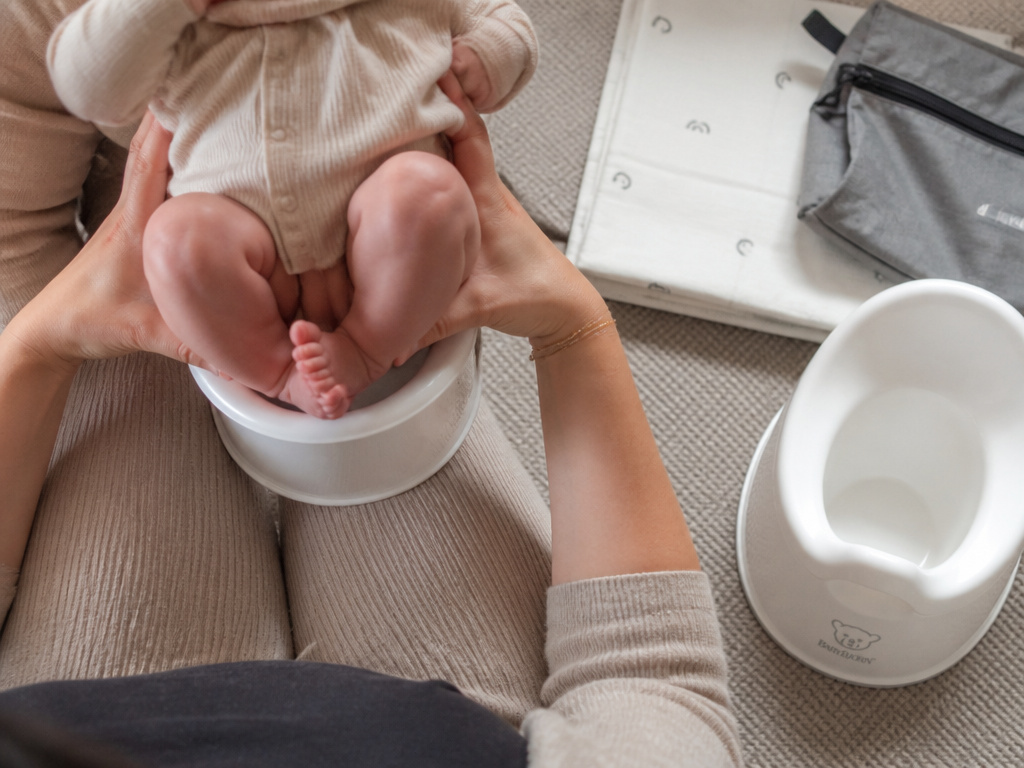
You need exactly one dedicated receptacle. Elaborate setups are a distraction. For newborns, a simple top-hat potty bowl or even your bathroom sink works perfectly. For older babies who can sit supported, a small floor potty like the BabyBjorn Smart Potty is ideal because it’s low to the ground and stable.
Common mistake: Buying a dozen potty gadgets before you’ve made a single catch. Start with a single, easy-to-clean bowl. You can always upgrade later, but you can’t get back the mental energy spent fussing with gear.
The only other essential is a waterproof layer for your observation time and for misses, a reusable changing pad or a towel inside a shower curtain liner works. Skip the special EC underwear for now; regular diapers or cloth diapers as a backup are fine. The fancy pants come later, if at all.
| Tool | Purpose | Why It Works |
|---|---|---|
| Small Potty Bowl | Newborn catches | Fits on your lap or between your legs; easy to dump and rinse. |
| BabyBjorn Smart Potty | Older, sitting babies | Low center of gravity prevents tipping; minimalistic design isn’t scary. |
| Waterproof Mat | Diaper-free observation | Contains misses during learning sessions; easy to wipe clean. |
| Wet Bag | On-the-go | Holds soiled clothes or the potty bowl if you’re out; contains smell. |
The Critical Difference: EC vs. Early Potty Training
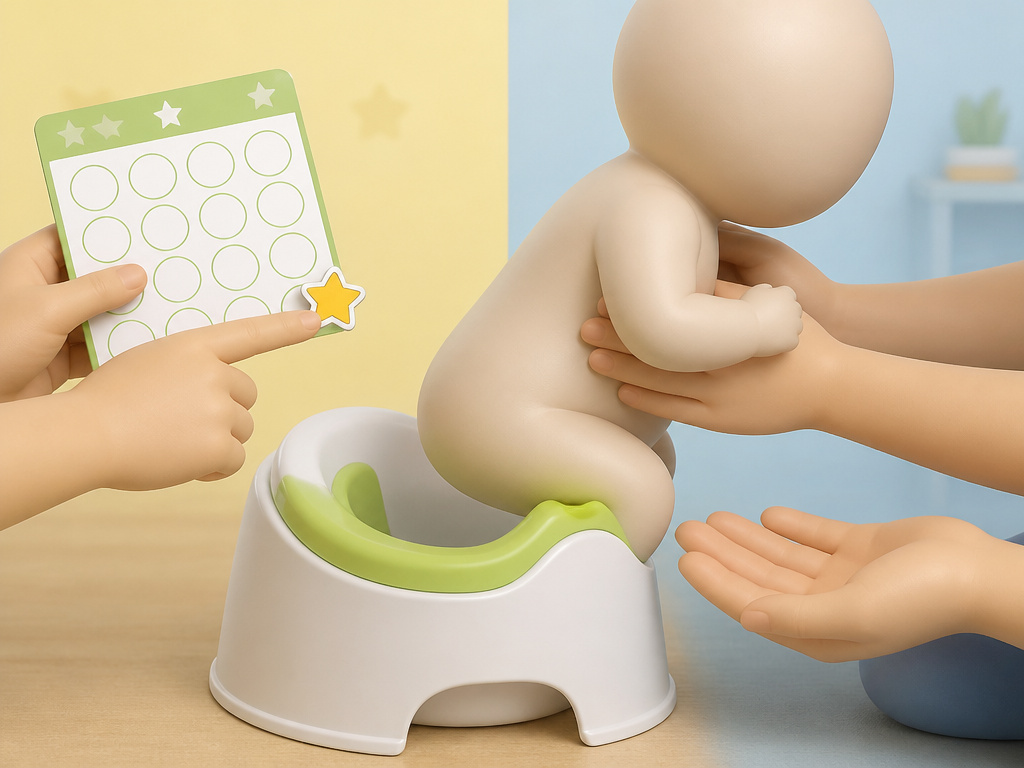
This distinction isn’t academic. It changes your reactions, your goals, and your child’s experience. Early potty training uses parent-led timing and rewards to achieve dryness. It often involves scheduled sits, sticker charts, and pressure to perform. The child is being trained.
EC uses baby-led cues to facilitate a natural function. There are no rewards for going, no punishment for missing. A miss is simply a missed signal, you clean it up and move on. The pressure is on you to observe, not on the child to produce. As outlined in a Pollywog Family blog post, the shift in mindset from “training” to “communication” is what makes the practice respectful and sustainable.
If your internal dialogue is “Did he go? Why didn’t he go?” you’re in training mode. If it’s “I think she’s signaling. Let me offer and see,” you’re in communication mode. This is why experts like Andrea Olson of Go Diaper Free stress that the parent’s attitude is the most important tool in the kit.
What Does “Success” Look Like? (Setting Honest Expectations)
Success in EC is not a diaper-free one-year-old. If that happens, it’s a wonderful side effect. Real success looks like this: * You recognize your two-month-old’s “poop face” and catch it in the potty 3 out of 5 times. * Your six-month-old pees almost every time you offer after a nap. * Your one-year-old, familiar with the potty, has an easier transition during actual starting potty training.
It also looks like fewer blowout diapers to scrub, a stronger sense of connection with your baby’s non-verbal language, and preserving their innate awareness of their body. A parent who logged their time found they spent only about five minutes a day on EC activities. That’s a sustainable investment.
Compare this to the emotional marathon of a three-day method with a toddler, which is a valid but entirely different tactic for a different developmental stage. EC lays a foundation that can make those intensive methods smoother when the time comes.
How to Integrate EC With Other Caregivers and Life
The fear that you must do this 24/7 or it won’t work is a myth. EC is flexible. If only one parent does it, that’s fine. If you only do it on weekends, that’s fine. The baby learns context: “With Mom in the morning, I use the potty. At daycare, I use a diaper.” This is not confusing to them; it’s just a different routine.
For caregivers, keep it simple. Show them the one or two times you offer (e.g., “We always try right after her nap”). Give them permission to skip it if it’s too hectic. The practice is resilient to inconsistency because its core is about moments of connection, not a rigid program. This flexibility is what makes part-time EC so much more sustainable than the all-or-nothing image it often has.
Frequently Asked Questions
Can you start EC with an older baby?
You can, but reframe it as early potty learning. An older baby is likely already accustomed to going in a diaper. Start with the same observation and easy catches (after sleep, at changes), but expect more misses and be patient. The goal shifts to reintroducing the concept of the potty, not relying on innate newborn signals.
Doesn’t EC create a power struggle?
It can, if you slip into training mode. If you’re holding a crying baby on the potty demanding they go, you’ve created a struggle. EC at its core is an offer, not a demand. If the baby fusses or arches away, you stop immediately. The communication is in the offering and the observation, not in the result.
How do you handle nights and outings?
Most part-time EC practitioners don’t do nights. Use overnight diapers. For outings, you have options: use a travel potty, offer right before leaving and right after arriving, or simply rely on the diaper for that trip. The system is designed to have a diaper backup, so use it.
Will EC make conventional potty training easier later?
In many cases, yes. A child who has maintained awareness of elimination and sees the potty as a normal place to go often has fewer fears and quicker understanding when it’s time for independent fast potty training. They’re not learning a scary new skill from scratch.
Is EC just a way to save money on diapers?
It can be a financial benefit, but it’s a poor primary motivator. The upfront time investment is about connection, not economics. The diaper savings are a bonus that accrues over time, especially if it leads to earlier daytime dryness.
Before You Go
EC potty training is a lens, not a checklist. It’s about tuning into your baby in a specific, tangible way. If you take one thing, let it be this: drop the word “training.” This is communication. Start with five minutes of observation tomorrow. Try one catch after the next nap. That’s it.
That small step preserves an option, a line of communication about a basic bodily function, that modern diapering often closes. Whether it leads to fewer dirty diapers next month or an easier potty training journey next year, the connection you build is the point. The rest is just a useful byproduct.
