
How to Potty Train an Autistic Child: A Guide for Parents
This post contains affiliate links. As an Amazon Associate, we learn from qualifying purchases
To potty train an autistic child, you build a predictable routine using visual supports and scheduled sits, not waiting for readiness cues. A published school study found success by removing diapers, scheduling bathroom visits every 30 minutes, limiting sits to 3 minutes, and using immediate rewards for success. The process takes an average of 96 calendar days, with progress measured in consistent small steps, not overnight mastery.
That 96-day average comes from a real program run by school staff. It’s a specific timeline most parent guides don’t mention, because they’re written for neurotypical kids where training often wraps in weeks. For autistic children, the brain’s wiring around interoception, the sense of internal body signals, and routine demands a different framework. You’re not teaching a child to recognize a urge. You’re teaching a body a new habit.
What follows breaks down the two proven frameworks: habit training for the body and schedule training for the mind. We’ll walk through the specs from the research, how to adapt them at home, and what to do when things stall, because they will.
Key Takeaways
- Start with schedule, not signals. Autistic children may not feel or communicate the urge to go. A timed routine teaches the body the habit first.
- Short sits win. Limit toilet time to 3 minutes or less per attempt. Longer sits increase frustration and turn the bathroom into a battleground.
- Visuals are non-negotiable. A step-by-step picture sequence beside the toilet removes the mystery and builds a predictable routine.
- Constipation is your first enemy. Address it before any training begins. Painful bowel movements will sabotage every strategy.
- Progress is measured in months, not days. The published school data shows a range of 72 to 135 calendar days to mastery. Patience is a tool, not a virtue.
Signs of Readiness (They Look Different Here)
Forget the standard checklist about staying dry for two hours or showing interest in the toilet. Those are social and sensory milestones that many autistic children hit later, if at all. Your markers are about capacity for routine, not bladder awareness.
The Maine AAP training guide lists parameters like “sufficient attention span to sit” and “motor skills to remove garments.” Those are the functional skills you need. Can your child follow a simple one-step direction? Can they sit still for 90 seconds? Do they have a predictable pattern for bowel movements, even if they can’t tell you?
If the answer is no, your first step isn’t potty training. It’s skill-building. Practice pulling pants up and down as a game. Use a timer to build sitting tolerance on a closed toilet lid with a favorite book. You’re laying track for the train that’s coming later.
Where this goes sideways: Starting training while a child is chronically constipated. Pain from passing hard stools creates a powerful negative association with the toilet that can take months to undo. Check for firm belly, infrequent bowel movements, and straining.
The Two Frameworks: Habit Training vs. Readiness Training
You have two main paths, and the choice depends on your child’s profile. Most families need a blend.
Habit Training (Schedule Training) is the method backed by the school study. It operates on a simple principle: the body can be trained to void at predictable times, regardless of conscious awareness. You take the child to the toilet on a fixed schedule, every 30, 45, 60 minutes, and reward success immediately. This method is ideal for children with low interoceptive awareness or those who’ve shown no interest in the toilet.
Readiness-Based Training works for children who show some awareness of being wet/dry or who have specific tells before they go. You watch for those tells and rush them to the toilet, pairing the physical sensation with the location. This method is harder to implement consistently and often leads to more accidents, but it can be a good supplement to a schedule.
For the vast majority, habit training is the backbone. It provides the consistency and predictability that autistic brains crave. The NIH toilet training study proved its effectiveness in a school setting, and it translates directly home.
The School-Based “3-Minute Rule”
The study published in the NIH’s PubMed Central archive is your blueprint. Researchers toilet-trained five autistic boys aged 3–5 in a public school. Paraprofessional staff ran the program with minimal clinical oversight. The results weren’t just good, they were replicable.
The procedure involved removal of diapers during school hours, scheduled bathroom visits at set intervals, a maximum of 3 minutes sitting on the toilet, immediate positive reinforcement for urination in the toilet, and gradually increased time intervals between visits as mastery was achieved.
Here’s how to translate those steps to your home:
- Ditch the diapers during training hours. Pull-ups feel like diapers. Use underwear or go commando under loose pants. The physical sensation of wetness is a natural consequence, but you must be ready for mess.
- Set the timer. Start with bathroom trips every 30 minutes. Use a visual timer your child can see.
- Enforce the 3-minute maximum. Sit for 3 minutes, no more. If nothing happens, calmly say “all done” and help them off. This prevents the toilet from becoming a place of prolonged struggle.
- Reward instantly. The moment urine hits the water, deliver a high-value reward. A piece of a favorite candy, 30 seconds of a specific video, a tickle. The reward must be immediate and consistent.
- Gradually stretch the interval. After 3 consecutive days with no accidents at 30 minutes, move to 45 minutes. Then 60, 90, 120. This is how you build bladder capacity.
The study participants took an average of 56 school days to reach a 2-hour dry interval. Calendar days, including weekends, averaged 96. One child took 135 days. This is the timeline you’re signing up for.
| Training Phase | Action | Goal | Risk If Skipped |
|---|---|---|---|
| Preparation | Address constipation, introduce visuals, build sitting tolerance | Child is physically comfortable and understands the routine. | Pain and fear create immediate aversion, halting progress before it starts. |
| Intensive Schedule | 30-minute intervals, 3-minute sits, instant rewards | Establish the muscle-memory link between toilet location and voiding. | Inconsistent timing confuses the body’s rhythm; accidents remain frequent. |
| Interval Stretching | Increase time between sits by 15-minute increments after 3 accident-free days. | Build bladder capacity and move toward independence. | Moving too fast leads to regression; moving too slow stalls progress. |
| Maintenance & Generalization | Use the routine in different bathrooms, with different caregivers. | Child can use any toilet following the familiar visual sequence. | Child may only go at home, leading to accidents at school or in public. |
Your Toolkit: Visuals, Rewards, and Physical Setup
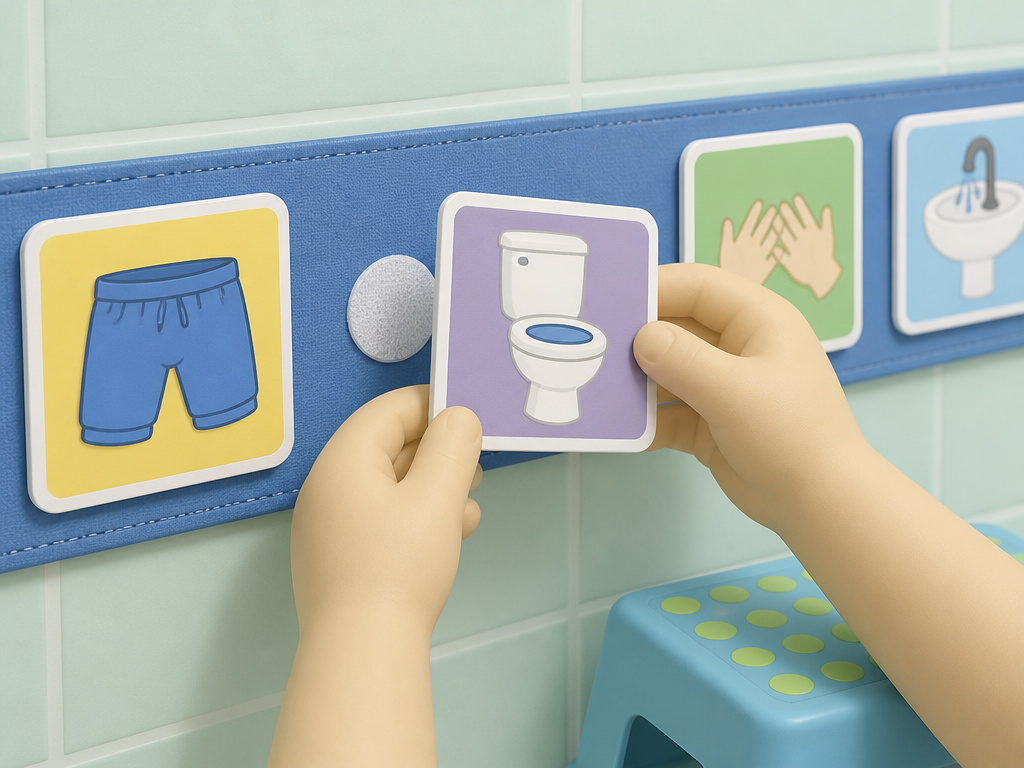
The right tools remove cognitive load. Your child shouldn’t have to remember what comes next.
Visual Schedules are mandatory. A simple strip of pictures or icons showing each step: walk to bathroom, pull down pants, sit, try, wipe, pull up pants, flush, wash hands. The Autism Speaks toilet training guide emphasizes this. It turns a multi-step social puzzle into a clear, predictable sequence.
Reward systems must be concrete and immediate. Social praise like “good job” often isn’t motivating enough. Use a token board where a successful sit earns a sticker; five stickers trade for a small toy or special activity. Keep the reward novel and high-value. For some kids, the intrinsic reward of flushing is enough, capitalize on that.
Physical setup matters more than you think. Feet must be supported. A wobbly child on a big toilet is focusing all their energy on balance, not relaxation. Use a sturdy step stool. Consider a padded toilet seat insert if the large opening causes anxiety. For a resistant child, the right physical comfort can lower the barrier to participation.
Navigating Common Setbacks and Challenges
Regression isn’t a failure; it’s data. It tells you the current interval is too long, the reward has lost value, or an external stressor is at play.
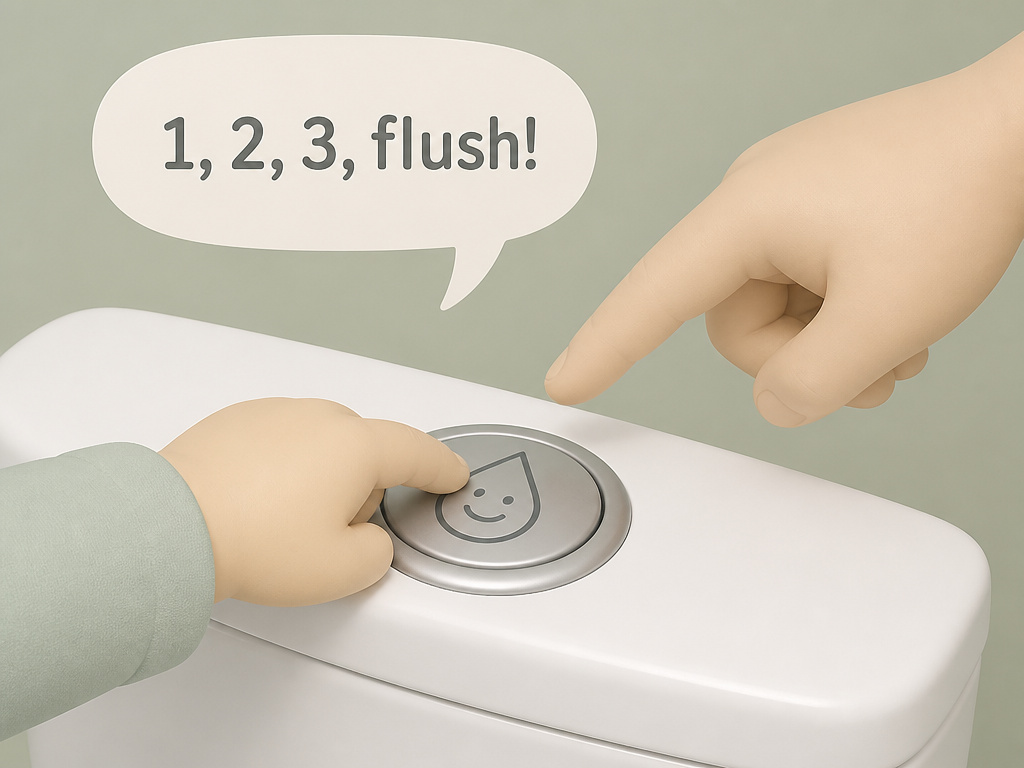
Fear of the Flush: The noise and sudden movement are terrifying. Practice flushing with a countdown (“1, 2, 3, flush!”) and let your child press the button. Or flush after they’ve left the room initially.
Smearing or Playing with Feces: This is often a sensory exploration, not a behavioral challenge. Provide a sanctioned, similar sensory alternative like play dough or slime at a different time of day. Ensure cleanup is neutral and non-rewarding.
Withholding Stools: This is usually linked to constipation or fear of pain. Go back to your pediatrician. A clean-out might be necessary, followed by daily maintenance with Miralax or similar, as directed. Never punish withholding, it’s a physical response to perceived pain.
These are the common challenges that make the process feel impossible. Each has a mechanical cause. Find it, and the solution follows.
When to Seek Additional Help
If you’ve followed a consistent schedule for 3 months with zero progress, it’s time to call in reinforcements. This isn’t a personal failing. Some children need the structured, data-driven approach of a Board Certified Behavior Analyst (BCBA).
ABA therapy can be particularly effective for breaking down toileting into its smallest components and teaching each step with precision. A therapist can also help design a foolproof reward system tailored to your child’s unique motivations. Seek a provider experienced in toileting interventions.
Speak to your child’s pediatrician or school team. Occupational therapists can address sensory aversions to the toilet seat, the sound of flushing, or the feel of toilet paper. This is a team sport.
Frequently Asked Questions
What is the average age for an autistic child to be potty trained?
Data is wide-ranging. A 2003 study cited an average of 3.3 years, but a 2017 study of 500 autistic children found only 35% were daytime trained by 3 years. More tellingly, 5% still had accidents at age 12. Age is a poor benchmark. Focus on skill acquisition, not calendar years.
Can I use a “three-day method” for an autistic child?
The three-day method relies heavily on a child’s intrinsic motivation and ability to make rapid cognitive connections. For most autistic children, this is an unrealistic timeline and can lead to intense pressure and shutdown. The school-based habit training method, averaging 96 days, is a more evidence-based and less stressful path.
My child will sit on the toilet but never goes. What now?
First, ensure they are physically able. Rule out constipation. Then, check your timing. Are you taking them 20 minutes after a big drink? Finally, examine the reward. Is it immediate and truly motivating? If they sit but don’t go, still reward the sitting behavior initially to build the habit of being on the toilet. The voiding will often follow.
How do I handle school versus home routines?
Consistency is everything. Share your home visual schedule with the teacher. Send identical rewards. Use a communication log to track successes and accidents. The goal is for the child to experience the exact same routine and consequences in both environments. Any major deviation will slow progress.
Before You Go
Potty training an autistic child is a marathon of tiny steps. Your compass is the data: the 3-minute sits, the 30-minute intervals, the 96-day average. Your tools are the visuals, the rewards, and the ruthless elimination of physical pain from constipation. Your mindset is patience measured in seasons, not weekends.
When you hit a wall, and you will, go back to the last step that worked. Shorten the interval. Change the reward. Check for constipation. This isn’t about willpower. It’s about wiring a new habit into the nervous system, one predictable, positive repetition at a time. The destination isn’t just a dry child. It’s a child who gains a piece of independence in a world that often feels confusing. That’s worth every step of the journey.
