
Can Diaper Rash Spread? The Contagious Types & 7-Day Rule
This post contains affiliate links. As an Amazon Associate, we learn from qualifying purchases
Diaper rash can spread across the diaper area, but whether it is contagious depends entirely on the cause. Common irritant dermatitis from wetness does not spread to other people. However, secondary infections from yeast (Candida) or bacteria like staph can spread to other skin folds on the same child and, through direct skin contact or shared items, to other people. The Health Canada monograph for diaper rash products states that if symptoms last more than 7 days, you should consult a doctor, a clear signal that a spreading or persistent rash may be an infection.
That timeline is the practical line. A simple rash from friction and moisture stays put and clears with basic care. A rash that marches into skin folds, shows up as satellite lesions, or outlasts a week of diligent changes is playing by different rules. The spread you’re seeing is likely microbial.
What follows is a breakdown of the three rash types by their spread potential, the specific signs that a rash has become infectious, and the barrier-and-isolation steps that actually stop it.
Key Takeaways
- Irritant diaper rash doesn’t spread person-to-person. It’s a localized skin reaction to moisture, friction, and pH, contained to areas in direct contact with the diaper.
- Yeast and bacterial rashes are contagious. Candida can spread to other warm, moist body folds (neck, armpits) and can be passed to others via direct skin contact or contaminated hands.
- Watch for the 7-day rule. If a rash doesn’t improve significantly within a week of proper care, or if it clears and quickly returns, suspect a secondary infection and see a doctor.
- Barrier creams prevent spread by creating a physical shield. Products with 40% zinc oxide or petrolatum work by sitting on top of the skin, not by being absorbed.
- Isolate the infection. Use separate towels, wash hands thoroughly after changes, and consider a dedicated tub for bath time until a contagious rash clears.
Is Diaper Rash Contagious?
The short answer is: it depends on what’s causing it. You need to diagnose the rash type first. The vast majority of diaper rashes are irritant contact dermatitis. This is a straightforward inflammation from prolonged wetness, friction from the diaper, and the interaction of urine and stool enzymes with skin. This type of rash is not contagious, you cannot catch it from your baby, and it won’t spread to their chest or arms.
A simple irritant diaper rash is a local skin injury, not an infection. It stays within the diaper area because that’s the only place experiencing the unique combination of moisture, ammonia, and mechanical rubbing.
The landscape changes completely with a secondary infection. The two main culprits are fungal (yeast) and bacterial.
- Yeast Diaper Rash (Candidiasis): This is caused by an overgrowth of Candida albicans, a fungus naturally present in the gut. A warm, damp, irritated diaper area is the perfect breeding ground. This rash is contagious. It can spread to other moist skin folds on your baby, like the neck, armpits, and behind the ears. It can also spread to other people through direct skin-to-skin contact or via contaminated hands, towels, or washcloths.
- Bacterial Infection (e.g., Impetigo): Less common, this occurs when bacteria like Staphylococcus or Streptococcus invade broken skin. It often presents with oozing, honey-colored crusts or blisters. This form is highly contagious and can spread rapidly across your baby’s skin and to caregivers or other children.
The confusion between “spreading” and “being contagious” is where most parent anxiety lives. A rash can spread across the diaper area simply because the entire area is exposed to the same irritant. That’s not contagion. Contagion means the causative agent (yeast or bacteria) can colonize new, unaffected skin areas on the same host or a new host.
Identifying a Rash That Can Spread
You can’t rely on guesswork. The visual cues and behavior of the rash tell you what you’re dealing with. Use this comparison to make the first call.
| Rash Type | Primary Cause | Appearance | Spread Pattern | Contagious? |
|---|---|---|---|---|
| Irritant Dermatitis | Moisture, friction, pH | Red, shiny, flat inflammation. Worst on convex surfaces (buttocks, thighs). Skin folds are often spared. | Stays within diaper-exposed zones. May get larger if irritant exposure continues. | No |
| Yeast Infection | Fungus (Candida) | Beefy red with sharp, raised borders. Often has satellite lesions—small red dots outside the main rash area. Commonly invades skin folds. | Spreads to other warm, moist areas (folds, neck). Can spread to other people. | Yes |
| Bacterial Infection | Bacteria (Staph, Strep) | Oozing, yellow-honey crusts, or fluid-filled blisters (bullae). Skin may look “weepy” or eroded. | Spreads quickly across local skin. Highly contagious via contact with fluid or crusts. | Yes |
Where this goes sideways: Assuming all red skin in the diaper area is the same. Treating a yeast rash with only barrier cream is like using a bandage on an infection, it covers the problem while it grows underneath.
The single most telling sign of a contagious yeast rash is the presence of satellite lesions. These are small, distinct red bumps or pustules that appear just beyond the border of the main rash. They represent the fungus spreading outward. If you see these, you’re almost certainly beyond a simple irritant issue.
How Contagious Rashes Actually Spread
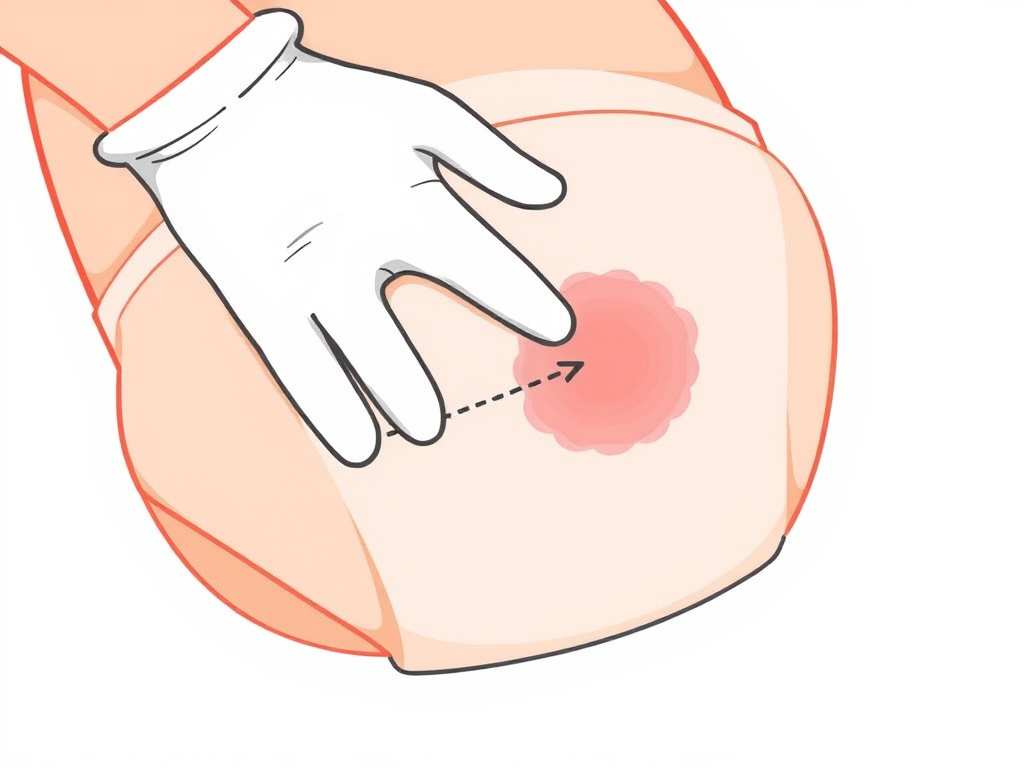
Understanding the mechanism takes the mystery out of it. For a yeast diaper rash, the fungus spreads via a simple chain of contact.
- Skin-to-Skin Transfer: The most direct route. Candida cells from the active rash are transferred to your hands during a diaper change. If you then touch another part of your baby’s skin, like drying their neck folds, you can inoculate that area.
- Fomite Transmission: The fungus can survive on damp towels, washcloths, bath toys, or the changing pad surface. Reusing a towel from a child with a yeast rash on a sibling is a classic way to spread it.
- Autoinoculation: The baby themselves can spread it by touching the rash and then sucking their thumb or touching their face, though this is less common.
Bacterial infections like impetigo spread even more efficiently through contact with the infected fluid or crusts. The bacteria can live on surfaces for a short time and enter new skin through tiny cuts or breaks.
This is why the standard advice for a severe diaper rash or one you suspect is fungal includes more than just cream. It includes breaking the chain of contact.
The 7-Day Rule: When to Suspect a Spreading Infection
Health regulations provide a clear, non-negotiable timeline. The official stance, reflected in labeling for products like zinc oxide diaper rash cream, is a built-in diagnostic clue.
Stop use and ask a doctor if symptoms last more than 7 days or clear up and occur again within a few days.
That’s not casual advice. It’s a regulatory requirement based on the typical healing window for simple irritant dermatitis. A rash caused solely by wetness and friction should show marked improvement within 3-4 days of diligent airing, frequent changes, and a thick diaper rash barrier cream. If it doesn’t, if it persists unchanged, worsens, or rebounds immediately after seeming to clear, the cause has likely shifted. The skin barrier is compromised, and an opportunistic yeast or bacterial infection has taken hold.
This rule transforms your observation from “Is this getting better?” to “Is this getting better on the expected schedule?”. When the answer is no, you stop guessing and seek a diagnosis. A doctor can confirm a yeast infection, often just by sight, and prescribe a targeted antifungal like nystatin or clotrimazole, which will work where over-the-counter barriers cannot.
How to Stop a Rash from Spreading
Your action plan splits in two: contain a contagious infection and protect skin from a simple irritant rash spreading due to ongoing exposure.
If you suspect a yeast or bacterial infection (Contagious):
- Doctor First: Get a diagnosis and prescribed treatment. Apply antifungal or antibiotic cream as directed.
- Hand Hygiene: Wash your hands with soap and water before and after every diaper change. Hand sanitizer is not effective against all particles on soiled hands.
- Isolate Linens: Use a separate, freshly washed towel for the infected child at every bath. Wash these towels, washcloths, and any soiled clothing in hot water.
- Clean the Environment: Wipe down the changing pad with a disinfectant after each change. Avoid shared bath water until the rash is clear.
To protect skin and prevent any rash from expanding (Irritant):
- Maximize Air Time: Let your baby go diaper-free for 10-15 minutes, 3-4 times a day. Lay them on a towel or waterproof pad.
- Apply a Heavy-Duty Barrier: At every change, after skin is completely dry, apply a thick layer of paste. You’re not rubbing it in; you’re painting it on. Look for a product with 40% zinc oxide (like Desitin Maximum Strength) or a simple petrolatum ointment. This layer acts as a literal shield between the skin and moisture.
- Change Promptly: Don’t wait for a diaper to feel full. Change wet or soiled diapers immediately.
- Gentle Cleansing: Use soft cloths with water or a fragrance-free, alcohol-free cleanser. Pat dry; never rub.
The goal of a barrier is mechanical, not medicinal. A high-percentage zinc oxide paste or pure petrolatum sits on the skin’s surface, creating an impermeable layer that stops urine and stool from making contact. This gives the skin’s natural repair mechanisms the dry, protected environment they need to heal.
Can It Spread to Other Parts of the Baby’s Body?
Yes, but again, the “how” is specific. An irritant rash will not spontaneously appear on the chest. It lacks a vector. However, a yeast infection can and does spread to other intertriginous zones, areas where skin touches skin.
Common satellite sites for a yeast diaper rash include: * The neck folds (especially in chubby infants) * The armpits * Behind the ears * The thigh folds
The environment in these folds, warm, dark, and often a bit sweaty, mimics the diaper area, allowing the transplanted Candida to thrive. If you are treating a diaper rash and notice a new, bright red rash in these other folds, it’s strong evidence the original issue was fungal and has spread. This warrants a pediatrician visit to coordinate treatment for all affected areas.
Frequently Asked Questions
Can diaper rash spread to parents or caregivers?
Common irritant diaper rash cannot. However, a yeast infection rash can spread to a caregiver’s skin, particularly if they have small cuts or breaks on their hands or if they have a compromised immune system. It can also lead to a vaginal yeast infection in women. Meticulous handwashing is the best defense.
Can a diaper rash spread to the face?
This is very uncommon. For a rash to spread to the face, the causative agent (like yeast) would need to be physically transferred there, typically by the baby’s own hands or a caregiver’s touch. While possible, the drier, more exposed environment of the face is less hospitable to yeast than skin folds. It’s more of a risk with highly contagious bacterial impetigo.
How long is a yeast diaper rash contagious?
Yeast diaper rash** is considered contagious for as long as the active lesions are present and until 24-48 hours after starting effective antifungal treatment. Once treatment begins and the rash starts to recede (loses its beefy red color and satellite lesions fade), the risk of transmission drops significantly.
Can using the wrong cream make a rash spread?
Indirectly, yes. Using only a gentle moisturizer or a low-strength barrier on a fungal diaper rash will do nothing to kill the yeast. The infection can continue to grow underneath the cream, leading to a larger, more entrenched rash. This is why identification is critical. For a suspected yeast rash, you need an antifungal agent, not just a barrier.
The Bottom Line
Most diaper rashes are messy and uncomfortable but contained. They spread only as far as the diaper’s wetness does. The real concern is the minority of rashes driven by yeast or bacteria, these are the contagious ones. Your best tools are observation and timing. Look for satellite lesions and deep red folds. Heed the 7-day rule on product labels. When basic care fails on schedule, that’s your signal to move from store-bought paste to a doctor’s prescription. Stop the infection first, then use a heavy-duty barrier like 40% zinc oxide to protect the healing skin. Keep towels separate, wash hands like it’s your job, and you’ll break the chain of spread.
