
Newborn Diaper Change Frequency: A Complete Parent’s Guide
This post contains affiliate links. As an Amazon Associate, we learn from qualifying purchases
Change a newborn’s diaper every 2 to 3 hours during the day and immediately after every bowel movement. For the first 48 hours, expect only one or two wet diapers, then 5-6 heavy wet diapers daily once your milk comes in. Legally, licensed daycare centers must check diapers at least every 2 hours.
That two-hour check is a requirement written into the childcare licensing codes of Pennsylvania, Washington, and Texas. The rule exists because a newborn’s skin barrier is about 30 percent thinner than an adult’s.Moisture and pH changes from waste break that barrier down fast. Waiting longer isn’t just uncomfortable; it’s an invitation for a rash that can set in within a single nap cycle.
What follows breaks down the schedule by age, the science behind the 2-3 hour window, and the specific exceptions for nighttime and premature babies. You’ll see why a manufacturer’s “12-hour dryness” claim is a warranty, not a care guideline, and how to spot the difference between a damp diaper and one that’s actively harming skin.
Key Takeaways
- State law mandates diaper checks at least every 2 hours in licensed childcare facilities, a solid baseline for home care.
- Change poopy diapers immediately. Stool contains enzymes that raise skin pH and can cause redness in under 10 minutes.
- In the first 48 hours, a newborn may only need changing every 4-6 hours; then expect 10-12 changes a day once feeding is established.
- Never wake a sleeping baby solely for a wet diaper change, but always check and change if soiled during a night feed.
- For preterm infants, routine diaper changes can cause significant stress, increasing heart rate in over 74% of observed cases.
The Science Behind the 2-3 Hour Window
Newborn skin is delicate and functionally incomplete. The stratum corneum, the outer protective layer, is still organizing itself.This makes it exceptionally permeable to moisture and vulnerable to irritants.
Urine is mostly water, but it also contains urea and ammonia. When urine sits against the skin, bacteria break down urea into ammonia, which raises the skin’s pH. This alkaline environment disrupts the skin’s acid mantle, its natural defensive barrier. A compromised barrier lets in more moisture and irritants, leading to inflammation—the first visible stage of diaper dermatitis.
Stool is more aggressive. It contains digestive enzymes like lipase and protease that actively break down skin lipids and proteins. This process starts on contact.
Where this goes sideways: Leaving a poopy diaper for “just a few more minutes” while you finish a task. The enzymatic activity doesn’t wait. Redness can appear in the time it takes to load a dishwasher.
The 2-3 hour guideline for wet diapers is a preemptive strike. It aims to remove the source of moisture and ammonia before pH shifts enough to damage the barrier. This interval is also the practical foundation of most official diaper change steps you’ll find in childcare manuals.
The Newborn Diaper Change Schedule (By Age & Situation)
A rigid count is less useful than understanding the physiological shifts behind the numbers. The schedule changes because your baby’s feeding, digestion, and sleep patterns do.
| Age / Phase | Wet Diapers (Daily) | Dirty Diapers | Change Frequency Guide |
|---|---|---|---|
| First 48 Hours | 1-2 | Meconium (1-2) | Every 4-6 hours |
| Newborn (1-4 weeks) | 5-6+ (heavy) | 3-4+ | Every 2-3 hours / after every feed |
| 1-6 Months | 4-6+ | Varies (1-3) | Every 3-4 hours |
| Nighttime (any age) | 1-2 | Rare after newborn | Only if soiled or leaking |
First 48 Hours: Your baby is expelling meconium and may only urinate once or twice. Their stomach is tiny, and colostrum intake is minimal. Checking diapers every 4-6 hours is usually sufficient unless you see the black, tar-like meconium, which should be cleaned promptly.
Establishment Phase (Weeks 1-4): As your milk comes in, intake skyrockets. Expect 5-6 heavily wet diapers a day and multiple yellow, seedy stools. This is the 10-12 changes a day period. The goal is to stay ahead of saturation. A good diaper fit is crucial here to contain the volume without leaks.
Older Infant (1-6 Months): Stools often become less frequent, especially in breastfed babies. The bladder capacity grows. You can move to a 3-4 hour rhythm, guided by check times rather than immediate changes for every slight dampness.
This 2023 clinical review notes that the ultimate goal of diaper care is to reduce excessive skin moisture, recommending cleansing with soft, fragrance-free wipes or water.
The transition isn’t always linear. A growth spurt means more feeding and more wet diapers. An illness can change stool consistency, demanding immediate attention. The schedule is a map, but your baby’s signals are the compass.
Reading Your Baby’s Signals (Not Just the Clock)
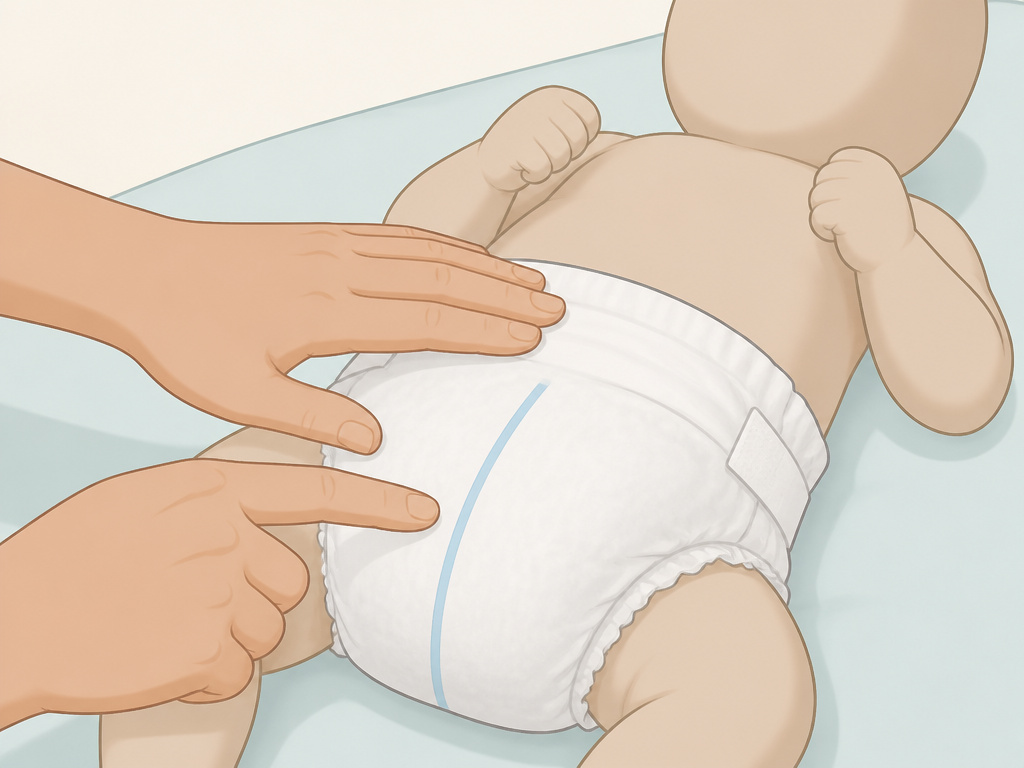 Timers are helpful, but your baby gives more specific data. Learning these signals prevents most rash episodes and missed diaper change timing.
For Wetness:
- Feel the Front: The front of the diaper will feel swollen, warm, and heavy. Many disposable diapers have a wetness indicator line that turns blue—a helpful cue, but not foolproof.
- Behavioral Cues: Some babies get fussy or pause during play when wet. Others are utterly unbothered. Note your baby’s pattern.
For Soiling:
- The Obvious Sign: The smell. Baby poop has a distinct, unmistakable odor.
- The Sound: Especially with newborns, you may hear the bowel movement during or right after a feed.
- The Grunt & Strain: It’s normal for babies to turn red and grunt while passing stool. If this is followed by a contented sigh and a suspicious aroma, investigate.
A poopy diaper is always a top-priority change. Never wait. For wet diapers, if your baby is sleeping soundly or seems completely comfortable, you can let the clock run a little longer, especially with a highly absorbent diaper. But if you see any hint of pinkness or irritation at the next change, shorten the interval.
Nighttime Changes: To Wake or Not to Wake?
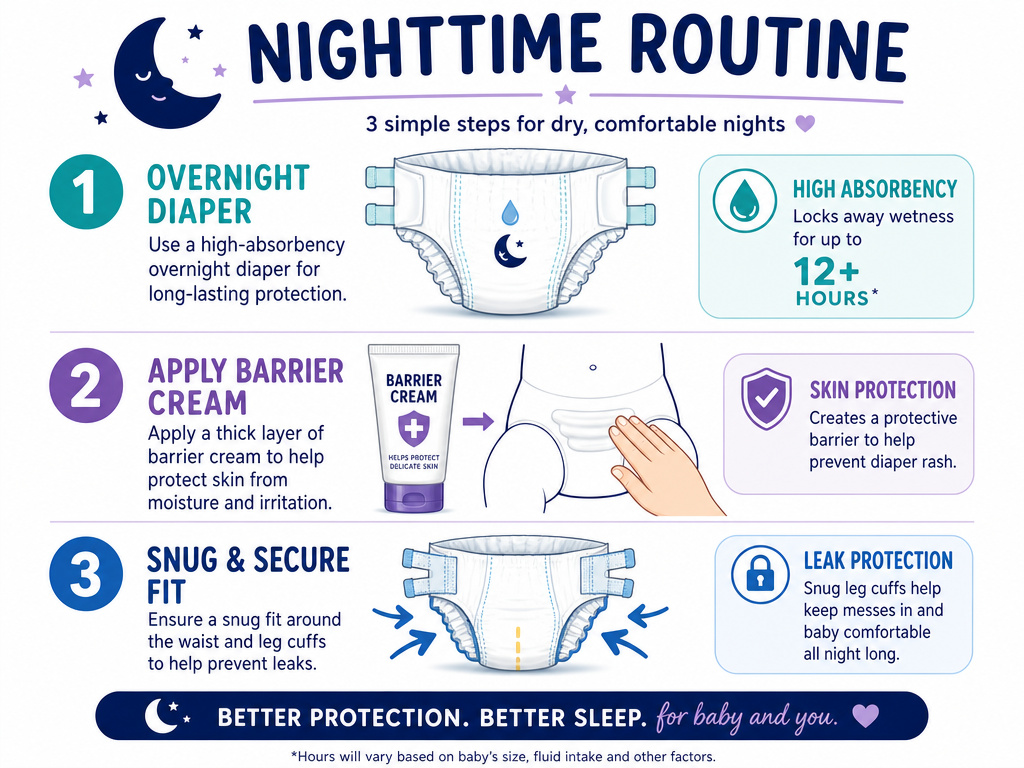 The old adage “never wake a sleeping baby” generally applies here. Sleep is critical for development and parental sanity. Disrupting it for a merely wet diaper is counterproductive.
The rule is simple: change a nighttime diaper only if it is soiled, or if your baby is awake and due for a feed. During a dream feed change, you can do a quick, quiet check and change if needed. Keep the lights low and interaction minimal to help them drift back off.
The risk of prolonged wetness at night is real, but modern diaper blowouts are often a bigger issue. To manage moisture: 1. Use a high-absorbency overnight diaper (like Pampers Baby-Dry) designed for extended wear. 2. Apply a thick layer of barrier cream like Aquaphor or a recommended diaper creams for newborns before bed to create a protective seal. 3. Ensure a snug, proper diaper fit around the legs to prevent leaks without being tight.
If your baby has active diaper rash, you may need to do one scheduled change to apply more cream. Otherwise, trust the diaper and let them sleep.
Special Considerations: Preterm Infants & Daycare Rules
Standard advice fractures when applied to vulnerable infants or regulated group settings. Here, specific protocols override general guidelines.
For Preterm or Medically Fragile Infants:
A 2022 RCT published in Advances in Neonatal Care found that diaper changes increased heart rate in over 74% of observations for preterm infants. For these babies, a change isn’t just a chore; it’s a physiologically stressful event that requires a developmentally sensitive manner.
The part nobody mentions: Bundling care—doing the diaper change, feeding, and assessment all in one slow, contained interaction—can minimize the number of stressful handling events. This is a core principle in the European newborn nappy change standard.
Daycare and Legal Requirements:
If your child is in licensed care, the schedule is partially legislated. You’re not just following best practices; you’re following law. * Pennsylvania Code § 3270.135: Staff must check a child’s diaper at least every 2 hours and change when soiled. * Washington Admin Code § 170-296A-7300: Mirrors the 2-hour check rule and adds that staff must wash the child’s hands after diapering. * Texas Admin Code § 748.1745: Requires caregivers to ensure the child is completely dry before placing a new diaper.
These exist for health, safety, and accountability. A home guide to checking a newborn’s diaper can adopt this 2-hour checkpoint as a fail-safe rhythm, even if a change isn’t always needed.
How to Change a Newborn Diaper Correctly
Frequency matters, but technique is what protects the skin. Doing it right makes each change effective.
Gather Everything First:
- Clean diaper
- Wipes (like Pampers Sensitive or water wipes)
- Barrier cream
- Changing pad
- A change of clothes (just in case)
The Steps:
- Wash your hands.
- Lay your baby on the pad and unfasten the dirty diaper.
- Use the front of the dirty diaper to wipe away the bulk of any stool.
- Hold your baby’s ankles gently and lift their bottom.
- Clean thoroughly from front to back with wipes. Get into all the skin folds.
- Let the area air dry completely or pat dry with a soft cloth. This step is non-negotiable. Applying a cream or new diaper to damp skin traps moisture.
- Apply barrier cream if needed.
- Slide the new diaper under, bring the front up, and fasten snugly but comfortably. You should fit two fingers between the diaper and your baby’s belly.
Common mistake: Rushing to close the new diaper while the skin is still damp. This creates a humid microclimate that accelerates rash development. Thirty seconds of air time is a powerful preventative.
Frequently Asked Questions
How do I know if the diaper is wet enough?
Sufficiently wet diaper will feel noticeably heavy and may have a bulging appearance. For newborns, aim for at least 5-6 diapers that feel as heavy as 2-3 tablespoons of water by day five. The wetness indicator line is a helpful tool, but the weight test is more reliable.
Should I change the diaper before or after feeding?
Check both times. A diaper change timing right before a feed can lead to spitting up if you’re putting pressure on a full tummy. Changing after a feed can fully wake a drowsy baby. The best practice is to check before the feed and change if very wet or soiled. If not, feed, then check and change again if needed before settling.
Can I use diaper cream every time?
Yes, you can use a protective cream like petroleum jelly or zinc oxide paste as a preventative barrier at every change, especially if your baby is prone to redness. It acts like a shield between the skin and moisture. For severe rash, use a thick therapeutic paste.
How does diaper fit affect change frequency?
Proper diaper fit is essential for preventing diaper blowouts** and containing moisture. If a diaper is too loose, it will leak, forcing more frequent changes. If it’s too tight, it can chafe and create red marks. The right fit seals at the legs without gaps and fastens comfortably at the waist.
Do cloth diapers need changing more often?
Typically, yes. Most cloth diapers lack the chemical super-absorbent polymers found in disposables, so they feel wet against the skin sooner. This means you might change a cloth diaper every 1.5-2 hours to keep skin dry, whereas a disposable might handle 3 hours comfortably. The upside is that this very frequency of checking often leads to fewer severe rashes.
The Bottom Line
Change your newborn’s diaper every 2-3 hours and immediately after every poop. Use the first 48 hours as a gentle ramp-up, then settle into a rhythm of 10-12 daily changes. Let nighttime sleep trump a wet diaper, but never skip a change for stool.
The two-hour rule is the intersection of skin biology and practical care, often codified into law for a reason. Your best tools are a reliable absorbent diaper, a good barrier cream, and the habit of checking diligently.Watch your baby, not just the clock, and you’ll keep them comfortable, dry, and rash-free.
