
What Is a Diaper Party? The Essential Guide to Planning One
This post contains affiliate links. As an Amazon Associate, we learn from qualifying purchases
A diaper party is a casual, often co-ed gathering where guests bring packs of diapers as gifts for expectant parents. The goal is purely practical: to stock the parents’ closet with a balanced supply of diaper sizes their baby will actually use, moving beyond the newborn stage. The concept gained a modern toolset when a founder noticed guests consistently brought too many size 1 diapers, leading to waste.
That last point is the whole reason the party works. Without a plan, you get a mountain of size 1 diapers and nothing for the three-month growth spurt. The modern version uses a simple spreadsheet or online registry to coordinate who brings what size, turning a nice idea into a genuinely useful stockpile.
What follows: the real origin story that exposed the flaw, a step-by-step breakdown of how to run one without the clutter, and the three rules that separate a helpful gift from a soon-to-be-donated box.
Key Takeaways
- The core problem a diaper party solves is imbalanced gifting: without coordination, guests overload on newborn (NB) and size 1 diapers, leaving gaps for larger sizes the baby will wear for months.
- Use a simple coordination tool—a shared spreadsheet or a site like Diaper-Party.com—to let guests claim which sizes they’ll bring. This crowdsources a balanced inventory.
- Diaper sizing is based on a baby’s weight, not age. A baby can outgrow the newborn size within weeks, but will wear size 4 or 5 for many months. Gift for the future.
- The party itself is intentionally low-key. It’s often held at a home, backyard, or brewery, focused on socializing, not traditional baby shower games.
- Pairing diaper gifts with a diaper bag stocked with essentials creates a complete support package for the new parents.
The Real Problem Diaper Parties Solve
A diaper party isn’t just a cute theme. It fixes a specific, wasteful failure in traditional gifting. People want to help, but they default to the smallest sizes they can picture.
The founder of Diaper-Party.com spotted this after researching gifts for his friend’s party. He read that guests commonly brought too many newborn and size 1 diapers. His solution was a shared spreadsheet where guests could log the sizes and quantities they planned to bring, letting everyone see what was still needed. This turned a guessing game into a coordinated supply chain.
Without a plan, a diaper party yields a pile of size 1 diapers and a panicked store run at 3 a.m. When the baby hits 12 pounds. Coordination is the difference between a thoughtful gift and a storage problem.
The waste isn’t just about excess. It’s about mismatch. A typical baby might use newborn diapers for only the first few weeks. They’ll then wear size 3, 4, and 5 for several months each. A gift of size 4 diapers delivered at the party is a gift the parents won’t need for four months, but it’s a gift they will 100% use. That’s the shift in thinking.
Why Sizing Is Everything (And Weight Is the Rule)
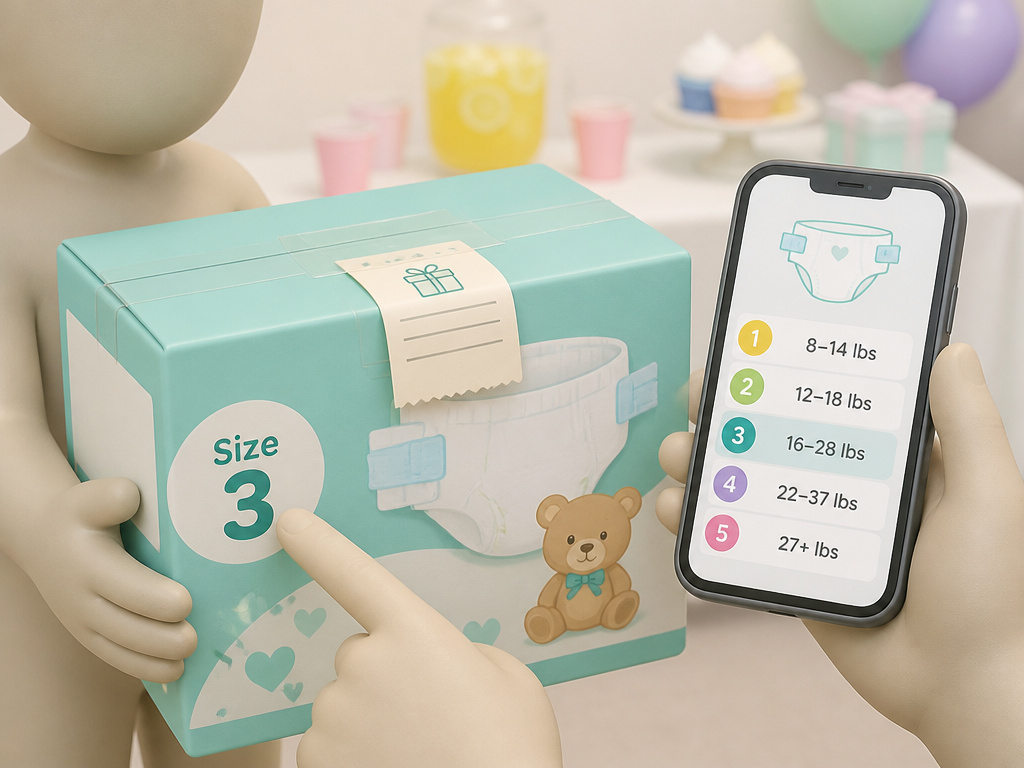
Diaper sizing follows a child’s weight, not their age or a calendar. The Chinese national standard GB/T 28004.1-2021 classifies them as newborn (NB), small (S), medium (M), large (L), extra large (XL), and extra extra large (XXL), with each size tied to a weight range.
| Size Label | Typical Weight Range | Approximate Age Duration |
|---|---|---|
| Newborn (NB) | < 10 lbs (< 4.5 kg) | First 2–4 weeks only |
| Size 1 | 8–14 lbs (3.5–6.5 kg) | 1–4 months |
| Size 2 | 12–18 lbs (5.5–8 kg) | 3–8 months |
| Size 3 | 16–28 lbs (7–13 kg) | 5–24 months |
| Size 4 | 22–37 lbs (10–17 kg) | 18–36+ months |
The duration column is the key. A baby rockets through the lower weights but plateaus in the toddler ranges. Gifting for the plateau stages—sizes 3 and 4—provides the most utility. This is the core logic any coordination tool should promote.
How a Modern Diaper Party Actually Works
Forget complicated themes. The modern diaper party has two components: the coordination tool and the casual event. The tool does the heavy lifting so the event can just be fun.
First, set up the registry. This can be a Google Sheet with columns for Size, Quantity Needed, and Claimed By. Or use a dedicated site that automates this. Share the link with the guest list. The rule is simple: you claim a size, you update the sheet. This is what prevents the size 1 avalanche.
Second, communicate the “why.” When you invite people, explain the system. A short note does it: “We’re using a simple spreadsheet to make sure little Jamie has diapers for the whole first year. Please check it out and claim a size before you shop!” This frames the coordination as part of the help, not an extra chore.
The party itself is straightforward. 1. Venue: A backyard, a garage, a local brewery. Casual is the point. 2. Food and drink: Grilling, pizza, a cooler of drinks. No fuss. 3. Activity: Socializing. Maybe a onesie-decorating station if you want one activity. 4. The gifts: A designated table for the diaper boxes. That’s it.
The goal is to leave with a stacked closet, not a pile of duplicate receiving blankets. The event is the celebration; the spreadsheet is the engine.
Where this goes sideways: Skipping the coordination tool because it feels too formal. The result is five guests each bringing a 96-count box of size 1 diapers. The parents will donate four of those boxes before the baby is two months old.
What to Gift Beyond the Diaper Box
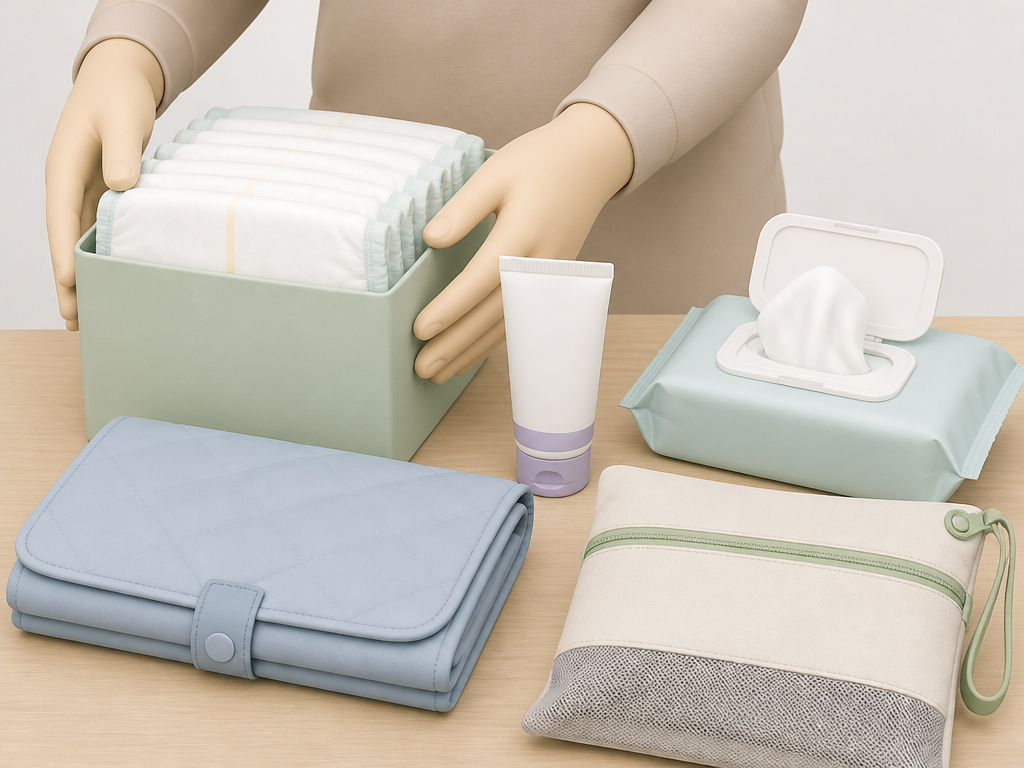
Diapers are the star, but the supporting cast matters. Think of gifts that pair with the diapers to create a complete changing system or that aid the parents directly.
The Essentials Pile:
- Diaper Cream: A full-size tube of a trusted brand like Aquaphor or Desitin. One tube lasts months.
- Wipes: A bulk box of unscented, sensitive skin wipes. You can never have too many.
- Diaper Pail Refills: If you know the parents’ pail model, a box of refill bags is a deeply appreciated gift.
- Changing Pad Liners: A pack of disposable or washable liners makes middle-of-the-night changes cleaner.
The “Next to the Diapers” Gear:
A great diaper bag is a game-changer. It’s the mobile command center. Gifting a well-organized bag, or items to stock one, is a logical extension of the diaper theme. Consider adding a portable changing pad, a wet/dry bag for soiled clothes, or a compact wipes case.
This approach moves the gift from a single consumable to a functional kit. It shows you’ve thought about the entire process, not just the item on the registry list.
The Unspoken Rules: Etiquette for Guests and Hosts
A diaper party bends some traditional baby shower rules. Clarity prevents awkwardness.
For Guests:
- Follow the Registry. The whole point is coordinated sizing. If the spreadsheet asks for size 3, buy size 3. Do not decide size 1 is “cuter.”
- Gift Receipts Are Mandatory. Include a gift receipt with every box. Sizes are a guess, and babies grow unpredictably. This allows for easy exchange.
- Spend What You’re Comfortable With. A large box of store-brand diapers is as helpful as a small box of premium brand. The utility is in the volume and correct size.
- Consider a “Diaper Fund” Contribution. Some registries allow cash contributions specifically for diapers. This lets the parents buy sizes as needed, which is the most flexible help of all.
For Hosts (or Expectant Parents):
- Provide Clear Size Guidance. Don’t just share a spreadsheet. Include a link to a simple diaper size chart or note the baby’s current weight/estimated future weight.
- Stock the Party for Adults. Have ample food, drinks, and seating. The gift is diapers, but the experience should be enjoyable for the guests.
- Send Thank-You Notes Specific to the Gift. “Thank you for the box of Size 4 diapers! We know they’ll be perfect this fall.” It confirms the gift was noticed and will be used.
These rules keep the focus on practical support. They acknowledge that the best gift is one that doesn’t create extra work for the recipient.
Frequently Asked Questions
Are diaper parties only for dads?
No. While sometimes framed as a “dad-friendly” alternative to a baby shower, modern diaper parties are often co-ed. The focus is on a casual, inclusive gathering to provide practical help. Anyone can host or attend one.
How many diapers should I bring to a diaper party?
Aim for one large box (often 100+ count) or two smaller packs of the size you claimed on the registry. The total value is typically in the $25-$50 range. The quantity is less important than adhering to the requested size.
What’s the difference between a diaper party and a baby shower?
Baby shower is a more traditional, often women-centric event with games, themed decorations, and a wider registry of gifts (cribs, strollers, clothes). A diaper party is minimalist: the stated gift is diapers, the decor is casual, and the vibe is like a standard party with a purpose.
Can I bring clothes or other baby items instead?
It’s best to ask the hosts. The entire premise is building a diaper stockpile. Bringing a different item, however thoughtful, can undermine the collective effort. If you want to give more, add a pack of wipes or a tube of cream to your diaper box.
Do I need to wrap the diaper boxes?
It’s not necessary. Many guests simply bring the box as-is, sometimes with a bow or gift tag attached. If the party has a “display table,” unwrapped boxes are easier to sort and inventory. Check the invitation for any specific preference.
The Bottom Line
A diaper party works when it treats gifting as a logistics problem. The sentimental part is the gathering; the practical part is the spreadsheet that ensures no size is forgotten. The goal isn’t to get the most diapers, but to get the right diapers spread across the sizes a baby actually needs.
Start with a coordination tool. Guide your guests toward sizes 2, 3, and 4. Pair the diapers with wipes and cream. Keep the event simple. You’ll give the parents a real stockpile that lasts for months, not just a photo-op pile that gets donated next week. That’s the whole point.
