
What Is a Diaper Pail | The Odor Control Systems Explained
This post contains affiliate links. As an Amazon Associate, we learn from qualifying purchases
A diaper pail is a specialized trash can designed to contain the odor of dirty diapers. It uses one of three core systems: a proprietary bag that individually wraps each diaper, a mechanical seal that isolates the bin’s contents, or a UVC light that sanitizes the air inside. The right one depends on whether you prioritize odor control, cost per use, or ease of cleaning.
That isolation is the whole point. A standard kitchen trash can lets odor molecules drift out every time you open the lid. A diaper pail is built to trap them, either physically or chemically, turning a daily chore from a nose-wrinkling event into a neutral task.
What follows is a breakdown of how each system actually works, where they fail, and the real trade-offs between a plastic pail with custom bags and a steel one that takes any liner. You’ll know which type fits your nursery by the last section.
Key Takeaways
- Diaper pails control odor through bagging, sealing, or sanitizing. Proprietary bag systems (like Diaper Genie) wrap each diaper individually. Seal systems (Ubbi, Momcozy) rely on airtight lids. Sanitizing systems (Munchkin UV) use UVC light to neutralize odor-causing bacteria.
- Steel pails resist odors but rust if cleaned wrong. A steel body like the Ubbi’s doesn’t absorb smells like plastic can, but its manual explicitly warns that liquid cleaners can cause rust on thin paint edges, limiting your sanitation options.
- “Takes any bag” is a cost-saver, but may weaken the seal. Pails that use standard 13-gallon bags are cheaper to run, but their odor lock often depends on a perfect mechanical seal at the lid—one that can fail if the bag is overstuffed or installed loosely.
- UVC lights have a finite lifespan and specific operating limits. The Munchkin UV pail’s UVC LEDs are rated for 3000 hours and only function within a strict temperature (32–104°F) and humidity (5–90% RH) range. Outside those bounds, the sanitizing feature simply stops.
How Does a Diaper Pail Work? The 3 Main Systems
The mechanism is everything. It decides how well the pail contains smells, how much you’ll spend on refills, and how often you’ll need to deep-clean the unit itself.
A diaper pail functions by creating a physical or chemical barrier between the soiled diapers and the room’s air. This is achieved through a dedicated clamping and wrapping mechanism, a multi-point airtight seal, or a bactericidal UVC light array, each with distinct maintenance and cost implications.
The first and most common system uses a proprietary refill bag. You load a long, pleated tube of plastic film into the pail. When you insert a diaper, an internal mechanism clamps, twists, or seals the film around it, creating an individual pod. Brands like Diaper Genie perfected this. The upside is potent odor isolation. The downside is that you’re locked into their refills, which cost more over time than standard trash bags.
The second system relies on a heavy-duty mechanical seal. Think of the Ubbi Steel Diaper Pail or the Momcozy Triple-Seal. These use a tight-fitting lid, sometimes with a rotating internal gate or a sliding door, to create an airtight chamber. They work with any standard tall kitchen bag. The odor control lives entirely in the seal’s integrity. If the lid doesn’t snap shut fully, or if the bag gets in the way, smells escape.
The third system adds active sanitization. The Munchkin UV Diaper Pail includes a ring of UVC LEDs inside the lid. After you close it, the light runs a 2-minute cycle, aiming to kill odor-causing bacteria on the diaper surface and in the air inside the pail. It’s a high-tech approach, but it introduces electronics, power requirements, and a light component with a 3000-hour rated lifespan.
Steel vs. Plastic: The Cleaning Trade-Off You Can’t Ignore
The body material isn’t just about looks. It dictates how the pail interacts with odors over the long term and, critically, how you’re allowed to clean it.
Plastic, used by Diaper Genie and many others, is lightweight and inexpensive. The problem is that plastic is porous. Even high-density polyethylene can absorb odor molecules over months of use. That’s why a well-used plastic pail can develop a faint background smell even when empty. Cleaning it requires strong disinfectants or baking soda soaks to pull those embedded odors out.
Steel, like the Ubbi pail, is non-porous. Odors don’t sink into the metal itself. This gives it a natural advantage for long-term smell containment. However, that advantage comes with a strict cleaning caveat.
Where this goes sideways: Cleaning a steel pail with spray detergent or liquid. The Ubbi manual states this can cause rust, particularly on thin edges where the paint may not have fully adhered. You’re left wiping it down with a damp cloth, which might not feel sanitizing enough after a year of diapers.
Your choice here is between a material that might hold a smell but can be scrubbed aggressively, and a material that resists smells but can be damaged by aggressive cleaning. There’s no perfect answer, just a trade-off you should see coming.
The Real Cost of “Convenience”: Proprietary Bags vs. Standard Liners
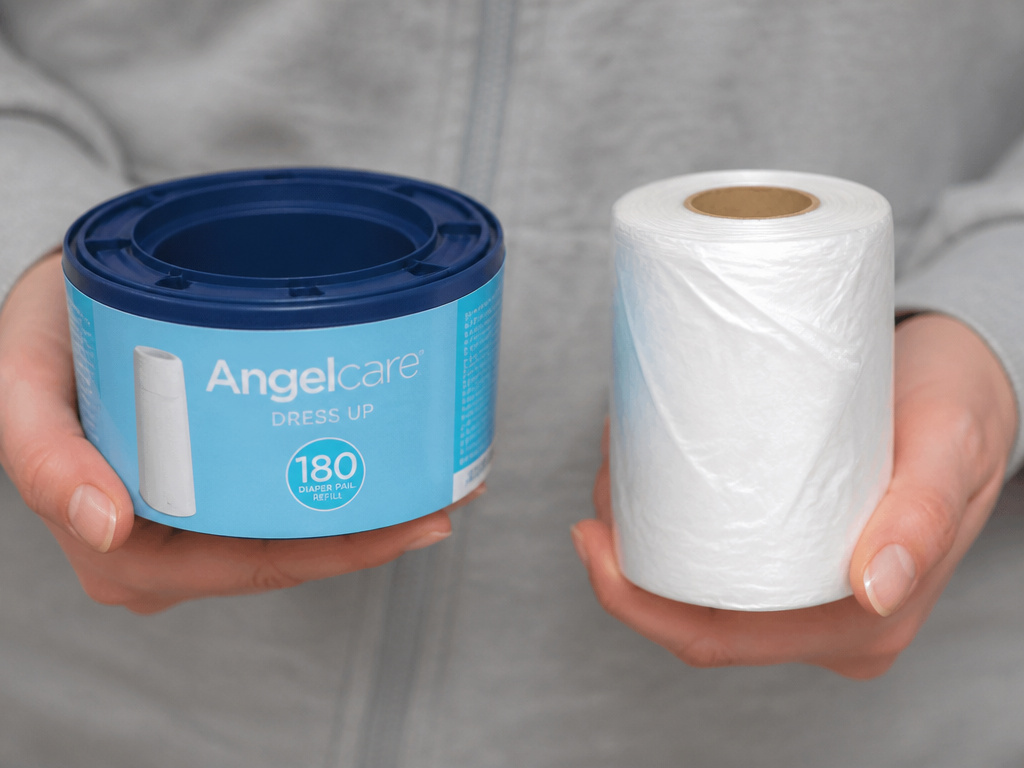 The refill is where the long-term math hits your wallet. Pails fall into two camps: those that require their own brand-specific refill cassettes and those that accept any standard tall kitchen bag.
Bag-System Pails (Diaper Genie, some Munchkin models)
- How it works: You buy a cartridge of continuous plastic film. The pail’s mechanism wraps and seals each diaper in a segment of this film.
- Pro: Excellent odor isolation. Each diaper is individually encapsulated.
- Con: Ongoing cost. You must buy their refills, which are priced higher per use than standard bags.
- Hidden catch: If the mechanism jams, you often need to buy a specific replacement part or follow a precise troubleshooting routine to fix a Diaper Genie.
Standard-Bag Pails (Ubbi, Momcozy, Diaper Champ)
- How it works: You line the pail with any 13-gallon drawstring or tall kitchen bag.
- Pro: Low running cost. You can use any cheap, grocery-store bag.
- Con: Odor control is weaker. It relies entirely on the pail’s lid seal and how tightly you tie the bag.
- Hidden catch: Some features only work with specific bags. The Momcozy Triple-Seal’s “innovative garbage bag closure feature” only functions with drawstring bags—use a plain bag and you lose that seal assist.
| Pail Type | Odor Control Method | Bag Cost | Main Risk |
|---|---|---|---|
| Proprietary Bag System | Individual wrapping & sealing | Higher, recurring | Mechanism jam; locked into brand refills |
| Standard Bag System | Airtight lid seal | Low, flexible | Seal failure from overfilled or poorly installed bag |
| UVC Sanitizing System | Light kills odor-causing bacteria | Moderate (may use standard or proprietary) | LED lifespan (3000 hrs); strict operating environment required |
The convenience of a bag system has a price tag attached every month. The freedom of using any bag puts the onus on you to install it perfectly every time. Neither is free.
What to Look For When You’re Buying
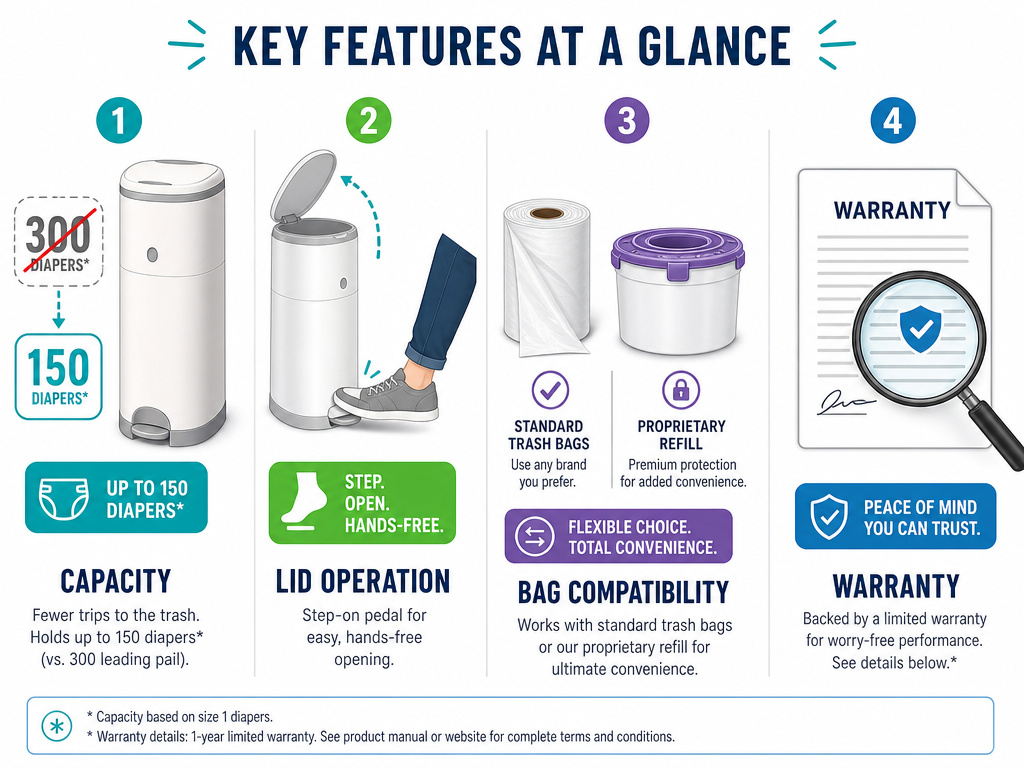 Cut through the marketing by focusing on four tangible specs: capacity, lid operation, bag compatibility, and the warranty’s fine print.
Capacity Claims Are Optimistic. A pail advertised to hold “up to 300 newborn diapers” will hold far fewer size-5 diapers. Furthermore, overstuffing any pail is the fastest way to break its seal or jam its mechanism. Plan to empty it every 2-3 days regardless of the claimed capacity. This regular disposal is, ironically, the best odor-control practice of all.
Lid Operation is a Daily Touchpoint. Do you want a foot pedal for hands-free use? A sliding lid you push with your elbow? This seems minor until you’re holding a wiggling baby and a dirty diaper. Test the motion in-store if you can. A stiff pedal or a lid that doesn’t stay open is a daily annoyance.
Bag Compatibility is a Budget Item. Verify whether the pail needs a specific refill or takes standard bags. If it uses standard bags, check the manual for details—some, like the Momcozy, work best with drawstring types. Knowing this upfront prevents frustration and extra costs, especially when you need to change the bag at 2 a.m.
Warranty Length Tells a Story. A one-year limited warranty, like the Munchkin UV pail’s, is standard. The critical part is what it doesn’t cover: misuse, accidents, or environmental exposure. If you place the pail in a humid bathroom outside its operating range (5–90% RH), or use the wrong cleaner on a steel model, you’ve likely voided the coverage. Read the manual.
UVC Technology: How the Munchkin UV Pail Works (and Where It Stops)
The Munchkin UV Diaper Pail represents the high-tech edge of this category. It combines a standard bag system with an ultraviolet-C light array. Understanding its limits is key to knowing if it’s right for you.
The UVC LEDs are mounted in a ring inside the lid. When you close the lid after inserting a diaper, the light activates for a 2-minute sterilizing cycle. The intent is to disrupt the DNA of bacteria and microbes on the diaper surface, neutralizing them before they can produce odors.
The Munchkin UV pail’s UVC LEDs have a rated life of 3000 hours. If you run three 2-minute cycles per day, that’s about 8.2 years of use. But that lifespan assumes operation within the specified temperature (32–104°F) and humidity (5–90% RH) limits printed in the manual.
This introduces dependencies that simpler pails don’t have. The pail must be plugged into a USB-C power source. It shouldn’t be kept in a garage or porch where temperatures dip below freezing or soar above 104°F. The sanitizing feature is an extra layer, not a replacement for a good bag and seal. If the bag leaks or the lid is left ajar, the UVC light can’t compensate.
It’s a clever solution for parents who want the maximum possible odor-fighting tech. Just know that tech has its own rules and a finite lifespan, turning the pail into a semi-durable appliance rather than a simple bucket.
Frequently Asked Questions
Do you really need a diaper pail?
You don’t need one, but it’s a powerful convenience tool. A standard trash can will work. A dedicated diaper pail, however, is engineered to contain the intense, biological odor of dirty diapers far more effectively. For small spaces like a nursery or an apartment, the difference in air quality is noticeable. For a full breakdown of the pros and cons, our article on whether you need a diaper pail digs deeper.
Can you use regular trash bags in a diaper pail?
It depends on the model. Pails like the Ubbi Steel Diaper Pail, Momcozy Triple-Seal, and Baby Trend Diaper Champ are designed to use any standard 13-gallon tall kitchen bag. Pails that use a proprietary wrapping system, like most Diaper Genie models, require their specific refill cartridge to function at all.
How often should you empty a diaper pail?
Every 2 to 3 days is the practical sweet spot. Even the best odor-control systems are overwhelmed by a week’s worth of diapers. More frequent emptying is the single most effective thing you can do to prevent smells. This also reduces the weight and mess when you finally replace the liner.
How do you stop a diaper pail from smelling?
First, empty it regularly. Second, ensure the bag is installed correctly and the lid is sealing completely—a common point of failure. Third, clean the pail itself monthly. For steel pails, wipe with a damp cloth (avoiding liquid cleaners). For plastic, wash with mild soap and water or a baking soda paste. Our general diaper pail cleaning guide has step-by-step methods.
What’s the difference between a Diaper Genie and an Ubbi pail?
The core difference is the odor-control system and bag compatibility. A Diaper Genie uses a proprietary refill that wraps each diaper individually. An Ubbi pail uses a mechanical, airtight seal and works with any standard trash bag. The Diaper Genie offers potentially better odor isolation per diaper; the Ubbi offers lower long-term cost and no lock-in to specific refills. Learning how a Diaper Genie works versus using an Ubbi highlights the daily experience.
Are diaper pails a safety hazard?
They can be, like any container with a lid. The primary risk is to curious toddlers who could climb in or get trapped. Always place the pail out of a child’s reach. Choose a model with a secure, potentially lockable lid. As a Consumer Reports diaper pail guide has noted, a secure lid is a non-negotiable safety feature.
Before You Go
A diaper pail is a tool for managing a specific, recurring mess. Its value isn’t magic; it’s in a deliberate design choice to trap smells where a regular can won’t.
Your decision boils down to a simple axis: pay more over time for a wrapped-bag system that offers strong, convenient odor control, or pay less upfront for a sealed-bin system that demands more precision from you on bag installation and lid closure. The high-tech UVC option adds a sanitizing layer for those who want it, with the understanding that it brings electronic dependencies.
For most households, a steel pail like the Ubbi that takes standard bags strikes the best balance of odor resistance, cleanability, and cost. Just remember to wipe it, not spray it. And empty it before it’s full. That last part is the rule that makes any pail work.
