
How Potty Training Can Cause Sleep Regression In 2 Weeks
This post contains affiliate links. As an Amazon Associate, we learn from qualifying purchases
Yes, potty training can cause a temporary sleep regression. The cognitive load, routine changes, and anxiety of learning this new skill commonly lead to increased night wakings, bedtime resistance, and nap refusal for 2 to 4 weeks. This is a short-term disruption, not a permanent change, and it settles as the child masters the daytime skill. Nighttime dryness, however, is a separate biological process controlled by hormones like vasopressin and cannot be rushed by daytime training.
The 2 to 4 week timeline isn’t a guess. It’s the pattern that emerges when you track real parent reports against the developmental science. The regression happens because you’re asking a toddler’s brain to manage a brand-new, high-stakes physical awareness during the day, and that heightened state doesn’t just switch off at bedtime.
What follows is the breakdown of why it happens, how long it typically lasts, and the specific, non-punitive moves that get you through it without derailing either sleep or potty progress. We’ll look at the evidence on short-term disruptions, the critical difference between daytime skill and nighttime biology, and when a sleep problem might signal something else.
Key Takeaways
- Potty training sleep regression usually lasts 2 to 4 weeks, resolving as the daytime skill becomes automatic.
- Nighttime dryness is governed by the hormone vasopressin, not daytime training; pushing it can prolong wetting.
- Avoid “lifting” (carrying a sleeping child to the toilet), it creates a habit, not true bladder awareness.
- Keep nighttime potty trips boring, dark, and quiet to minimize full wake-ups and protect sleep cycles.
- A consistently dry morning diaper for 2-3 weeks is the only reliable sign of physical readiness for night training.
How Potty Training Disrupts Sleep
Potty training isn’t just learning to use the toilet. It’s a massive cognitive and behavioral overhaul. A toddler must recognize internal bodily signals, interrupt play to act on them, manage clothing, and coordinate with a new piece of furniture, all while facing the social pressure of getting it right. That’s a lot of brainpower for a two- or three-year-old.
This mental load directly collides with sleep. The brain processes and consolidates new skills during sleep, which can make rest more active and fragmented. The anxiety of possibly having an accident can also fuel bedtime stalling or cause a child to wake up worrying they’re wet.
Where this goes sideways: Assuming the bedtime “I need to go” calls are always genuine stalling. Sometimes it’s real anxiety. Always take them, but make the trip a zero-reward, functional event.
The disruption has a predictable shape. In one community report, a parent noted a “ROUGH night of sleep Thursday” after starting training on Wednesday, but the child “slept fine last night (Friday).” This mirrors the common pattern: an acute spike in disruption in the first few days, followed by a gradual return to baseline over the next couple of weeks as the novelty and stress diminish.
The Science of Sleep Consolidation vs. Skill Learning
Sleep and new learning are intimately linked. The American Academy of Sleep Medicine’s practice parameters on bedtime problems note that night wakings in young children can represent a regression in behaviors associated with the neurodevelopmental process of sleep consolidation. When you introduce a major new skill like potty training, you’re temporarily asking the brain to prioritize processing that skill over maintaining perfect sleep consolidation. It’s a trade-off, not a failure.
Daytime Skill vs. Nighttime Biology: The Vasopressin Divide
This is the most critical concept for parents to grasp, and most general advice glosses over it. Daytime potty training is a learned skill. Nighttime dryness is a biological milestone.
They are controlled by different systems. Daytime training relies on cortical awareness, the conscious brain recognizing a full bladder and choosing to hold it until reaching the toilet. Nighttime dryness depends on two primary factors: 1. The body’s production of vasopressin (the antidiuretic hormone), which reduces urine output overnight. 2. The ability to sleep through the sensation of a full bladder or to wake up to it.
You cannot teach a hormone to mature. The NHS and pediatric urologists stress that parents cannot “train” nighttime dryness; they can only wait for the child’s body to develop the capacity. This is why a child can be fully day-trained for months or even years before staying dry overnight.
| Aspect | Daytime Potty Training | Nighttime Dryness |
|---|---|---|
| Primary Control | Learned skill, conscious control | Biological maturation, hormone (vasopressin) |
| Can it be taught? | Yes, through practice and reinforcement | No, it develops on its own timeline |
| Key Readiness Sign | Shows interest, can follow instructions, stays dry for ~2 hours | Wakes up with a dry or nearly dry diaper for 2-3 consecutive weeks |
| Common Age Range | 18 months – 3+ years | 3 years – 5+ years (considered normal up to age 5) |
Pushing nighttime training before the body is ready is a recipe for frustration, sleep disruption, and can even create lasting bladder issues. The single best indicator is the morning diaper. If it’s consistently heavy, the body isn’t producing enough vasopressin yet. Full stop.
Protecting Sleep During Potty Training
You can manage the short-term regression without sacrificing progress. The goal is to lower the overall stress load on your toddler’s system.
First, defend the bedtime routine. Keep everything else as consistent as possible. If the pre-bed potty trip is new, make it the very last step, right after stories, right before lights out. This minimizes stalling opportunities and creates a clear “business then sleep” sequence.
Handle nighttime calls strategically. If your child calls out after bedtime, take them. But make the trip utilitarian: use a dim red night light, no talking, no play, straight back to bed. You’re acknowledging the need without making it an interesting middle-of-the-night adventure. This approach helps everyone return to sleep faster.
Skip “Lifting.” Carrying a sleeping child to the toilet before you go to bed is a common tactic. The evidence suggests it’s counterproductive. Lifting doesn’t teach the brain to recognize the bladder signal during sleep; it just empties the bladder on your schedule. This can accidentally train the bladder to empty at that time, and if you miss a night, you get a wet bed. It also risks fully waking the child, fracturing their sleep.
The part nobody mentions: A child who is truly ready for nighttime dryness will often start waking up on their own to go. Your job is to make the path to the toilet safe and easy, not to become their bladder alarm clock.
When to Start Night Training (And When to Wait)
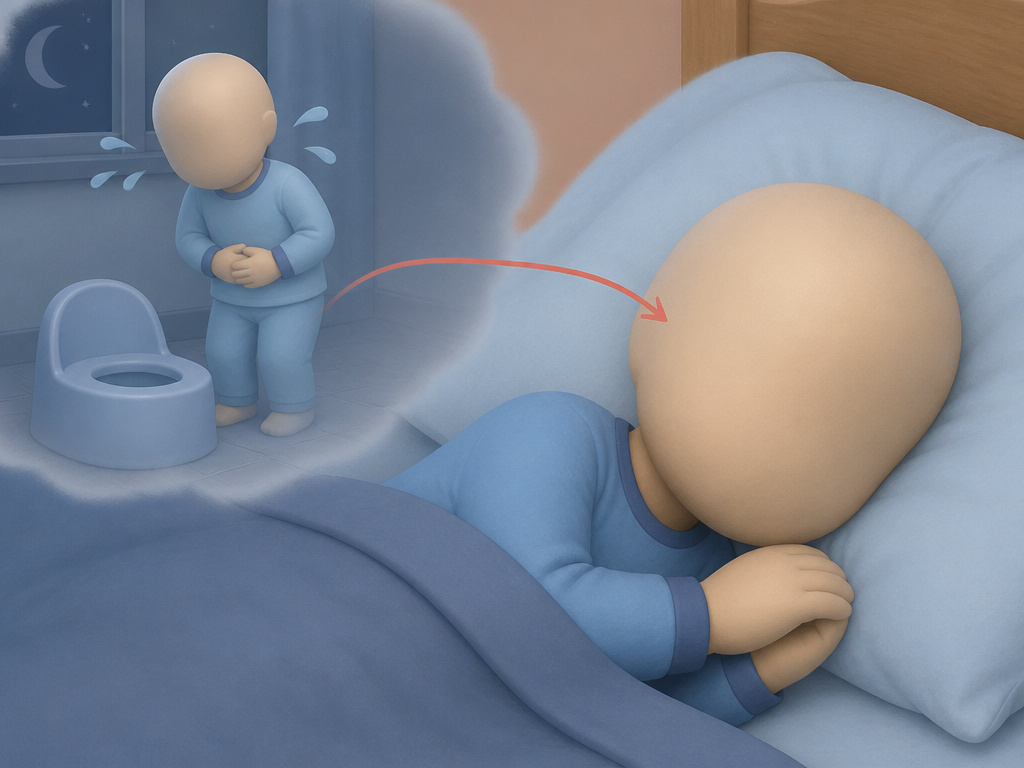
The transition out of night diapers should be led by the child’s body, not the calendar. Rushing it is one of the biggest sources of prolonged sleep problems.
The Green Light: When the morning diaper is dry or only slightly damp for a solid 2-3 weeks, you can try switching to training pants or underwear at night. This is a signal the vasopressin system is kicking in. Use a waterproof mattress protector and keep the routine low-pressure.
Pump the Brains If:
- The morning diaper is consistently wet.
- Your child is under 3 years old and daytime training is still new.
- There’s a major life change happening (new sibling, moving, starting preschool).
- Sleep is already disrupted for other reasons.
A peer-reviewed study on toilet training readiness found that “dry after nap” was only present in 46% of children who had completed training, underscoring that even nap dryness isn’t a universal prerequisite. Night dryness is even less connected. The same study created a model with a 0.97 Area Under the Curve (AUC) for predicting success, heavily weighted on developmental signs like following instructions and showing interest, not on age or nighttime dryness.
Is It Sleep Regression or Something Else?
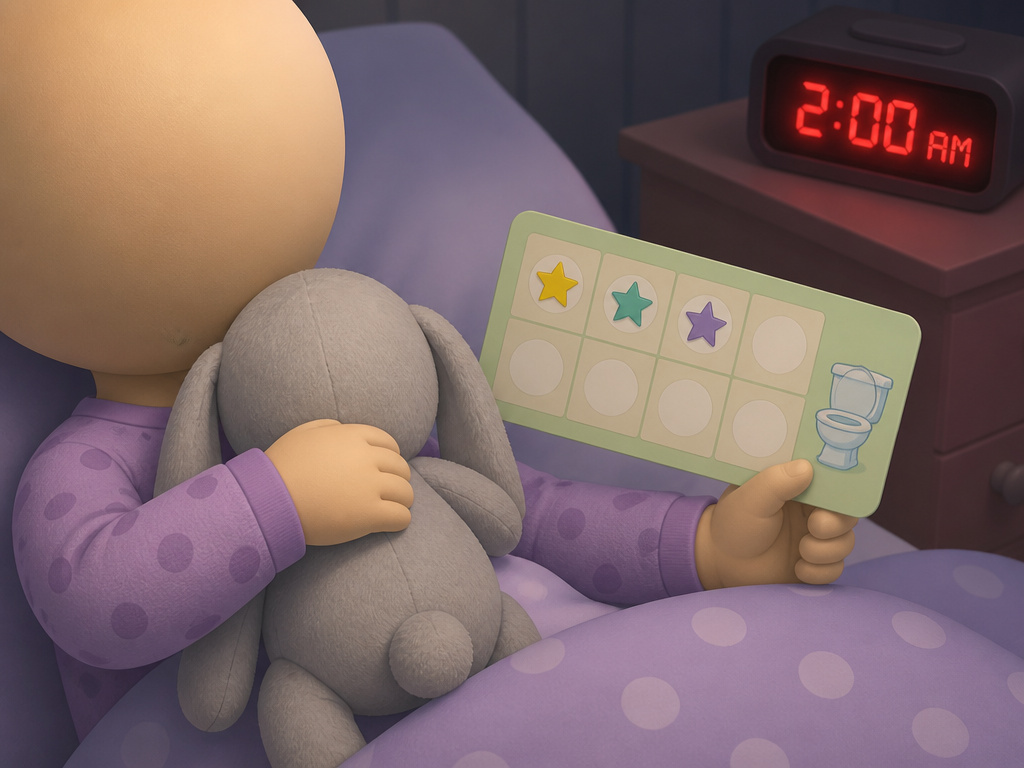
Most potty-training sleep issues resolve within a month. If problems persist or intensify, it’s time to look deeper.
Consider a potty training regression. Sometimes daytime accidents return, often due to stress, a change in routine, or a power struggle. This can absolutely spill over into sleep anxiety. Our guide on sudden accidents in potty-trained children dives into the common causes.
Rule out medical causes. Secondary enuresis, starting to wet the bed again after six months of dryness, warrants a chat with your GP. Common culprits include urinary tract infections (UTIs) or constipation, which can put pressure on the bladder and disrupt sleep.
Evaluate overall stress. Is the potty training method itself creating too much pressure? A stubborn toddler might dig in their heels, turning bedtime into a battleground. If the process feels fraught, it might be worth pausing or trying a more playful, fun potty training approach to lower the temperature for everyone.
Frequently Asked Questions
How long does sleep regression from potty training last?
The acute phase is usually a few days, with residual effects like occasional night waking or stalling tapering off over 2 to 4 weeks. If sleep isn’t improving after a month, look for other stressors or consider whether your child is genuinely ready.
Should I wake my child to pee at night?
No. Waking them interrupts their sleep cycle and doesn’t teach nighttime bladder control. It creates a dependency on you to empty their bladder. True readiness is when their body either holds urine all night or wakes them up naturally.
My 4-year-old is day-trained but still wets the bed. Is this normal?
Yes. The NHS considers bedwetting within the normal range up to age 5. Around 25% of 4-year-olds aren’t reliably dry at night. Focus on reducing shame, using protective bedding, and waiting for vasopressin levels to rise. Consult a GP if it continues past age 5 or starts suddenly after a long dry period.
Can I use rewards for staying dry at night?
Proceed with caution. Nighttime dryness is not a behavior they consciously control, so rewarding it can be confusing and frustrating if they fail. Rewards are better suited for daytime cooperation, like sitting on the potty or trying to go. For night training, praise a dry morning calmly, but don’t punish a wet one.
Do sleep training methods work during potty training?
Be cautious. This is a period of high cognitive load and potential anxiety for your child. An academic sleep training resource from BASIS notes that methods focusing on managing crying break a biologically ingrained survival link, and the effects during a major developmental push like potty training are unknown. Prioritizing comfort and responsiveness during this temporary phase is often more effective than strict sleep training protocols.
The Bottom Line
Potty training causes sleep regression because learning is hard work, not because you’re doing it wrong. The timeline is short, measure it in weeks, not months. Your two main jobs are to separate the daytime skill from the nighttime biology in your own mind, and to keep the nighttime environment boring and supportive.
Protect the sleep you can, ride out the temporary disruption, and let go of the idea that you can train the night. Dryness will come when your child’s body is ready. Until then, a good high-absorbency nighttime diaper is not a setback; it’s a tool that guarantees everyone gets the rest they need to tackle the daytime lessons.
