
What is Diaper Rash Cream | The 40% Zinc Oxide Rule
This post contains affiliate links. As an Amazon Associate, we learn from qualifying purchases
Diaper rash cream is a topical ointment, paste, or cream containing barrier agents like zinc oxide (1-40%) or petroleum jelly. It works by coating clean, dry skin to block moisture and irritants from urine and stool, giving the skin underneath time to heal. For mild irritant rashes, apply a thick layer with every diaper change; if the rash doesn’t improve within 7 days, shows blisters, or spreads, it’s likely infected and needs a doctor.
That 7-day window is the line between a simple irritation you can manage and a problem that needs a different approach. Most parents reach for the cream when they see redness, but the ingredient concentration and the rash’s cause decide whether it helps or just sits there.
What follows: the three things any cream must do, the regulatory specs that explain why some work better, the debate over removing the old layer, and the signs that mean you need a prescription, not a thicker coat.
Key Takeaways
- Zinc oxide concentration dictates strength. General creams use 1-25%; ointments for severe rashes use 25-40%. A 15% cream is standard, but a 40% paste creates a far more durable seal.
- Don’t scrub off the previous layer. Thick barrier creams don’t need complete removal at every change. Wiping gently with mineral oil or a soft cloth preserves the protective seal and avoids further skin damage.
- Watch the clock. If a rash doesn’t start to improve within 2-3 days of consistent care, or hasn’t cleared within 7 days, it’s time to call the pediatrician. This often signals a yeast or bacterial infection.
- Storage matters. Keep the tube or jar tightly closed at room temperature. Heat, moisture, and direct light degrade the active ingredients and can introduce contaminants.
- Know when it’s not enough. Bright red rashes with satellite spots, blisters, or fever require medical evaluation. An antifungal or antibiotic, not just a barrier cream, is the necessary treatment.
The Three Jobs of Diaper Rash Cream
A diaper rash cream isn’t a medicine in the traditional sense. It doesn’t contain antibiotics or antifungals unless specifically labeled. Its job is physical, not chemical.
Diaper rash cream forms a water-repellent, semi-occlusive barrier between the skin and irritants in urine and stool. By preventing contact, it reduces friction and allows the skin’s natural repair mechanisms to function. Effective products maintain this barrier for several hours under hydration and mechanical stress.
First, it blocks moisture. Wet skin macerates, it breaks down and becomes more permeable. A cream with water-repellent ingredients sits on top, keeping the skin drier. Second, it shields against irritants. Enzymes in stool and the ammonia in urine raise skin pH and cause chemical irritation. The barrier keeps them off. Third, it creates a healing environment. By reducing friction and maintaining a slightly moist wound bed underneath, it supports skin regeneration.
If the cream is too thin, it washes off with the first wet diaper. If it’s not water-repellent, moisture wicks through. The formulation has to survive in a warm, wet, mobile environment.
Active Ingredients: What’s Actually in the Tube
The effectiveness hinges on a short list of barrier agents. These are the workhorses, and their concentration is regulated.
Zinc oxide is the most common active ingredient. It’s a mild astringent and a powerful physical barrier. The US FDA and Health Canada define two tiers: general zinc oxide products contain 1% to 25%, while zinc oxide ointment must contain 25% to 40%. This isn’t a marketing choice. A 40% paste is substantially thicker and more tenacious than a 15% cream. For a mild pinkness, 15% is fine. For a persistent, angry red rash, the higher concentration is what creates the durable seal that stops the cycle.
Petroleum jelly (white petrolatum) is the other primary barrier. It’s occlusive, meaning it seals moisture in. That’s a benefit when applied to clean, dry skin, it locks in the skin’s own hydration and locks out external wetness. It’s inert, hypoallergenic, and forms a reliable film. Many pediatricians recommend plain petroleum jelly for prevention because it’s simple and effective.
Dimethicone is a silicone-based barrier. It’s less greasy than petroleum jelly and spreads easily. It protects by forming a hydrophobic layer on the skin’s surface. You’ll often see it in lighter lotions or as a secondary ingredient in pastes to improve spreadability.
Other ingredients like lanolin, cod liver oil, and mineral oil are emollients. They help soothe and soften skin but don’t provide the same level of waterproofing as the primary barriers.
| Ingredient | Primary Role | Typical Concentration | Best For |
|---|---|---|---|
| Zinc Oxide | Barrier, Astringent | 1-40% | Treating active rashes, especially moderate to severe. |
| Petroleum Jelly | Occlusive Barrier | 100% (or near) | Prevention, daily protection, very sensitive skin. |
| Dimethicone | Water-Repellent Barrier | 1-5% | Lightweight protection, easy application. |
| Lanolin | Emollient, Soothing | Varies | Soothing chapped skin alongside a primary barrier. |
How to Use It Correctly (And the Removal Debate)
The process seems straightforward, but one step causes more confusion than any other.
Clean and dry the area completely. Use water and a soft cloth or a fragrance-free, alcohol-free wipe. Pat dry, don’t rub. Air-drying for 30-60 seconds is ideal. Any moisture trapped under the cream will worsen maceration.
Apply a thick, even layer. You should be able to see the cream on the skin. A thin smear disappears on contact and offers no real protection. Cover the entire affected area, not just the brightest red spots.
Where this goes sideways: Scrubbing off the old layer of thick cream at every change. The Cleveland Clinic advises that ointments “don’t have to be completely removed at the next diaper change,” noting that “heavy scrubbing or rubbing will only damage your baby’s skin more.” If you need to remove buildup, use a cotton ball with a little mineral oil to gently lift it away.
This contradicts the older advice to always start with a clean slate. The reasoning is skin integrity. Vigorous wiping strips the skin’s fragile top layer, making it more vulnerable. A stable barrier that stays in place for a few changes is more protective than a perfectly clean one that requires abrasion to achieve.
Use it with every diaper change until the rash is fully resolved. Consistency is the key. One missed application can restart the irritation cycle.
When Diaper Rash Cream Isn’t Enough
Barrier creams only work for irritant contact dermatitis, the rash caused by moisture and friction. They are powerless against infections, which require a different weapon.
Yeast (Candida) infections are common. The telltale signs are a bright red, shiny rash with sharp borders and satellite lesions, small red dots around the main rash. It often appears in the deep skin folds. A standard barrier cream will do nothing here; you need an antifungal like clotrimazole or nystatin.
Bacterial infections (like impetigo from Staph or Strep) present with honey-colored crusts, blisters, or pus-filled sores. These require a doctor’s diagnosis and usually a topical or oral antibiotic.
Severe irritant rashes that have eroded the skin also need more than just a barrier. They may require a short course of a low-potency topical steroid, like 0.5% hydrocortisone, to reduce inflammation before healing can begin. Never use a steroid cream without a pediatrician’s instruction.
| Rash Type | Appearance | Diaper Cream Helpful? | What You Actually Need |
|---|---|---|---|
| Mild Irritant | Pink or light red, flat | Yes | Thick barrier cream (zinc oxide or petrolatum). |
| Severe Irritant | Beefy red, may be raw or weepy | Partially | Barrier cream PLUS pediatrician may recommend 0.5% hydrocortisone for a few days. |
| Yeast (Candida) | Bright red, shiny, satellite spots, often in folds | No | Topical antifungal cream (clotrimazole, miconazole). |
| Bacterial | Yellow crusts, blisters, pus, rapid spreading | No | Medical evaluation for topical or oral antibiotics. |
Common mistake: Assuming all red skin is the same. Treating a yeast rash with zinc oxide for a week just gives it time to spread. If the rash looks different or feels hotter, the diagnosis has probably changed.
The timeline is your guide. According to the StatPearls Diaper Dermatitis guide on the NCBI Bookshelf, if a rash doesn’t improve within 2-3 days of good care, consider an infection. The standard medical advice is to seek help if it hasn’t cleared within 7 days.
Choosing and Storing a Cream
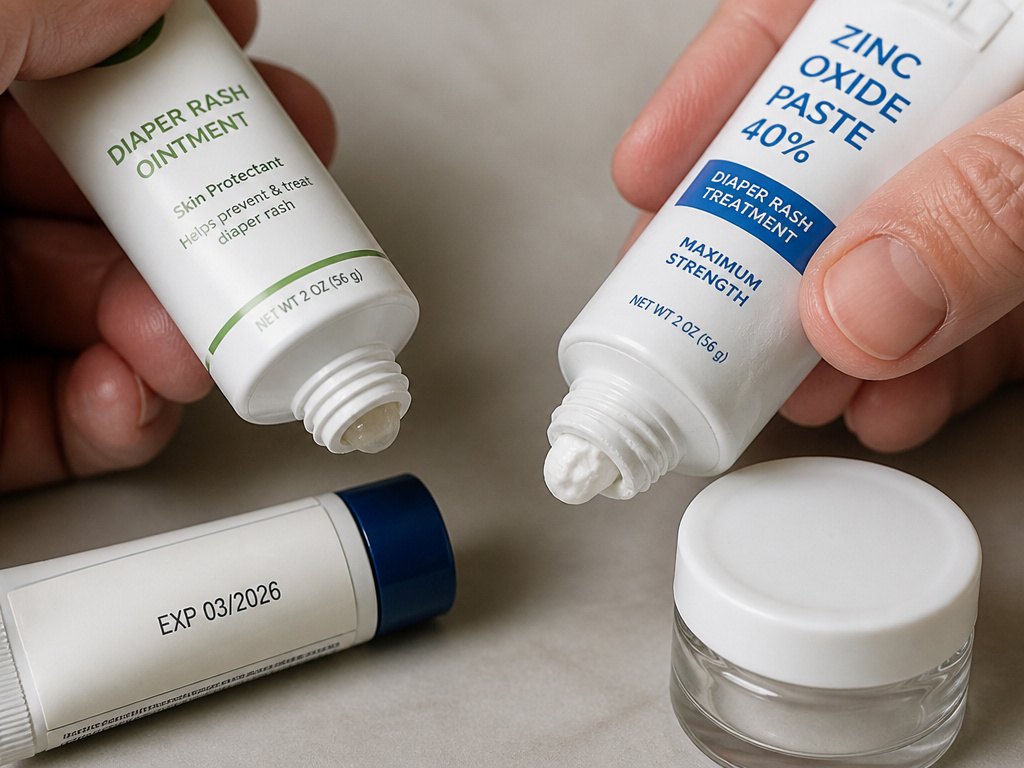
With dozens of options, the choice boils down to severity, skin type, and convenience.
For daily prevention on clear skin, a simple petroleum jelly or a thin dimethicone lotion works well. For treating an active mild rash, a zinc oxide cream in the 10-15% range is the default. Look for a product like Desitin Daily Defense or Aquaphor Baby Healing Ointment.
For tough, persistent rashes, you want maximum barrier strength. This is where a 40% zinc oxide paste like Triple Paste or Bordeaux’s Butt Paste Maximum Strength wins. The texture is denser, and it stays put.
Easy to miss: Storage conditions. The Mayo Clinic diaper rash treatment guidelines note these products should be kept in a closed container at room temperature, away from heat and direct light. A tube left in a hot car or a jar with water in the lid introduces bacteria and breaks down the active ingredients.
Always check the expiration date. An expired cream may have separated, lost efficacy, or become contaminated. If it smells off or the texture has changed, throw it out.
Frequently Asked Questions
What’s the difference between diaper rash cream and ointment?
Ointments have a higher oil content and are more occlusive, meaning they create a better moisture barrier. Creams are often lighter and easier to spread. For treatment, a thick ointment or paste is generally more effective. For prevention, a cream or lotion may be sufficient.
Can I use diaper rash cream at every change?
Yes, and you should when treating a rash. For prevention on clear skin, you may use a lighter product with every change or apply a barrier during high-risk times (overnight, during diarrhea).
Is it safe to use on a newborn?
Most zinc oxide and petroleum jelly-based creams are considered safe for newborns. However, it’s always prudent to check with your pediatrician first, especially in the first few weeks. Their skin is exceptionally delicate.
What if my baby puts their hands in it?
The ingredients in standard barrier creams are non-toxic if ingested in tiny amounts. Wipe their hands clean to prevent it from getting in their eyes, which can cause irritation. Teach “hands out of the diaper” as soon as they’re able.
How do I know if my baby is allergic to the cream?
True allergy is rare, but sensitivity to fragrances or other inactive ingredients can occur. Signs include increased redness, raised bumps (hives), or itching precisely where the cream was applied. If you see this, stop using that product and try a fragrance-free, simple formula like plain zinc oxide or petroleum jelly.
Can it be used for things other than diaper rash?
The barrier principle works elsewhere. Many parents use zinc oxide cream on mild drool rash on the chin or neck. Petroleum jelly is a common protectant for dry lips or cheeks in winter. Always patch-test on a small area first.
Before You Go
Diaper rash cream is a shield, not a cure. Its job is to block irritants so skin can heal itself. Pick the strength based on the rash: 15% zinc oxide for pinkness, 40% paste for persistent red. Apply it thick, don’t scrub it all off, and watch the calendar.
If the rash hasn’t budged in three days or is still there in a week, the problem isn’t moisture, it’s likely yeast or bacteria. That’s the signal to put down the tube and call the doctor. The right cream used the right way solves most simple rashes. Knowing when it’s the wrong tool is what keeps a small problem from becoming a big one.
