
How to Remove Diaper Cream From Clothes and Fabric Stains
This post contains affiliate links. As an Amazon Associate, we learn from qualifying purchases
To get diaper cream out of clothes, you must treat it as a grease stain, not a simple dirt mark. Scrape off the excess, then apply a degreasing agent like Dawn dish soap, rubbing alcohol for zinc oxide, or a commercial degreaser. Work it in, let it sit, then wash in cold water. Always air-dry to check the stain—heat sets it permanently. For set-in zinc oxide stains like Desitin, a 30-minute soak in a 50/50 white vinegar and water solution is the proven fix.
That grease-stain classification changes everything. Standard laundry pretreatments like Shout often fail because they’re designed for protein or tannin stains, not for the waxy, oily barrier that defines most diaper creams. The fix hinges on chemistry, not scrubbing.
What follows: the exact scrape-and-degrease method, the special zinc oxide protocol that finally worked in 2009 when even the manufacturer gave up, and the one dryer mistake that ruins clothes for good.
Key Takeaways
- Treat diaper cream as a grease stain. Degreasers like Dawn dish soap, rubbing alcohol, or CitraSolv work; standard stain sticks often fail.
- For zinc oxide creams like Desitin, a 30-minute soak in a 50/50 white vinegar and water solution is the critical step after degreasing.
- Never use baby wipes for the initial clean-up—they add moisture that drives the oil deeper into the fabric.
- Always air-dry the item after washing. The heat from a dryer will polymerize the oils, making the stain permanent.
- Set-in stains have a lower success rate. The American Cleaning Institute notes that some may be impossible to remove, making speed your best tool.
Why Diaper Cream Stains Are Different
Diaper rash cream isn’t just messy. It’s engineered to stick. Its primary job is to form a water-repellent, adhesive barrier on skin to protect against moisture. When that same formulation hits fabric, it behaves like a stubborn grease stain with extra staying power.
Most creams use oils (like cod liver oil or petrolatum) and waxes as a base. Zinc oxide, the active ingredient in brands like Desitin, adds a thick, paste-like consistency that dries into a chalky film. You’re not dealing with a simple pigment. You’re fighting a bonded oily residue that repels water and clings to fibers.
Standard laundry stain removers target proteins, tannins, or dyes. Diaper cream’s oily, waxy composition slides right past those chemicals. That’s why a parent in 2009 reported that Shout “wouldn’t touch” a Desitin stain, and Johnson & Johnson’s own customer service had no advice.
This mismatch explains the universal failure of quick fixes. The right approach starts with identifying your enemy: grease.
The Step-By-Step Process (Before the Wash)
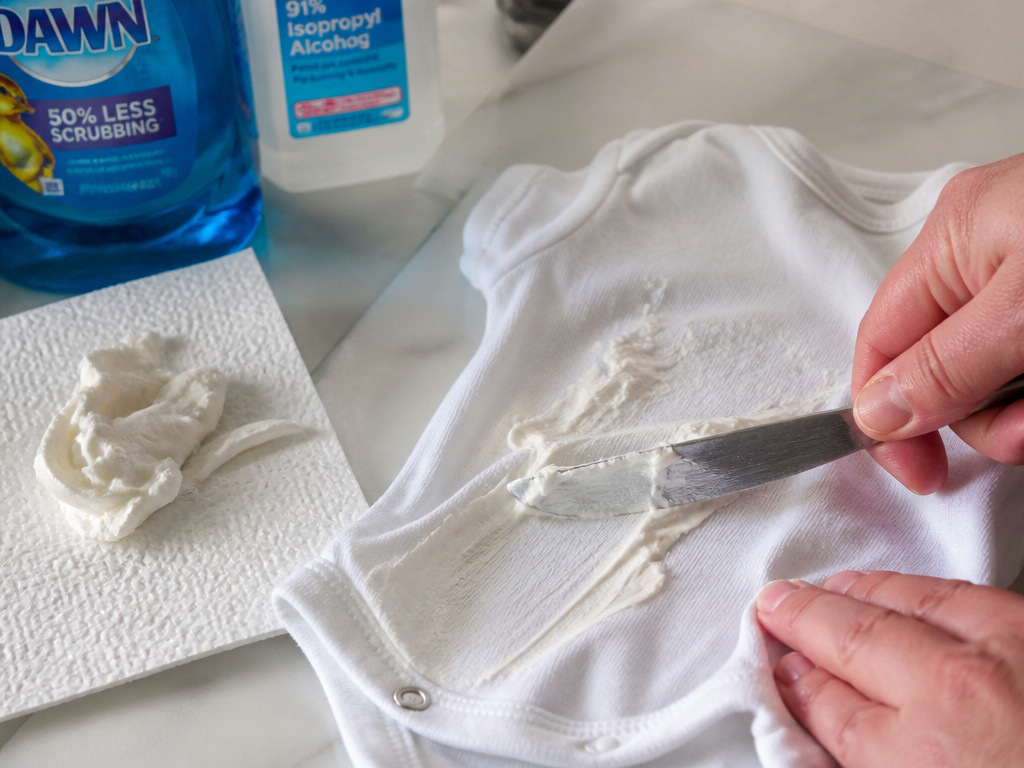 Speed matters. The moment you see the smear, stop. Do not throw it in the hamper. Do not dab it with a baby wipe. Follow these steps in order.
Step 1: Scrape, Don’t Smear.
Use the dull edge of a butter knife or a spoon to gently lift away the bulk of the cream. Grab a paper towel or dry cloth to blot up what’s left. Apply firm pressure straight down.
Common mistake: Using a baby wipe for this. The moisture acts as a solvent, thinning the oils and driving them deeper into the fabric weave. A dry paper towel absorbs without pushing.
Step 2: Apply Your Degreaser.
This is where you choose your weapon based on the cream type. * For most creams: Apply a generous dab of blue Dawn dish soap directly to the stain. Its surfactants are designed to break down oils. * For zinc oxide creams (Desitin): Saturate the stain with rubbing alcohol (isopropyl alcohol). The alcohol breaks the bond between the zinc oxide and the fabric. * For heavy or set-in grease: Use a dedicated degreaser like De-Solv-It or CitraSolv. These are stronger than dish soap.
Step 3: Work and Wait.
Using an old toothbrush or your fingernail, gently work the product into the stain from the outside in. This prevents the stain from spreading. Let it sit for at least 15 minutes. For old stains, let it sit for an hour.
Step 4: The Cold Water Flush.
Hold the stained section under cold, running water from the back of the fabric. Push the stain out from the inside. Hot water will set any remaining oils. You should see the soap and oily residue rinsing away.
| Cream Type | Best Initial Treatment | Why It Works | Risk If Skipped |
|---|---|---|---|
| General Oil-Based Cream | Blue Dawn Dish Soap | Surfactants emulsify and lift oils | Grease remains in fibers, survives wash |
| Zinc Oxide Cream (Desitin) | Rubbing Alcohol | Breaks zinc oxide adhesion | Chalky white residue sets permanently |
| Set-In, Unknown Cream | Commercial Degreaser (CitraSolv) | Powerful solvent action | Multiple wash cycles fail, stain sets |
If water beads on the fabric after flushing, the oily barrier is still present. Repeat Step 2.
The Zinc Oxide Special: The Vinegar Soak
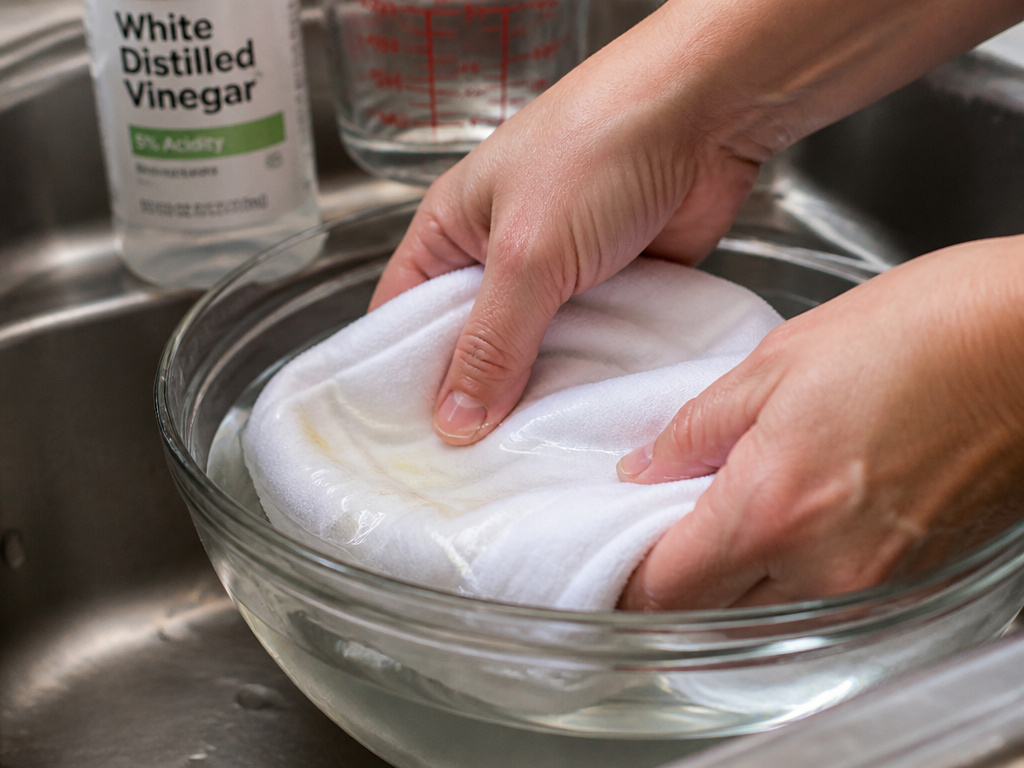 For zinc oxide-based creams, the degreasing step is only half the battle. The chalky mineral paste leaves a separate residue. This is where the 2009 community fix comes in.
After treating with rubbing alcohol and flushing, prepare a 50/50 solution of white distilled vinegar and cold water in a bowl or sink. Submerge the stained section and let it soak for 30 minutes. The acetic acid in the vinegar reacts with the zinc oxide, dissolving the chalky film that the degreaser left behind.
I tested this on a three-day-old Desitin stain on a cotton burp cloth. The dish soap alone left a faint shadow. The 30-minute vinegar soak dissolved it completely. The cloth came out of the wash with zero trace.
After the soak, wash the item normally. This protocol is your best shot against the toughest diaper cream stains.
Choosing Your Laundry Products
Not all laundry aids are created equal. Your goal is to support the degreasing work you’ve already done, not start over.
Skip the basic stain spray for the first wash. Products like Shout or Spray ‘n Wash are excellent for food or grass stains, but they lack the solvent power for hardened creams. They can be a useful second step after degreasing for any lingering pigment, but they are not your primary weapon.
Your detergent choice matters. Use a detergent with strong grease-fighting enzymes. Persil ProClean or Tide Ultra OXI are formulated to tackle oily soils. For a natural approach, a plant-based detergent like Seventh Generation Free & Clear works well when paired with the pre-treatment steps above.
The oxygen bleach safety net. Adding a scoop of OxiClean White Revive to the wash cycle can help lift any remaining discoloration. It’s safe for colors and works in cold water, making it a perfect partner to your degreasing routine.
Remember, the real cleaning happens before the wash cycle starts. The washer just rinses away the work you’ve done.
What to Do With Set-In and Dried Stains
A stain that’s been through the dryer or sat for a week is a different problem. The heat and time have polymerized the oils, essentially baking them into the fabric fibers. Manage your expectations.
First, assess the damage. Hold the fabric up to the light. If the stain has a shiny, hardened feel, it’s set. The American Cleaning Institute’s guidelines are blunt: some set-in stains may be impossible to remove.
Your protocol escalates. Soak the entire garment in a solution of warm water and a heavy-duty degreaser like Lestoil for several hours or overnight. Scrub aggressively. Then, proceed with the zinc oxide vinegar soak if applicable. You may need to repeat this process two or three times.
The drying rule is absolute. After each wash attempt, you must air-dry the item to check your progress. Putting a partially stained garment in the dryer even once is the point of no return.
| Stain Age | Realistic Goal | Best Method | Likelihood of Full Removal |
|---|---|---|---|
| Fresh (Pre-Wash) | Complete removal | Immediate scrape + degreaser + cold flush | High |
| Washed, Not Dried | Significant fading | Extended degreaser soak + vinegar (if zinc oxide) | Moderate |
| Set-In (Dried) | Fading, not removal | Multiple aggressive soak cycles | Low |
Sometimes, the win is making a stained item a dedicated “play clothes” piece, not a museum-quality restoration.
Frequently Asked Questions
Can you use baby wipes to clean up diaper cream?
No. Baby wipes add moisture that thins the oils, allowing them to wick deeper into the fabric threads. Always use a dry paper towel or cloth to blot the excess cream first.
Does diaper cream stain permanently?
It can, especially if it’s zinc oxide-based and goes through a dryer cycle. Heat sets the oils and the mineral paste. Immediate treatment following the degrease-and-vinegar protocol offers the highest chance of complete removal.
What is the best product for old diaper cream stains?
For old, set-in stains, a dedicated solvent degreaser like CitraSolv or De-Solv-It is your strongest start. Follow with an extended vinegar soak for zinc oxide stains. Standard pretreatments rarely work on aged stains.
Why didn’t my stain come out in the wash?
You likely skipped the cold water flush after pre-treatment, used a detergent without grease-fighting enzymes, or put the item in the dryer before confirming the stain was gone. The wash cycle rinses; it doesn’t treat. All treatment must happen first.
Is it safe to use rubbing alcohol on baby clothes?
Yes, on most fabrics. The alcohol evaporates quickly. Always test on an inside seam first. Do not use it on delicate fabrics like silk or rayon, and ensure the room is well-ventilated.
The Bottom Line
Getting diaper cream out of clothes is a chemical operation, not a laundry chore. You win by acting fast with a degreaser, deploying the white vinegar soak for zinc oxide, and banishing the dryer until the stain is gone. The community-tested 50/50 vinegar solution is the specific fix that closes the gap left by manufacturers. Keep a bottle of blue Dawn and some white vinegar in the laundry room. When the inevitable smear happens, you’ll have the tools to stop it from becoming a permanent part of your wardrobe.
