
How to Pack a Diaper Bag for a Toddler and Newborn Baby
This post contains affiliate links. As an Amazon Associate, we learn from qualifying purchases
Packing a diaper bag for a toddler and a newborn means matching two different sets of needs in one organized space. Use a 4-zone system: a Diapering Zone, a Feeding Zone, an Emergency Blowout Zone, and a Parent Zone. This keeps a clean onesie away from a dirty diaper and lets you find a pacifier without unpacking the entire bag.
The one-diaper-per-hour rule is a baseline, not a ceiling. Newborns can burn through four in one change. Toddlers need three snack options because the first two will be rejected. The system works because it separates items by purpose and contamination risk, which is exactly what the AAP and CDC advise for hygiene.
What follows: the exact zone layout, a breakdown of toddler versus newborn math, the non-negotiable extras that prevent mid-trip disasters, and how to adapt the whole setup as your kids grow.
Key Takeaways
- Pack by zone, not by item. Separate diapering, feeding, emergency clothes, and your stuff into dedicated compartments or pouches.
- For diapers, pack one per hour out plus one extra. For a newborn, mentally double that count for the first two months.
- A toddler needs multiple snack choices—bringing only one guarantees a meltdown. Pack at least three options.
- Your Emergency Blowout Zone must be a sealed kit, used only for major accidents. It needs a spare spare outfit.
- Choose a backpack-style bag with a wipeable liner. A tote will swing and throw off your balance when you’re carrying a baby.
The Core 4-Zone Packing System
Most diaper bags fail because everything gets tossed in together. When wipes, snacks, clean clothes, and a dirty diaper mingle, you get a bottomless pit of germs and frustration. The 4-zone system fixes that by grouping items by their job.
A well-organized diaper bag aligns with CDC guidance on limiting germ spread. Keeping diapering supplies together and separate from feeding items supports proper hand hygiene and surface separation when you’re changing a baby away from home.
The zones are Diapering, Feeding, Emergency, and Parent. Assign each zone a specific compartment or a dedicated organizer pouch. You should be able to reach into the bag blind and pull out exactly what you need.
Zone 1: The Diapering Station
This is your everyday change setup. It lives near the main zipper for one-handed access. * Diapers: Use the one-per-hour-plus-one rule. For a three-hour outing, that’s four diapers. * Wipes: A full travel pack. You can never have too many. * Diaper Cream: A small tube or a sample-size container. * Changing Pad: A portable, wipeable pad. Never lay a baby directly on a public surface. * Small Wet/Dry Bag: For the single dirty diaper or the lightly soiled burp cloth.
This zone gets used constantly. Restock it after every trip.
Zone 2: The Feeding & Snack Hub
This zone is for anything that goes in a mouth. The AAP stresses separating feeding tools from diapering supplies to limit germ transfer. * For Newborns: Two prepared bottles (fresh breastmilk lasts 8–10 hours at room temperature), a formula dispenser with pre-measured powder, or a nursing cover. * For Toddlers: A spill-proof sippy cup and at least three different snack options. A single pack of fruit snacks dropped on the floor is a crisis. * For All: A bib and a burp cloth. Use a separate, clean pouch for this zone.
Zone 3: The Emergency Blowout Kit
This is a sealed kit you hope to never open. It stays at the bottom of the bag, separate from everything else. * A Complete Outfit Change: Onesie, pants, socks. For a newborn, make it two. * Extra Wipes: A small, fresh pack. * A Large Wet/Dry Bag: For the catastrophic, outfit-soiling mess. * Plastic Bags: Two gallon-size Ziploc bags for soiled clothes.
Why sealed? If you raid this kit for a minor spill, you won’t have it for the real blowout. And yes, you need the spare spare outfit. Back-to-back blowouts happen.
Zone 4: The Parent (& Peace) Zone
This is for you. It keeps you functional and sane. * Hand Sanitizer: Clip a small bottle to the bag’s strap. * Lip Balm: You’ll need it the one time you forget it. * A Snack and Water: Hangry parents make bad decisions. * Small First-Aid Kit: Band-aids, pain reliever. * Keys, Wallet, Phone: Dedicated pockets.
A clean, organized diaper bag packing routine starts with this zone structure. It turns a chaotic jumble into a reliable system.
The Toddler vs. Newborn Math
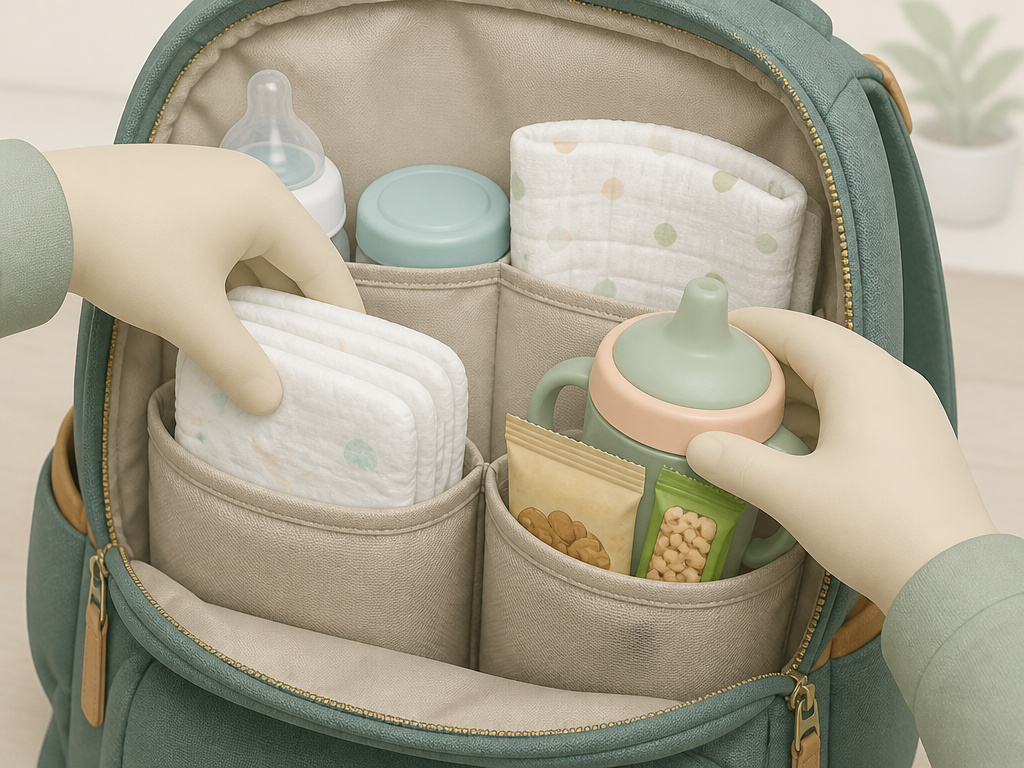
Packing for two different ages isn’t about doubling a single list. It’s about understanding two distinct consumption patterns. A newborn’s needs are frequent and fluid-based. A toddler’s are unpredictable and mood-based.
| Item | Newborn Focus | Toddler Focus | Why The Difference |
|---|---|---|---|
| Diapers | High volume, small size. Pack 2x the hour rule for the first 8 weeks. | Fewer diapers, larger size. Stick to the hour rule. | Newborns pee constantly and have frequent, small bowel movements. The “PPPPPP poop” (poop/pause/repeat) is real. |
| Feeding | Prepared bottles, formula dispenser, burp cloths. | Spill-proof cup, 3+ snack options, snack cup. | Newborns eat on a strict schedule. Toddlers graze and veto food based on the day’s whims. |
| Clothing | Two full outfit changes in the Emergency Zone. | One full change usually suffices. | Newborn blowouts are legendary and can soak through layers. Toddler messes are more often food or dirt. |
| Extras | Pacifier (plus a backup), swaddle blanket. | Small toy, book, training pants if potty training. | Newborns need comfort and containment. Toddlers need distraction and accident preparedness. |
The math shifts the weight in your bag. A newborn-heavy load is bulkier with diapers and bottles. A toddler-heavy load has more volume from snacks and a sippy cup. A good diaper bag for newborn and a capable toddler diaper bag often have the same core feature: flexible space.
Where this goes sideways: Assuming the one-diaper-per-hour rule is absolute. Some newborns need changes hourly or less because they cry over a single drop of pee. If your baby is like that, pack for the worst-case scenario, not the average.
Your bag’s architecture should support this split. A backpack diaper bag with multiple compartments lets you dedicate one side to newborn diapers and another to toddler snacks. Organizer pouches are essential for keeping the zones distinct, especially when packing for two.
Non-Negotiable Extras (The “Save The Trip” Items)
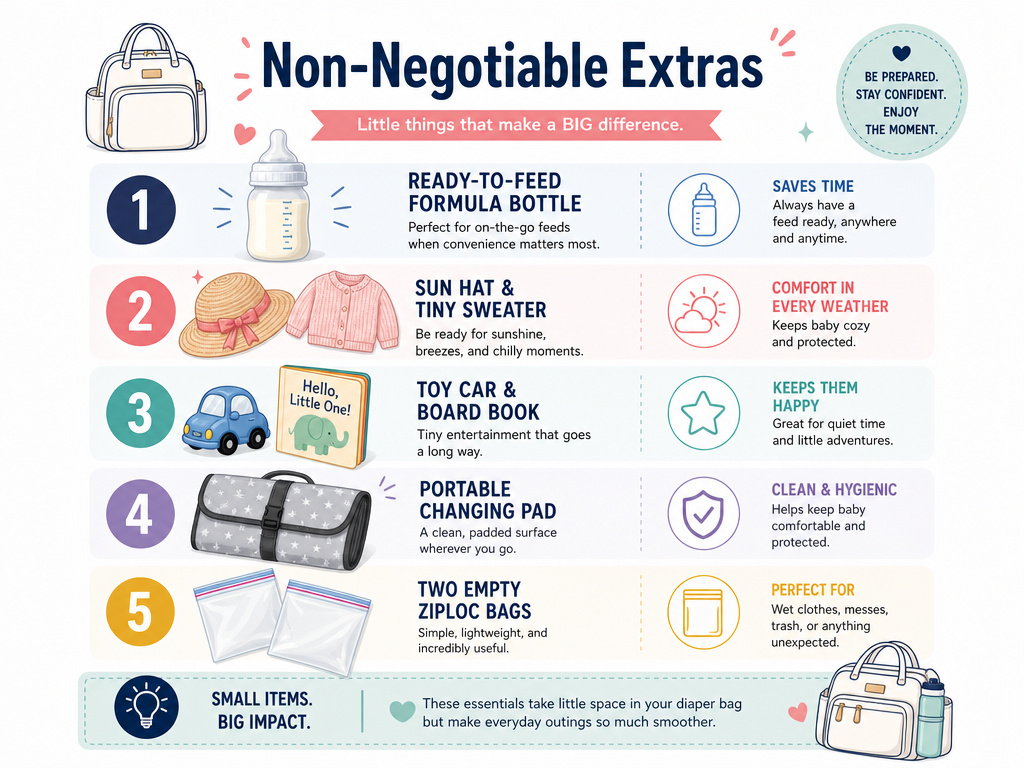
These items don’t fit neatly into a zone. They are the tactical gear that rescues an outing from disaster. Skip them, and you’ll remember why you needed them halfway through a grocery trip.
- Emergency Formula or Milk. This is for the “just in case” that always happens. Spill a bottle. Underestimate a growth spurt. Get stuck in traffic. A single ready-to-feed formula bottle or an extra bag of breastmilk in the cooler is trip insurance.
- Weather Armor. A compact sun hat or a lightweight sweater. A child’s perception of 65 degrees is not an adult’s. What looks like a sunny day can be a windy, cold ordeal for a little one.
- Distraction Devices. A small, novel toy or a board book. This is for the pediatrician’s waiting room or the restaurant line. A toddler’s patience is measured in seconds, not minutes.
- A Portable Changing Pad. Not all bathrooms have changing tables, and park benches are dirty. A dedicated changing pad is a clean, portable surface that folds up small.
- Empty Ziploc Bags. Their uses are endless: a makeshift wet bag, a container for a dirty pacifier, a way to isolate a leaky sippy cup from everything else.
Packing these extras is the difference between handling a problem and letting it end your day. They turn a travel diaper bag into a mobile command center.
Choosing & Maintaining the Right Bag
The best system falls apart in the wrong container. Your bag is the foundation.
Style Matters: Backpack vs. Tote
- Backpack: The unanimous choice for hands-free parenting. It distributes weight evenly, which is critical when you’re also carrying a baby. It keeps your arms free to hold hands or catch a falling toddler. A good diaper bag in backpack form, like the GoBabyMart Diaper Backpack, will have wide, padded straps and a structured shape.
- Tote: A crossbody or shoulder tote, like the GoBabyMart Everyday Diaper Tote, can work for very short, predictable trips where you won’t be carrying much else. The long strap will swing and throw off your balance if you’re trying to carry a child.
Maintenance Is Non-Negotiable
A diaper bag is a germ factory if you ignore it. * Clean Weekly: Empty it completely. Wipe the interior with a mild soapy cloth, especially if it has a wipeable liner. Let it air dry. * Restock Immediately: The minute you walk in the door, refill what you used. Do not assume items are still there for next time. * Contain Messes: Never put soiled clothes directly into the main compartment. Always use the wet bag from your Emergency Zone. This simple habit is the core of knowing how to organize a diaper bag for the long haul.
Your bag is a tool. A well-chosen, clean diaper bag for toddler and newborn makes the 4-zone system effortless. A cluttered, dirty bag defeats the whole purpose.
Frequently Asked Questions
How many diapers should I pack for a newborn and toddler?
For a newborn, pack two diapers for every hour you’ll be out, plus one extra. For a toddler, pack one diaper per hour plus one extra. This accounts for a newborn’s higher frequency and the potential for multiple changes in a short window.
What is the most important thing to remember when packing for two?
Separation. Keep diapering items and feeding items in different compartments or pouches. This follows basic hygiene guidance and prevents a dropped wipe from contaminating a snack.
Can I use a regular backpack as a diaper bag?
You can, but it’s harder. Dedicated diaper bags have features like wipeable linings, insulated bottle pockets, and stroller straps. If you use a regular backpack, you’ll need a set of organizer inserts to create the zones.
How do I pack a diaper bag for a toddler who is potty training?
Replace diapers in your Diapering Zone with 2-3 pairs of training pants or underwear. Pack an extra pair of pants and socks in your Emergency Zone. The rest of the system stays the same.
How often should I clean out my diaper bag?
Do a full empty-and-wipe clean once a week. Remove trash and soiled items after every single use. A bag that holds dirty clothes for days becomes a health hazard.
The Bottom Line
Packing a diaper bag for a toddler and a newborn is a logistics puzzle, not a guessing game. The 4-zone system gives you a map: Diapering, Feeding, Emergency, Parent. It works because it mirrors how you actually use the stuff—in focused, separate moments.
Remember the specifics. Newborn diapers are a volume game. Toddler snacks are a psychology test. Your Emergency Blowout Kit is a sealed vault. And the bag itself must be a backpack you can manage with one hand free.
Start with the zones. Adapt the math for your kids’ ages. And never, ever leave home without a spare spare outfit. That’s the part that saves the day.
