
How to Pack a Diaper Bag for Travel | The 2-Kg Pack That Fits a Crib
This post contains affiliate links. As an Amazon Associate, we learn from qualifying purchases
To pack a diaper bag for travel, match your bag’s capacity to your trip length and mode of transport. For air travel, your diaper bag is usually a free personal item if it fits under the seat. Pack by scenario: short errands need a minimalist kit; cross-country flights require a full disaster recovery load-out, including a change of clothes for you. The LIINI NAPPY backpack proves a 29-liter bag can hold a travel crib and a 2-day supply, but only if you pack tight.
That 29-liter spec is the difference between a bag that holds your stuff and a bag that becomes your stuff. A travel crib, ten diapers, bottles, and your wallet have to coexist in a space smaller than a standard hiking daypack. The organization isn’t optional, it’s structural.
What follows is not a generic list. It’s a system built around three travel scenarios: the quick errand, the long-haul flight, and the overnight stay. Each has a different packing mandate, a different failure point, and a different best bag. We’ll cover airline rules, multi-child logistics, and the one packing mistake that voids most warranties.
Key Takeaways
- Your diaper bag is typically a free personal item on airlines, but it must fit under the seat; confirm your carrier’s specific dimensions.
- Pack by the “PPPPPP” rule, poop/pause/poop, and bring at least four diapers for any outing expected to need one.
- A backpack style is non-negotiable for travel; it keeps your hands free for tickets, strollers, and toddlers.
- Weather dictates 30% of your bag’s contents; a 90-degree day with 60% humidity requires a completely different kit than a 65-degree afternoon.
- Warranties like LIINI’s 24-month coverage exclude damage from improper cleaning (like machine washing) and wear from stroller attachment, common travel pitfalls.
Choosing Your Travel Diaper Bag
Head design changes the entire process. Look at the business end of your trimher. For travel, the bag itself is the first and most critical piece of gear. A tote will ruin your trip by the airport security line.
You need a backpack. The hands-free advantage is obvious when you’re hauling a car seat or folding a stroller. Less obvious is the weight distribution. A 2-kg bag loaded with 5 kg of baby gear feels like a suitcase on one shoulder. A backpack carries it on your frame.
Capacity is the next spec. The LIINI NAPPY backpack uses a 29-liter capacity. That’s the sweet spot. It’s large enough to hold a disassembled crib and a day’s supplies, but compact enough to slide under an airplane seat. Many travel diaper bags push 35 liters, which risks bumping into carry-on size limits. Check your airline’s under-seat dimensions before you buy.
A 29-liter backpack measures roughly 40 cm tall by 32 cm wide by 23 cm deep. That’s the maximum dimensions for a personal item on many budget airlines. Go larger, and you may be forced to gate-check it.
Material matters for the messes ahead. You want wipe-clean linings and water-resistant fabric. The LIINI uses a polyester and vegan faux leather blend that can be spot-cleaned. This is crucial. The warranty for most bags, including LIINI’s 24-month coverage, is voided by machine washing. Travel guarantees spills, clean them by hand, not in a laundromat washer.
Finally, consider integrated features. Some bags, like the LIINI, have a built-in USB port for a power bank. Others have insulated bottle pockets or stroller straps. Stroller straps are a double-edged sword. They’re convenient, but attaching the bag can make the stroller tippy on slopes, and that kind of stress isn’t covered under “normal use” by most warranties.
The Core Travel Diaper Bag Checklist
This is the baseline load-out for a day of air travel or a long road trip. It assumes you are away from home for 6-12 hours and cannot easily resupply.
| Category | Essential Items | Travel-Specific Reason |
|---|---|---|
| Diapering | 8-10 diapers, travel wipes pack, portable changing pad, diaper cream, 4-5 plastic bags | Pressure changes can upset little stomachs. Airport bathrooms are tiny. You need containment. |
| Feeding | 2-3 bottles, prepared formula or breast milk in cooler, 2+ baby food pouches, bib | Delays happen. Spills happen. Never pack the exact amount of milk you think you’ll need. |
| Clothing | 2 full baby outfits (including socks), 1 lightweight parent shirt, 1 sweater | Explosions can strike twice. Your clothes are not immune. A sweater for cold planes is key. |
| Health & Comfort | Infant pain reliever (ibuprofen/acetaminophen), pacifier with clip, 2 small toys | Ear pressure pain is real. The pacifier clip prevents drops. New toys buy 10 minutes of calm. |
| Parent Gear | Wallet/ID, phone, power bank, hand sanitizer, snacks, empty water bottle | You cannot help your baby if you are hangry, phone-dead, or dehydrated. |
Diapers: The common advice is one per hour. Ignore it. Pack for the “PPPPPP” scenario, a single change attempt that yields multiple poops in pauses. One parent reported blowing through four diapers in one sitting. For a flight, take the hour-based count and double it. Eight diapers for a four-hour journey is not overkill.
Feeding: If you’re bottle-feeding, bring more milk or formula than you calculate. Assume one full bottle will spill or be rejected. For formula, use a pre-portioned dispenser and buy water after security. For breast milk, know that fresh milk lasts 8-10 hours at room temperature; a simple cooler bag is sufficient for a day trip.
Clothing: The extra parent shirt is the most forgotten and most critical item. A baby’s mess has a three-foot splash radius. A lightweight layer takes little space and saves your dignity.
The Bag Within the Bag: Use organizer pouches. A clear toiletry bag for diapering, a thermal pouch for bottles, a slim case for parent gear. This turns a frantic dig into a targeted grab. It also lets your partner find things without asking. For a deep dive on this system, our guide on how to organize your diaper bag breaks it down step-by-step.
Packing for Three Travel Scenarios
Your destination and duration dictate your load. Packing for a pediatrician visit is not the same as packing for a week at Grandma’s.
The Short Errand (2-4 hours)
This is a minimalist drill. You need a tiny sling bag or a small backpack compartment. – Diapering: 4 diapers, small wipes, 1 changing pad, 2 plastic bags. – Feeding: 1 prepared bottle or snack pouch. – Extras: 1 baby outfit, hand sanitizer, your wallet. – The Rule: This is the “get home” kit. Its job is to handle one major incident and sustain you until you can retreat. A bag like the Dr. Brown’s Breast Pump Carryall works here because it’s slim and structured.
The Long-Haul Flight (6+ hours)
This is the full checklist from the previous section. The focus shifts to parent endurance and baby comfort. – Critical Add: Pacifier for ear pressure, infant pain reliever, a compact blanket. The pain reliever is for ear pain or unexpected fevers, not just teething. – Entertainment: 2-3 new, small toys or books. A crinkly book buys more peace than a favorite stuffed animal. – Parent Sanity: High-protein snacks, a large water bottle (fill after security), headphones. You will be trapped.
Where this goes sideways: Forgetting the pacifier clip. The pacifier drops at 30,000 feet and rolls six rows back. You now have a screaming baby with ear pain and no solution. Clip it to their shirt before takeoff.
Your bag choice here is key. You need a dedicated diaper bag for airplanes with easy-access pockets. A backpack like the Jujube Be Sporty or the Skip Hop Forma works because it opens like a suitcase, letting you find the pain reliever without unpacking everything onto your seatmate’s lap.
The Overnight Stay
This is about bulk and delegation. You’re packing for someone else’s house, which may have no baby supplies. – Diapering: 6 diapers per day, plus a half-day buffer. A full pack of wipes. – Feeding: Bulk formula or frozen breast milk, multiple bottles, a bottle cleaning brush. Consider Microwave Steam Sterilizer Bags for your host’s convenience. – Sleep: Sleep sack, lovey, portable sound machine. The crib is usually provided, but confirm. – Strategy: Pack in a large duffel or a travel diaper backpack with expandable compartments. Use packing cubes to separate “Day 1” clothes from “Day 2” clothes. This isn’t a diaper bag; it’s a baby luggage system.
For multi-child trips, the calculus changes completely. You need to compartmentalize each child’s essentials to avoid cross-contamination of sippy cups and socks. Our resource on packing for two kids details the divide-and-conquer method.
Navigating Airline Rules and Bag Logistics
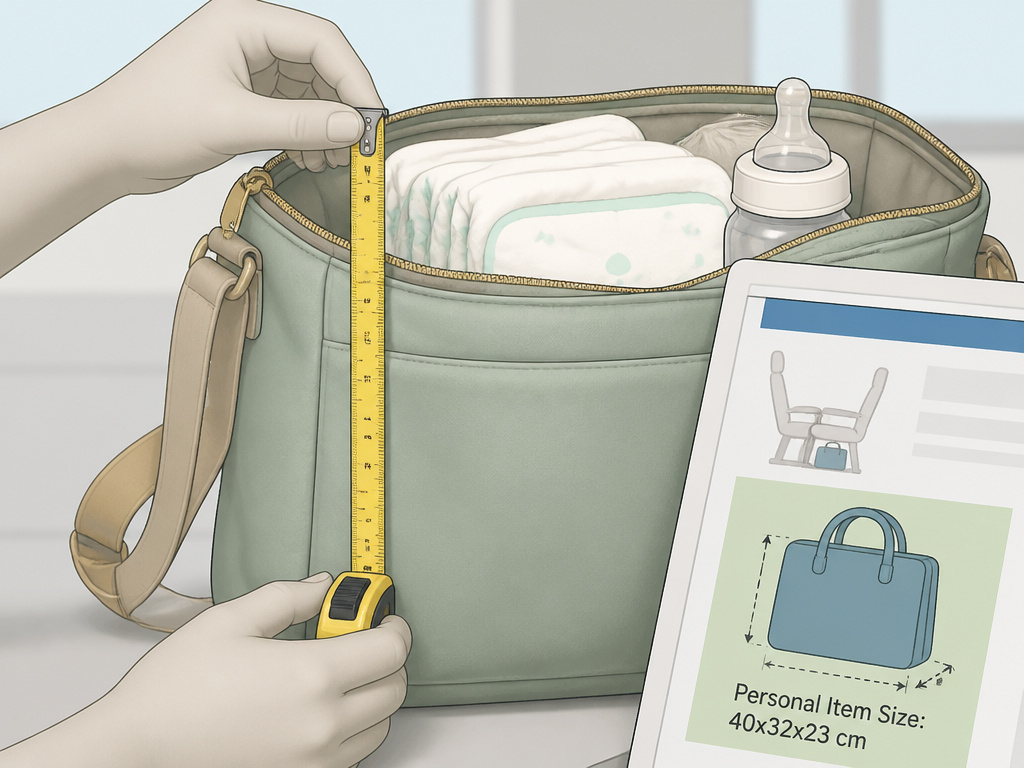
The rules are not universal. “Personal item” is a defined size, not a courtesy.
Most U.S. Airlines explicitly allow a diaper bag plus a carry-on and personal item for travelers with infants. However, that diaper bag must still fit under the seat in front of you. If it’s oversized, a gate agent can classify it as your carry-on, forcing you to consolidate.
The LIINI NAPPY backpack, at 40x32x23 cm, is designed to this limit. Many best travel diaper bags are slightly larger. Always check your specific airline’s “under-seat dimensions” before you fly.
Your Action Plan:
- Visit your airline’s website. Search “personal item size.”
- Measure your packed bag’s height, width, and depth. Include external pockets bulging with toys.
- Have a backup plan. Be prepared to quickly move valuables to your personal item if gate-checking is required.
The question of whether a diaper bag counts as a personal item is answered by size, not need. Similarly, understanding carry-on policies for diaper bags prevents last-minute gate fees.
Travel-Specific Gear and Pro Tips
Travel breaks standard procedures. Your home routine won’t survive the airport.
Weather is a Packing Director: A forecast of 90 degrees with 60% humidity means you pack two extra outfits (for sweat), a sun hat, and a portable fan. A 65-degree day demands pants, socks, and a sweater. You cannot guess. Check the weather for your destination the morning you pack.
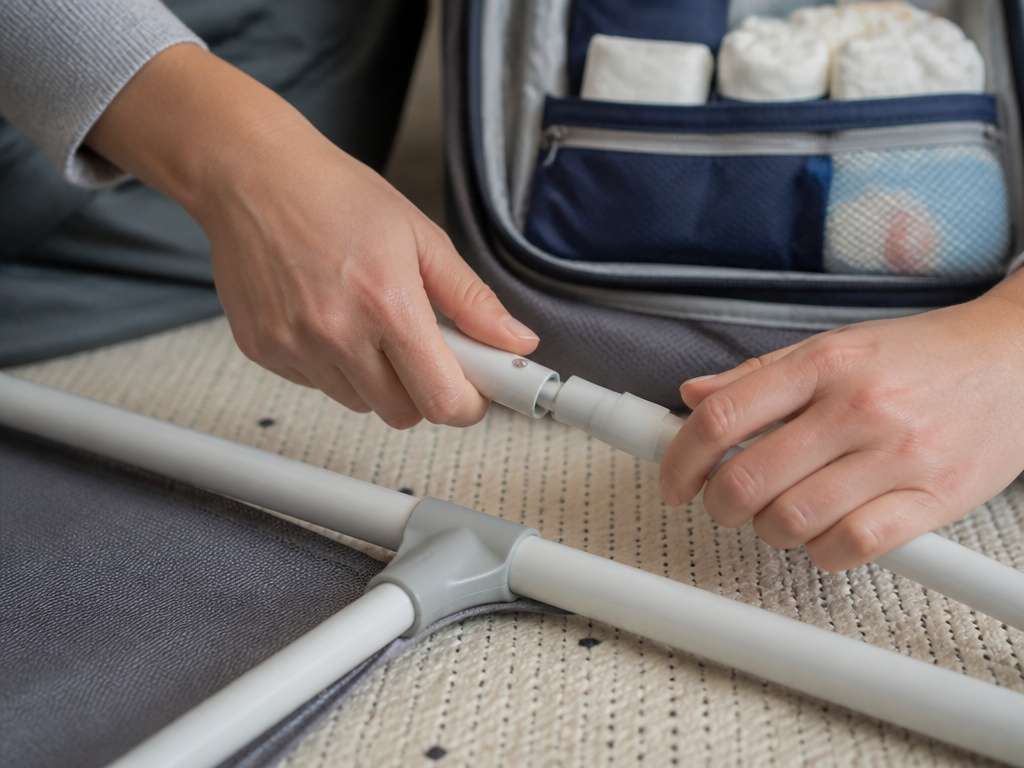
The Crib-in-the-Bag Concept: The LIINI NAPPY system shows it’s possible. The 2 kg curb weight backpack unfolds into a 70×30 cm crib. The trick is the plastic rods that snap together for structure. Practicing this assembly at home is mandatory. Fumbling with poles on a windy beach while your baby fusses is a special kind of torture.
The Warranty Fine Print: Travel is hard on gear. LIINI’s 24-month warranty does not cover “improper handling” or damage from stroller attachment on slopes. It also excludes defects from “improper cleaning.” Throwing your grimy bag in a washing machine after a trip voids the coverage. Hand-wash only.
Final Pro Tips:
- Roll clothes. It saves space and reduces wrinkles.
- Pre-load the diaper pouch. Before you walk out the door, ensure the diaper pouch has cream, bags, and wipes. Refill it immediately upon returning home.
- Pack a power bank. Your phone is your boarding pass, camera, and distraction tool. Keep it charged.
- Wear the backpack. When boarding, wear it on both shoulders. It looks less bulky and keeps your profile slim for the gate agent’s eye.
For gear-specific recommendations, our reviews of the best travel diaper backpacks and best diaper bag organizer pouches compare features that matter on the move.
Frequently Asked Questions
How many diapers should I pack for a 4-hour flight?
Pack eight. The one-per-hour rule fails under travel stress. Air pressure changes can trigger multiple bowel movements in a short span. Four diapers might cover the time, but eight covers the disastrous “PPPPPP” scenario where a single change consumes them all.
Can I bring breast milk and formula through TSA?
Yes. The Transportation Security Administration (TSA) allows reasonable quantities of breast milk, formula, and baby food in your carry-on, even exceeding the standard 3.4-ounce liquid rule. You must declare these items for separate screening. It’s often easier to place them all in a separate bin.
What is the best type of diaper bag for travel?
Backpack-style diaper bag is the only serious choice for travel. It distributes weight, keeps your hands free, and typically fits better under airplane seats. Look for one with a suitcase-style opening, wipe-clean lining, and external bottle pockets. The backpack style is the default for all recommended travel bags.
Do I need to pack a travel crib?
Not usually. Most hotels and rental homes provide cribs or pack ‘n’ plays upon request. Always call to confirm. The exception is camping, beach trips, or visits to homes without children. In those cases, an all-in-one system like the LIINI NAPPY or a separate lightweight travel crib is worth its weight.
How do I handle dirty diapers and clothes on a plane?
Use scented diaper disposal bags or a heavy-duty ziplock bag. Seal the soiled diaper or outfit tightly inside. Flight attendants can sometimes provide a small trash bag. For major blowouts, a travel changing pad with a wipeable surface is easier to clean in a cramped lavatory than a fabric one.
The Bottom Line
Packing a diaper bag for travel is about anticipating system failures. The flight will be delayed. The baby will have a blowout 20 minutes after a clean change. You will spill the last bottle of milk.
Your bag is your backup system. Choose a 29-35 liter backpack that fits airline size rules. Pack using the scenario method, errand, flight, or overnight, and always double the diapers. Organize with pouches so you can find the pain reliever in the dark. Remember that warranties don’t cover travel wear, so hand-wash that bag when you get home.
The goal isn’t to pack for every possibility. It’s to pack for the three most likely disasters. That’s the difference between a stressful trip and an adventure you can handle.
