
What Is a Pull-Up Diaper? The Medical Definition for Insurance
This post contains affiliate links. As an Amazon Associate, we learn from qualifying purchases
A pull-up diaper is a disposable absorbent product designed like underwear, with elastic waistbands instead of adhesive tabs, intended for children who are learning to use the toilet. Its formal medical definition, used by insurers like MassHealth, specifies it is for moderate incontinence and requires the user to have the cognitive and physical ability to pull it on and off independently.
That second part is the one most parents never see. On the store shelf, a pull-up is a potty training tool. For an insurance reimbursement form, it’s a medical device with strict eligibility rules. Missing that distinction is how families get coverage denials.
What follows is the split view: what pull-ups are made to do, the exact size and absorption specs from the manufacturer, and the clinical criteria that decide whether a child’s pull-up is a learning step or a covered health supply.
Key Takeaways
- The medical definition of a pull-up, per guidelines like Massachusetts’, requires a user to be ambulatory and capable of self-managing the product for coverage.
- Pull-Ups® brand training pants come in seven size tiers, from 2T-3T (16-34 lbs) to 6T-7T (55-75 lbs), with Night*Time versions offering up to 12 hours of protection.
- Targeted absorption zones differ between boys’ and girls’ products, a functional spec most generic “training pants” omit.
- Switching from diapers to pull-ups should be a one-way transition; going back and forth confuses the potty training routine.
- For children with disabilities, the choice between a tab-style diaper and a pull-up is a clinical decision based on mobility and cognitive ability, not just age.
The Official Definition vs. The Aisle Label
Walk down any baby aisle and you’ll see them: packages labeled “Training Pants” or “Pull-Ups.” The marketing is about independence and “Big Kid” confidence. The clinical manual has a drier, more precise take.
According to the Massachusetts guidelines for medical necessity determination, a “pull-up/pull-on product” is defined as protective underwear that the user may pull up or down as needed, held in place by its own straps, buttons, snaps, Velcro, or slip-on feature. It is categorized as generally used for moderate incontinence.
This isn’t just paperwork. That definition creates a bright line between a “diaper” (with adhesive tabs) and a “pull-up.” For insurance programs like MassHealth, that line dictates coverage. A child who is bedridden or cannot manipulate the garment does not meet the medical definition for a pull-up, even if the parent buys the same product off the shelf. The product is the same; the qualified user is not.
The international standard ISO 9949 also provides a full nomenclature for absorbent hygiene products, including adult incontinence pants. This standardization matters for hospitals, care facilities, and global product testing. Your home potty training tool exists inside a larger framework of medical supply classification.
What’s Actually in a Pull-Up? (Brand Specs vs. Generics)
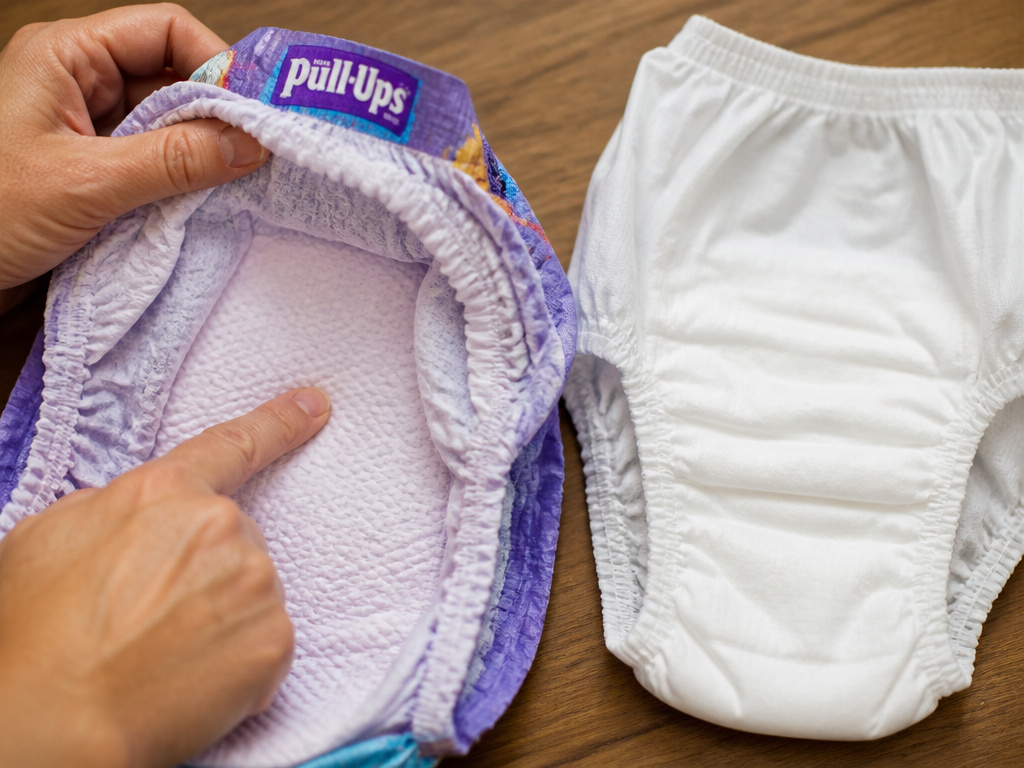
When you pick up a package of Pull-Ups®, you’re buying a specific set of engineered features. Knowing them lets you compare fairly to store brands or other products.
All Pull-Ups® are hypoallergenic, fragrance-free, and paraben-free. The core innovation for potty training is the Learning Layer™. This layer is designed to feel wet against the skin while keeping the outer surface dry, giving a child clear sensory feedback about accidents. It’s a deliberate teaching mechanism, not just absorption.
The brand splits its line clearly: * Pull-Ups® Training Pants: The daytime standard, available in boys’ and girls’ versions with targeted absorption zones. * Pull-Ups® Night*Time Training Pants: Built for up to 12 hours of overnight protection, currently in sizes 2T-3T and 3T-4T. * Pull-Ups® Skin Essentials™: A line focused on sensitive skin within the smaller size range.
| Pull-Ups® Size | Weight Range | Typical Age | Key Product Lines |
|---|---|---|---|
| 2T–3T | 16-34 lbs | Toddler | All (Training Pants, Night*Time, Skin Essentials) |
| 3T–4T | 32-40 lbs | Toddler | All (Training Pants, Night*Time, Skin Essentials) |
| 4T–5T | 38-50 lbs | Preschool | Training Pants, Skin Essentials |
| 5T-6T | 46-60 lbs | Preschool | Training Pants |
| 6T-7T | 55-75 lbs | School-age | Training Pants |
A generic “training pant” might copy the underwear shape but skip the Learning Layer or the gender-specific absorption mapping. That’s a functional difference, not just a brand name. For heavy wetters at night, the Night*Time version’s claim of absorbing more than a comparable diaper is a measurable spec worth checking.
When to Use Pull-Ups (And When to Stick with Diapers)
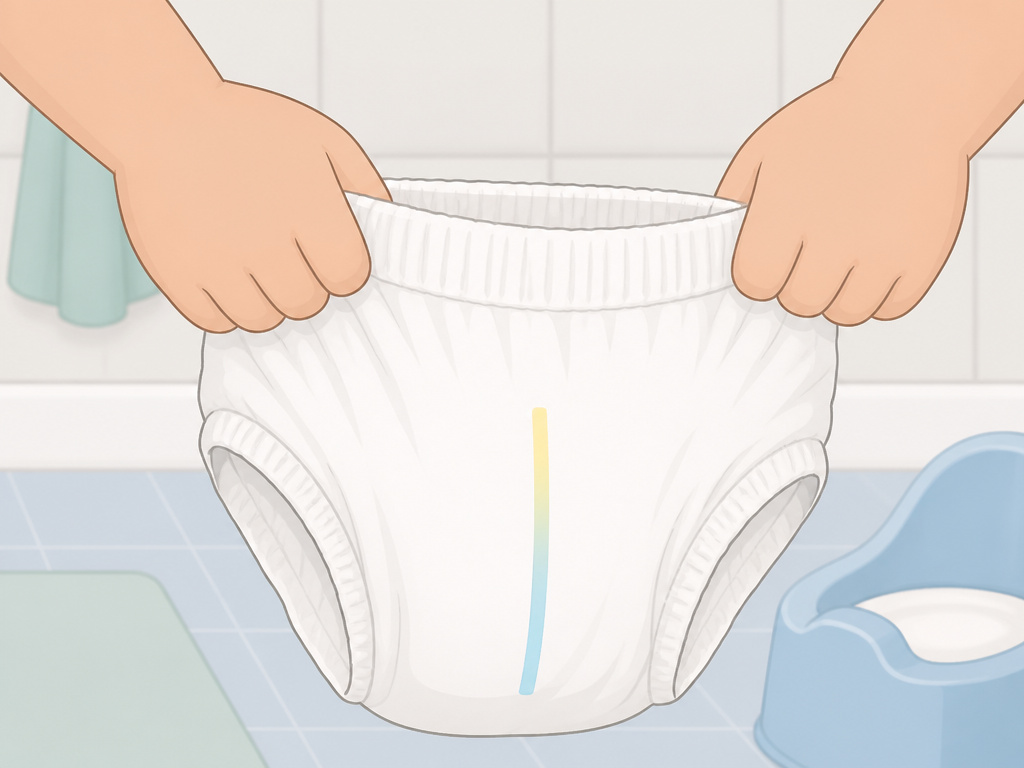
The difference between diapers and pull-ups isn’t just about tabs versus elastic. It’s about developmental readiness and intent. A diaper is a passive containment system. A pull-up is an active tool in a potty training method.
Common mistake: Using pull-ups interchangeably with diapers before a child shows any interest in the toilet. This teaches that pull-ups are just another type of diaper, delaying the association with bathroom independence.
Pull-ups are for the child who understands the basic concept of using the potty, can communicate the need to go (even if too late), and is physically able to pull clothing up and down with minimal help. They bridge the gap between total reliance and full reliability.
If you’re ready to start potty training, committing to pull-ups during waking hours signals the shift. The official Pull-Ups® guidance states that going back and forth to diapers creates confusion. Consistency is the lever.
For overnight, the decision is separate. Many children master daytime dryness months or years before night dryness. Pull-Ups® Night*Time pants are a logical choice here, as they provide protection without the infantilization of a baby diaper. They are part of a step-by-step potty training routine that acknowledges different developmental timelines for daytime and nighttime control.
The Medical Necessity and Coverage Gap
This is where the sunny aisle of the store meets the stark language of healthcare bureaucracy. For families with children who have disabilities or chronic medical conditions causing incontinence, absorbent products are a recurring, significant expense.
State Medicaid programs, like MassHealth, have strict medical necessity determination rules. The Massachusetts absorbent products guidelines spell out that pull-up/pull-on products may be considered only when the member meets all of these criteria: 1. Has a medical condition causing incontinence. 2. Is participating in a toileting-assistance program (unless impractical). 3. Has the cognitive and physical ability to pull up and take off the product independently. 4. Is able to ambulate and is not bedridden.
A child who uses a wheelchair but can self-transfer and manage clothing might qualify. A non-ambulatory, non-verbal child with the same medical condition would not—the system would classify their needed product as a “diaper” (with tabs) for coverage purposes. This is a critical, often heartbreaking, functional difference that parents navigating government reimbursement criteria for diapers must understand before submitting claims.
Pull-Ups vs. Other Products: A Decision Matrix
Your choice isn’t just “pull-up or diaper.” It’s a spectrum from traditional diapers to training pants to underwear. This table breaks down the primary use case and limitation of each.
| Product Type | Best For | Limitation / Risk |
|---|---|---|
| Traditional Tab Diaper | Infants, heavy overnight wetting, non-ambulatory children | Does not encourage potty independence; can hinder toilet training if used too long. |
| Pull-Up Training Pant | Ambulatory toddlers/preschoolers showing potty interest; overnight training | Less absorbent than premium diapers; not suitable for children who cannot self-dress. |
| Absorbent Underwear | Children with occasional daytime accidents; school-aged bedwetting | Very limited absorption; designed for “just-in-case” not full voids. |
| Plastic/PVC Pants | Used over cloth diapers or underwear to contain leaks | No absorbency; can cause skin irritation if wet fabric is held against skin. |
For a child with typical development, the path is often diaper → pull-up → underwear. For a child with disabilities, the choice between a “diaper” and a “pull-up” is made by a clinician based on the MassHealth absorbent supplies policy and the child’s mobility. The best pull-up diapers for one family might be entirely wrong for another based on this clinical gate.
Frequently Asked Questions
Are pull-up diapers reusable?
No, mainstream brands like Pull-Ups® are disposable. The term “pull-up” refers to the underwear-like design, not reusability. Reusable cloth training pants exist but are a separate product category.
Can pull-ups be used for overnight?
Yes, specifically designed products like Pull-Ups® Night*Time Training Pants are formulated for overnight use, offering up to 12 hours of protection. Using a daytime training pant overnight will likely lead to leaks.
What size pull-up diaper for a 4-year-old?
Check the child’s weight. A 4-year-old typically fits into Pull-Ups® sizes 4T–5T (38-50 lbs) or 5T-6T (46-60 lbs). Always use the weight range on the package, not just age, for the best fit and leak protection.
Why do pull-ups leak more than diapers?
They can leak if sized incorrectly or if the child’s output exceeds the product’s designed capacity. Pull-ups often have less absorbent material than a same-size diaper to maintain a trim, underwear-like fit. For heavy wetters, a Night*Time version or a tab-style diaper may be necessary.
When should you stop using pull-ups?
Stop daytime use once the child is consistently staying dry for most of the day and successfully using the toilet. Nighttime use can continue until the child consistently wakes up dry, which for many kids happens years after daytime training.
Before You Go
A pull-up diaper is two things: a cleverly designed pair of disposable underwear for a toddler, and a medically categorized absorbent product with strict eligibility rules. For the typical family, focus on the fit, the Learning Layer, and a committed transition. For families dealing with medical incontinence, know the clinical definitions—they are the key to accessing support. The right choice always starts with the child in front of you: their abilities, their routine, and the real-world result you need, whether that’s a dry night or an approved insurance claim.
