
What Is a Changing Robe? The Oversized Hooded Privacy Layer
This post contains affiliate links. As an Amazon Associate, we learn from qualifying purchases
A changing robe is a large, loose-fitting, hooded outer garment designed to provide a private, sheltered space for changing clothes outdoors. It’s not a bathrobe. It’s a portable changing room made from either highly absorbent toweling fabric or a windproof, waterproof shell with a warm lining, built for use after swimming, at festivals, or anywhere public facilities are lacking.
That definition covers the basics. The real story is in the specifics, the exact dimensions patented for full coverage, the two material paths that split its purpose, and the care rules that keep it from falling apart after one season. Most guides call it a “big towel with a hood.” That misses the engineering.
What follows: the patent that defined its shape, the two material types that dictate your choice, and the maintenance schedule that actually works.
Key Takeaways
- The standard dimensions trace to a 1997 U.S. Patent: about 40 inches wide and 56 inches tall for medium, with a 13-14 inch neck opening.
- You choose between toweling (absorbent, for warmth) and weatherproof (wind/water-resistant, for cold/wet conditions). They are not interchangeable.
- Frequent washing destroys them. Aim for 6–8 weeks between washes, and only ever use a cold, gentle cycle with mild detergent.
- Proper storage means hanging weatherproof robes to preserve coatings and never cramming them into a packed bag.
- Sizing is intentionally oversized for changing ease, but check brand-specific fit guides, some, like the Passenger Escapism, are cut more generously.
The Core Design: More Than a Big Towel
The blueprint comes from U.S. Patent #5,611,083, filed in 1995. It wasn’t invented for babies or nursery use. The patent describes a “robe-like garment for use in changing clothes” for scuba divers, surfers, campers, and boaters. The inventor specified a purpose: privacy and shelter where walls don’t exist.
The patented design calls for a garment “large and loose-fitting on the wearer, with a hood, a large neck opening and a pair of short enlarged-diameter sleeves” made from “liquid absorbent terry cloth material (ten to twelve ounce cotton velour).”
The numbers matter. For a medium size, the robe is about 40 inches wide when laid flat, that’s an 80-inch circumference. It stands about 56 inches tall from hem to shoulder. The neck opening is 13 to 14 inches across. Those sleeves are short but wide, with a diameter of about 8 to 9 inches. This isn’t arbitrary. The scale creates a tent-like space. You step into it, pull it over your head, and your arms can retract inside the body to change without exposing a thing.
The patent also explicitly lists user groups most conventional articles ignore: “wheelchair-bound persons” and “transsexuals who are excluded from normal changing areas.” For these users, the robe’s design isn’t just about convenience; it’s about access and dignity. That’s a layer of intent most product descriptions skip.
Toweling vs. Weatherproof: The Material Split
This is the first decision point, and it’s absolute. The material defines the robe’s job. Getting it wrong means being cold, wet, or both.
| Type | Best For | Core Material | What It Does | What It Doesn’t Do |
|---|---|---|---|---|
| Toweling Robe | Warm weather, beach days, drying off quickly after a swim. | Absorbent terry cloth, cotton velour, or microfiber. | Soaks up moisture from skin, provides light warmth, offers privacy. | Blocks wind or rain. A wet towel robe in a breeze chills you fast. |
| Weatherproof Robe | Cold, wet, or windy conditions; winter surfing, kayaking, festivals. | Polyester or nylon outer shell with a DWR (Durable Water Repellent) coating, lined with fleece or sherpa. | Shields from wind and light rain, traps body heat with a plush lining. | Absorb water. It’s a barrier, not a sponge. |
The toweling robe is your quick-dry privacy tent. It’s lighter and packs smaller. The classic example is the robe described in the patent: 10-12 ounce cotton velour. Modern versions use soft microfiber. Its entire purpose is to give you a dry, private space to get out of a wet swimsuit and get a towel-dry started before you pull on clothes.
The weatherproof robe is your mobile shelter. Think of it as a wearable sleeping bag with a rain jacket shell. Brands like Passenger build these with recycled polyester shells, YKK zippers, and cozy sherpa fleece linings. The Passenger Waves Robe, for instance, has a water-resistant coating and a full sherpa lining. This is the robe you live in at a rainy soccer tournament or after an October surf session. It doesn’t dry you, you dry underneath it, protected from the elements.
How to Use a Changing Robe (The Right Way)
The process seems obvious, but a few tricks prevent frustration. First, ensure you have a dry, level spot to stand. Sand, grass, or a concrete pad works. Mud or puddles do not.
- Unzip and step in. Face the back of the robe, hold it open at the hem, and step both feet inside. The generous cut is there for a reason, you need to squat.
- Pull it overhead and find the sleeves. Hoist the robe up and over your head and shoulders. Slide your arms into the short, wide sleeves. If you’re changing out of a wet swimsuit, your arms can retreat inside the body cavity at this point.
- Change within the tent. Perform your clothing change inside the private space created by the robe’s volume. The fabric should not be stretched tight against you.
- Exit and zip up. Once dressed, slide your arms back into the sleeves, zip up the front, and you’re ready to go.
Where this goes sideways: Trying to change on a steep, slippery slope. You need stable footing to manage the oversized garment. On an uneven boat deck or a rocky shore, the risk of losing balance and exposure goes way up.
The hood isn’t just for rain. It adds an extra layer of privacy around your head and helps trap warmth. On a windy beach, cinch it down.
Critical Care and Maintenance Rules
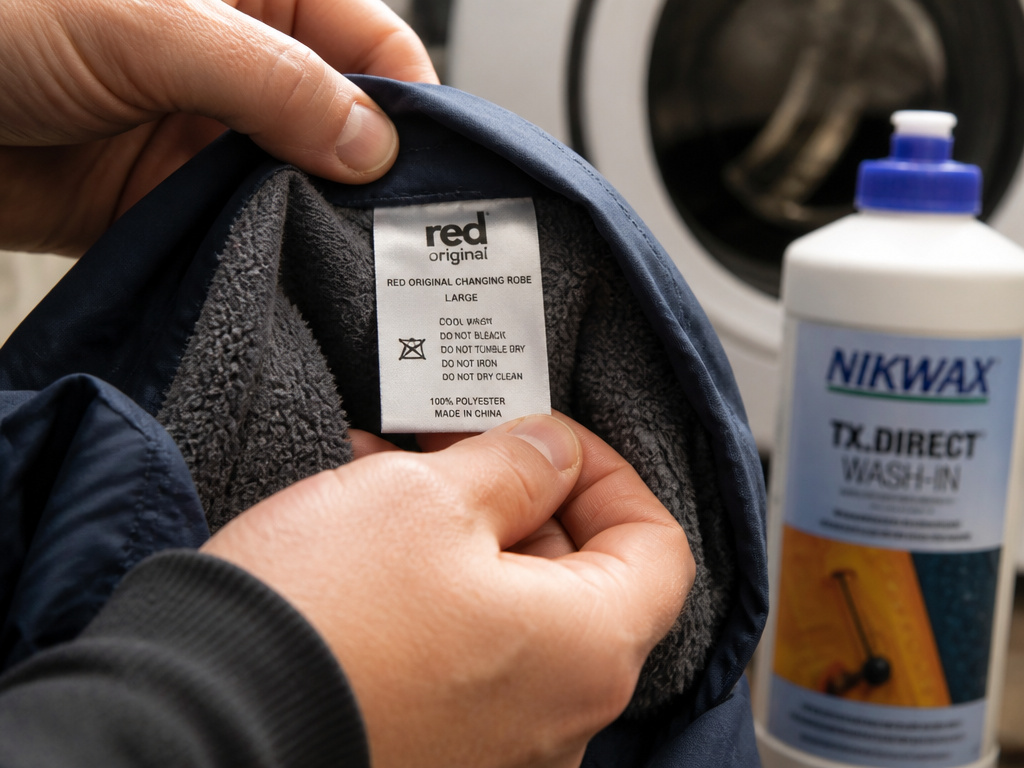
Here is where owners trash a perfectly good robe in one season. These garments are not like towels or jackets. The materials, especially waterproof coatings and bonded seams, are fragile.
Common mistake: Washing after every use. For both toweling and weatherproof robes, frequent washing degrades the fabric, strips the water-repellent finish, and can cause seams to de-laminate. A leading care guide recommends a minimum of six to eight weeks between washes.
Washing:
- Always check the label. The Passenger Escapism Robe dictates a cold, gentle machine cycle, no bleach, no tumble drying.
- Use a technical gear detergent. Standard detergents and fabric softeners clog the pores of waterproof fabrics and coat towel fibers, reducing absorbency.
- Zip all zippers and close Velcro. This prevents snagging and protects other fabrics.
- Never use heat. Hot water and high-heat drying shrink fabrics and melt adhesive seams.
Drying:
- Air dry only. Hang the robe on a wide, padded hanger in a well-ventilated area out of direct sunlight. Never drape it over a radiator or use a dryer.
- Why heat kills it: Direct heat on a weatherproof robe can cause the waterproof coating to crack and peel. On a toweling robe, it weakens the fibers and causes drastic shrinkage.
Storage:
- Hang weatherproof robes. Folding can crease and permanently weaken the waterproof coating. If you must fold, do it loosely.
- Use the storage bag. Many robes, like the Passenger models, come with a drawstring sack. It’s for transport, not long-term compression. Before long-term storage, make sure the robe is completely dry to prevent mildew.
- Avoid prolonged exposure to direct sunlight, which fades colors and degrades synthetic fibers.
Choosing the Right Changing Robe for You
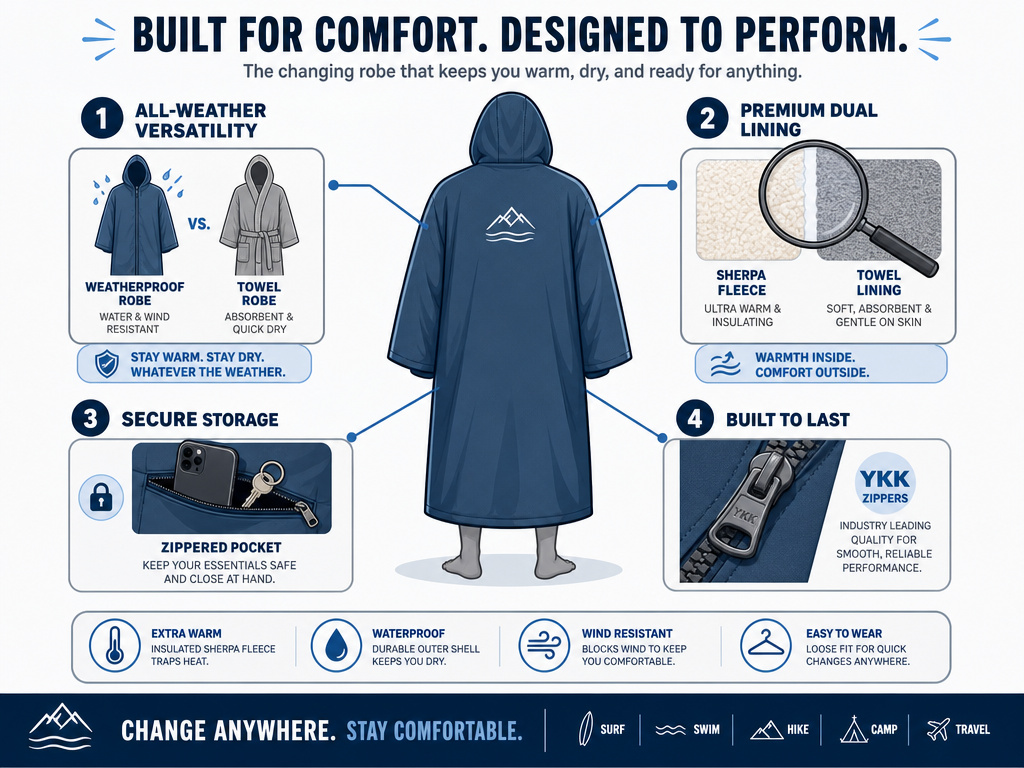
This isn’t about finding the “best” one. It’s about matching the robe to your actual climate and activity. Use this checklist.
- What’s your primary use? Post-swim at the local pool (toweling) vs. Winter paddleboarding (weatherproof).
- Check the lining. Sherpa fleece is warmer and cozier than standard fleece. A towel lining is for absorption, not insulation.
- Examine the pockets. You’ll want secure, zippered pockets for keys and phones. Some have internal security pockets.
- Look at the zipper. YKK zippers are a mark of quality, they resist corrosion from saltwater and sand.
- Understand the sizing. These are meant to be oversized, but brands differ. Passenger’s Escapism robe runs large; some users size down.
If you need one answer for most parents at outdoor events: a weatherproof robe with a sherpa lining. It handles drizzle, wind, and cold, and you can put it over dry clothes for warmth. The towel robe is a more niche, fair-weather tool.
Frequently Asked Questions
Are changing robes only for watersports?
No. The original patent lists uses from gyms and cruise ships to festivals and breastfeeding. Anywhere you need a private, sheltered space to change clothes outdoors is a valid use. Parents use them at parks, sports fields, and during travel.
Can a baby or toddler use a changing robe?
Not safely as a changing station. A changing robe is designed for a standing or seated adult to change themselves. It is not a secure surface for diapering an infant. For that, you need a stable, secure portable changing pad.
How is a changing robe different from a poncho?
Poncho is a single layer of fabric with a head hole. A changing robe is a fully enclosed garment with sleeves, a front zipper, and a designed volume that creates a private changing chamber. A poncho offers minimal privacy and no warmth compared to a lined changing robe.
Do I need to buy a special detergent?
For weatherproof robes, yes. Use a technical cleaner like Nikwax Tech Wash or Grangers Performance Wash. For toweling robes, a mild, fragrance-free detergent without softeners is best to maintain absorbency.
How long should a changing robe last?
With proper care, infrequent cold washing, air drying, and careful storage, a quality robe should last 3-5 years of regular use. The first thing to fail is usually the water-repellent coating on weatherproof models if washed incorrectly.
The Bottom Line
A changing robe solves a simple, physical problem: no walls. It’s a portable privacy shell, patented with specific dimensions to make that work. Your choice boils down to material: pick toweling for drying off in the sun, and pick a weatherproof, sherpa-lined model for everything else. Then, follow the care rules religiously. Wash it sparingly, dry it in the air, and hang it up. Do that, and it becomes a piece of gear you rely on for years, not a disposable item that fails when you need it most.
