
How to Clean a Keekaroo Changing Pad | Safe Methods & Tips
This post contains affiliate links. As an Amazon Associate, we learn from qualifying purchases
Clean your Keekaroo Peanut Changer by wiping it with a mild detergent and warm water, then drying it completely before the next use. The manufacturer’s October 2023 manual explicitly warns against submersion and harsh chemicals, which can damage the bonded shell and void the 5-year limited warranty. The pad’s 30-pound weight limit is tied to its structural integrity, which improper cleaning can compromise.
That “wipe clean” promise is why you bought it. The Dura-Soft shell is designed to repel fluids and limit bacteria without absorbing a drop. But the cleaning instructions hide two clauses that change the game: the DO NOT SUBMERGE warning and the specific list of cleaners that can dull the surface or break the seal between the shell and the foam core. Get those wrong, and the pad becomes structurally weakened as well as dirty.
What follows: the exact cleaning agents Keekaroo names, the step-by-step dry-down that prevents surface damage to your furniture, and the three cleaning mistakes that directly contradict the ASTM F 2388 safety certification the pad carries. By the end, you’ll know how to clean it today and keep it functioning for the full five-year warranty period.
Key Takeaways
- Use only mild detergent or mild soap with warm water, as specified in the 2023 user manual. Harsh solvents, bleach, or abrasive pads damage the shell’s finish and the foam bond.
- Dry the pad completely before placing it back on your dresser. A damp bottom transfers moisture to the wood finish, causing white rings or veneer lifting within a week.
- Never submerge the Keekaroo Peanut Changer. The hook-and-loop adhesive for the safety strap is not waterproof, and water intrusion between the shell and foam core leads to mold you cannot see or clean.
- Adhesive residue from the safety strap can be removed from your furniture with a citrus-based cleaning solution, per the manufacturer’s note.
- Check the safety harness for integrity during every cleaning. The audible click is non-negotiable for use, and the five-year warranty does not cover harness wear from chemical exposure.
Why the “Wipe Clean” Design Actually Demands Specifics
The Keekaroo Peanut Changer uses a shell-over-foam construction where a solid Dura-Soft skin is bonded to a foam core. That bond is the critical interface.Harsh chemicals don’t just sit on the surface; they can migrate through microscopic seams and degrade the adhesive holding the two layers together.
The 2023 user manual specifies a “mild detergent.” The product page says “soap and warm water.” Those are your only approved agents. This process is about preserving the impermeable barrier that makes the pad hygienic, not just keeping the surface shiny. Compromise that bond with bleach or abrasive scrubbing, and you create pockets where fluids and bacteria can penetrate, defeating the entire design purpose of this category of wipeable changing pads.
The Keekaroo Peanut Changer’s Dura-Soft shell is a non-porous, fluid-impermeable layer bonded to a supportive foam core. Cleaning must maintain the integrity of this bond. Approved agents are limited to mild, pH-neutral detergents and warm water; all others risk delamination and void the product warranty.
That’s the stake. Your cleaning routine directly impacts the 30-pound weight limit and the ASTM F 2388 safety certification. A damaged core doesn’t support weight evenly.
The Right Way to Wipe Down the Pad

This is a two-minute daily routine and a ten-minute weekly one. The difference is in the drying time.
What you need:
- A soft cloth or sponge (microfiber is ideal)
- Mild dish soap or baby bottle detergent
- A bowl of warm water
- A dry towel
The Steps:
- Mix your solution. Add a few drops of mild soap to a bowl of warm water. Never apply soap directly to the pad, it’s too concentrated and leaves a residue that feels tacky.
- Wipe in one direction. Dampen your cloth, wring it out thoroughly, and wipe the entire surface along the pad’s contour. Go front to back. Overlapping, circular scrubbing can grind debris into the surface over time.
- Rinse the cloth. Wring it out again in clean water and go over the pad a second time to remove any soap film. This step prevents soap buildup, which attracts dust and makes the surface less slip-resistant.
- Dry immediately and completely. Use a dry towel to wipe off all standing moisture. This is the step that prevents water spots.
Now, the part everyone skips: air-dry the bottom. Flip the pad over or stand it on its side for 20-30 minutes. The bottom rim and the area around the safety strap slot trap moisture. Placing a slightly damp pad on a wooden dresser is the fastest way to damage the furniture’s finish. The manufacturer’s manual states both the pad and the table must be dry before placement to avoid this.
What Not to Do: The Short List That Voids Your Warranty
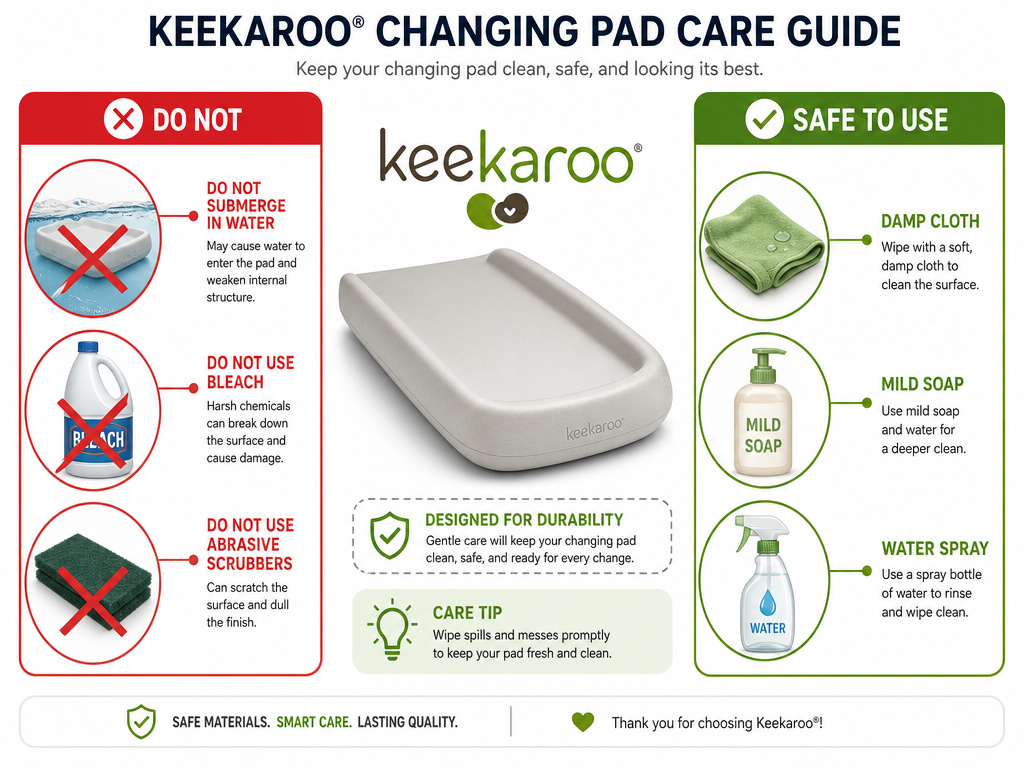
The manual’s “DO NOT SUBMERGE” warning is in all caps for a reason. Submersion affects the safety harness adhesive. The hook-and-loop patch that secures the strap to your table is not waterproof.Soaking the pad compromises that adhesive, and a loose strap is a fall hazard.
Common mistake: Using multipurpose sprays or disinfectant wipes. The alcohol or ammonia in these products dries out the Dura-Soft material. The shell loses its slight flexibility, becoming brittle and prone to micro-cracks within a few months of daily use.
Here are the banned agents and their specific consequences:
| Avoid This Cleaner | What It Does | Timeline for Damage |
|---|---|---|
| Bleach or chlorine-based cleaners | Dulls the shell’s finish, creates a chalky white film | After 2-3 uses |
| Abrasive scrubbing pads (Scotch-Brite) | Scratches the surface, creating grooves for bacteria | Immediate |
| Disinfectant wipes (e.g., Clorox, Lysol) | Dries and cracks the shell material | 1-2 months of daily use |
| Undiluted vinegar or baking soda paste | Can degrade the shell-to-foam bond | Over several weeks |
| Power washers or hose spray | Forces water into seams, leading to internal mold | Immediate risk |
This list exists because these cleaners alter the material properties the safety certification depends on. The CVPED parents cleaning guide echoes this, stressing that non-approved chemicals break down the very features that justify the pad’s price.
Dealing with Stains, Adhesive, and Deep Clean Questions
For sticky situations like diaper cream or adhesive residue, the manual has a specific fix.
For adhesive residue on your furniture (from the safety strap patch), Keekaroo directs you to a citrus cleaning solution. Products like Goo Gone or a homemade orange oil mix work. Apply a small amount to a cloth, rub the residue, and wipe clean. Never use this on the pad itself, only on your table.
For stubborn stains on the pad (berry juice, marker): 1. Follow the standard wash with mild soap. 2. For persistent marks, make a paste with baking soda and water. Gently rub with a soft cloth, then rinse thoroughly. This is a mild abrasive that works on the shell without scratching it. 3. Dry completely as before.
There is no such thing as a “deep clean” that involves soaking or steam. If a stain won’t lift with the baking soda method, it’s likely a surface scratch that has trapped pigment, not a cleanliness issue. This is a limitation of the solid-shell design, and it’s why selecting from the best changing pad covers for daily protection is a smart move.
Drying and Storage: Where Mold Actually Starts
Cleaning is only half the job. Storing the pad damp guarantees problems.
The rule: The pad must be bone-dry on all surfaces before you put it away or place it back on your dresser. This includes the bottom, the side channels, and the area under the safety strap buckle.
| Storage Scenario | Correct Method | Risk of Incorrect Method |
|---|---|---|
| Daily use on a dresser | Dry top & bottom, ensure table is dry | Moisture transfer damages furniture finish |
| Storing in a closet | Stand on its side or hang; ensure air circulation | Flat storage traps moisture, leading to mildew odor |
| Travel or rarely used | Clean, dry completely, store in breathable bag | Plastic bag storage promotes condensation and mold |
Never store anything on top of the pad. The foam core can compress permanently, creating an uneven surface that doesn’t support your baby properly. This is especially important if you’re choosing among changing pads for a dresser where space is tight.
How Cleaning Affects the Safety Harness and Warranty
Your five-year warranty covers defects in material and workmanship. It does not cover damage from accident, misuse, or improper cleaning. Using bleach or submerging the pad is considered misuse.
The safety harness is part of the cleaning check. Each time you wipe the pad, run the cloth over the strap and buckle. Check for: – Fabric stiffness or cracking (a sign of chemical damage) – Buckle function (the tabs should press and release smoothly) – The audible click when you latch it
A harness damaged by harsh cleaners is a fall hazard. Keekaroo states the pad must never be used without the provided harness. If the harness is damaged, you must replace it with an official Keekaroo part, third-party accessories void the warranty. This integrated safety is what separates it from basic diaper changing pads.
TL;DR: Clean with mild soap and water only. Dry every surface completely. Never soak it. That’s the entire manual, and it’s enough to keep the pad safe and intact for years.
Frequently Asked Questions
Can I use Clorox wipes on my Keekaroo?
No. Disinfectant wipes contain chemicals that dry out and crack the Dura-Soft shell over time. The manufacturer’s approved cleaners are mild detergent or soap with warm water only.
How do I get rid of the mildew smell?
Mildew smell indicates water was trapped inside, likely from submersion or improper drying. Surface cleaning won’t fix it. If the smell persists after a full, proper dry, the internal foam may be compromised. Contact Keekaroo customer service, but note this may not be covered under warranty if improper cleaning is the cause.
Can I put the Keekaroo pad in the washing machine?
Absolutely not. The manual explicitly says “DO NOT SUBMERGE.” Machine washing will destroy the adhesive bonding the shell to the foam, void the warranty, and create a serious mold problem inside the pad.
What is the best cleaner for the Keekaroo peanut changer?
The best cleaner is the one Keekaroo names: a mild detergent or mild soap with warm water. For adhesive residue on your furniture (not the pad), they recommend a citrus-based cleaning solution.
How often should I clean my Keekaroo changing pad?
Wipe it down with a damp cloth after every diaper change to remove surface mess. Do a full clean with mild soap and water once a week. Immediate cleaning of acidic spills (spit-up, fruit) prevents potential surface staining.
Before You Go
Cleaning a Keekaroo is about preserving the engineering that makes it safe, not just making it look new. Stick to mild soap and water.Dry it thoroughly, every time. Listen for the click on the harness.
That’s it. That routine protects your investment, keeps the warranty valid, and ensures the pad performs as certified. For other surfaces, the rules change; our guide on how to clean a Skip Hop pad walks through its different material needs. But for the Keekaroo Peanut Changer, simplicity is the whole point.
