
How to Clean Your Ubbi Diaper Pail to Prevent Mold and Rust
This post contains affiliate links. As an Amazon Associate, we learn from qualifying purchases
To clean an Ubbi diaper pail, use only a dry cloth on the interior and exterior steel surfaces. The manufacturer explicitly warns against any liquid, including water, bleach, or disinfectants, because moisture trapped inside the airtight steel chamber leads to condensation, mold, and eventual rust at the powder-coating edges. For the rubber door seals, a barely-damp cloth with mild soap is acceptable, but it must be thoroughly dried immediately to preserve the airtight seal.
That “dry cloth only” directive comes straight from Ubbi’s official FAQ and user manual. It contradicts a separate manual that suggests a damp cloth, which is why so many owners get this wrong. The steel body and airtight design that make the Ubbi so effective at locking in odor are the same features that make it vulnerable to internal moisture damage.
What follows is the correct, manufacturer-approved process. We’ll cover the tools you actually need, the one critical mistake that voids the warranty, and how to handle the rubber seals without compromising their function. You’ll also get a clear timeline for what happens if you use liquids, based on the physical properties of powder-coated steel.
Key Takeaways
- The Ubbi’s steel body must be cleaned with a dry cloth only. Introducing liquid creates condensation inside the airtight chamber, leading to mold and rust.
- The rubber seals around the sliding door can be wiped with a cloth dampened with mild soapy water, but must be dried completely and immediately to prevent degradation.
- Never submerge, hose down, or use abrasive cleaners on the pail. Disassembling it for cleaning voids the 3-year manufacturer warranty.
- Persistent odors usually come from an improperly installed bag blocking the seal, not from the pail itself. Fix the bag placement first.
- For deep smells, sprinkle baking soda directly into the bottom of a fresh bag before installing it; avoid loose powders or deodorizer pucks inside the empty pail.
Why the Ubbi’s Cleaning Rules Are Different
Most plastic diaper pails can handle a quick wipe with a disinfectant. The Ubbi Steel Diaper Pail is not most pails. Its core value, odor control, comes from two features that also dictate its care: powder-coated steel and a totally airtight seal.
The Ubbi diaper pail should only be wiped with a dry cloth. Any liquid, including Lysol, bleach, or harsh abrasives, even water, can potentially create condensation that could eventually develop into mold and rust. Since the pail is totally airtight, liquid is to be completely avoided. . Ubbiworld Official FAQ
The steel construction doesn’t absorb odors like plastic does. But steel rusts. The powder coating is a baked-on paint layer that prevents oxidation, but it’s thin at the stamped edges around the door opening and bag holder. Introducing moisture inside the sealed environment lets water vapor condense on these cold steel surfaces. That trapped dampness has nowhere to go.
Where this goes sideways: Using a wet cloth to wipe the inside on a Tuesday. By Friday, you might see faint moisture beads under the lid. In two weeks, a musty smell appears, that’s mold spores growing in the microscopic dampness. After a few months of this cycle, you’ll spot the first specks of orange-brown rust along the raw metal edge of the door opening. Once rust starts under the paint, it spreads.
The Ubbi’s Dry-Cloth Cleaning Rule (And Why It’s Non-Negotiable)
You will find conflicting advice. Another official-looking manual online says to use a “damp cloth.” Ignore it. The guidance from Ubbi’s own website and the PDF manual hosted on Amazon is absolute: dry cloth only.
This isn’t about being fussy. It’s a direct consequence of material science. A damp cloth leaves behind more water than evaporates. In an airtight steel box, that residual humidity reaches 100% relative fast. When the room temperature drops at night, the water condenses on the interior walls.
The powder coating is porous at a microscopic level. Condensation settles into these pores, particularly at cut edges where the coating is thinnest. This constant wet-dry cycle is the perfect catalyst for oxidation, rust.
| Cleaning Method | Official Ubbi Stance | Physical Consequence | Timeline for Damage |
|---|---|---|---|
| Dry Cloth | Approved and required. | Removes surface dust and debris without adding moisture. | No damage. |
| Damp Cloth / Water | Explicitly prohibited. | Introduces condensation. | Mold smell in 1-2 weeks; rust spots in 1-3 months. |
| Disinfectant Sprays | Explicitly prohibited. | Liquid carrier causes condensation; chemicals may degrade rubber seals. | Seal degradation and rust on parallel tracks. |
| Abrasive Cleaners | Explicitly prohibited. | Scratches the powder coating, exposing bare steel to air and moisture. | Immediate vulnerability; rust follows first condensation event. |
The warranty won’t cover rust from improper cleaning. The 3-year manufacturer warranty is for defects in materials or workmanship, not damage from normal wear and tear or failure to follow care instructions. Using liquid is a clear violation of those instructions.
What You’ll Need (The Two-Minute Toolkit)
Gather these items before you start. You likely have them all. – Microfiber cloths (2): The default tool. They grab dust and sticky bits without needing moisture. – Soft-bristled brush (optional): A clean, dry toothbrush or pastry brush for dislodging crumbs from the rubber seal grooves. – Mild dish soap: Only for the rubber seals, and only if they are visibly soiled. – Lint roller (optional): Excellent for quickly picking up pet hair or dust bunnies from the exterior.
Skip this: Spray bottles, bleach, vinegar, baking soda paste, magic erasers, hose, or pressure washer. Your goal is to clean without adding moisture or abrasives.
Step-by-Step: The Correct Cleaning Process
 Follow this sequence every 1-2 weeks, or whenever you change the bag. The whole process takes under five minutes if the bag is installed correctly.
Step 1: Empty and Remove the Bag
Lift the top cover and bag holder together, tie the full bag shut, and lift it out slowly. Inspect the empty interior. If the old bag leaked or tore, you may need to pick solid debris from the bottom of the steel pail with a dry paper towel.
Step 2: Dry-Wipe the Interior Steel Surfaces
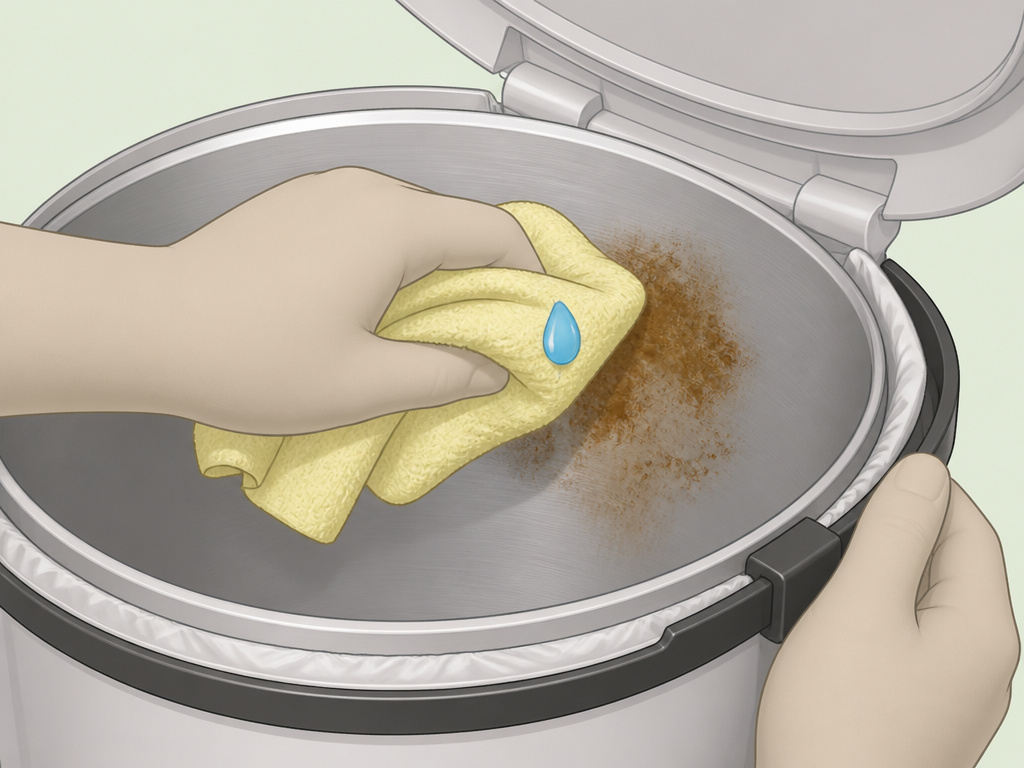
Take a dry microfiber cloth and wipe the entire interior, sides, bottom, and the underside of the top cover. Use firm pressure to scrub off any dried-on spots. The cloth’s texture provides enough abrasion. For a stubborn bit, slightly dampen a corner of the second cloth, spot-treat the debris, and then immediately dry the area thoroughly with the dry section. Do not wet the metal.
Step 3: Clean the Rubber Seals
This is the only place moisture is cautiously allowed. Examine the rubber gaskets around the sliding door opening and the lid. – If they’re just dusty, use the dry brush to sweep the grooves. – If soiled, dip a cloth corner in a bowl of water with a tiny drop of mild soap. Wring it out until it’s barely damp. Wipe the seal, then immediately and meticulously dry it with a dry cloth. Soap residue left on rubber will dry and crack it over time.
Step 4: Wipe the Exterior
Give the outside a quick pass with a dry cloth or a lint roller. The powder-coated finish wipes clean easily. This maintains the look but has no functional impact on odor control.
Step 5: Install a Fresh Bag Correctly
This step is critical. An improperly seated bag is the #1 cause of odor breakthrough. 1. Push a new standard tall kitchen bag through the center of the bag holder. 2. Tuck all edges of the bag around the holder’s rim and between the bag holder clip. This is the step everyone misses. The manual shows it for a reason. 3. Ensure no part of the bag extends outside the pail. If it does, the sliding door cannot seal airtight against the rubber gasket.
Common mistake: Letting the bag liner puff out over the rim. The door closes on plastic, not the seal. Odors leak out within hours.
Step 6: Close and Lock
Push the cover down until it snaps. Engage the childproof lock on top if needed. You’re done.
Troubleshooting Persistent Odors and Stains
 If smells linger after cleaning, the pail itself is rarely the source. Run through this diagnostic list.
Problem: Odor when the pail is closed.
- Likely Cause: The bag is installed incorrectly (see Step 5). The airtight seal is broken.
- Fix: Remove the bag and re-install it, ensuring all edges are tucked between the clip and the rim.
Problem: Odor when opening the pail.
- Likely Cause: This is normal. The Ubbi contains smell, not eliminates it. The inside of a full bag of diapers will smell.
- Fix: Add an odor neutralizer to the bag itself, not the pail. Sprinkle a tablespoon of baking soda directly into the bottom of a fresh bag before you put it in the holder.
Problem: Visible stains or sticky residue inside.
- Likely Cause: A diaper leaked or a bag tore.
- Fix: Use the dry cloth with more elbow grease. For a gummy spot, apply a drop of mild soap directly to the dry cloth, scrub the spot, and dry instantly. Do not pour or spray soap into the pail.
Problem: Musty smell from a clean, empty pail.
- Likely Cause: Mold from past liquid cleaning. Condensation has occurred.
- Fix: Leave the empty pail with the lid open in a dry, sunny room for 48 hours. If the smell persists, the mold may be in the seal grooves. Clean the seals meticulously with the barely-damp soapy cloth method, dry them completely, and air out again.
What Absolutely Not to Do (Warranty-Voiding Moves)
The Ubbi is a simple, durable tool. You can break it by being too thorough. – Do not disassemble it. The parts are factory-assembled and not meant to be taken apart. Doing so voids the warranty instantly. The only exception is replacing a broken bag holder with an official part. – Do not use “deep clean” methods. This includes dishwasher, shower, hose, steam cleaner, or submerging any part. It’s steel, but it’s not waterproof. – Do not use internal deodorizer pucks or loose powders. Granular deodorizers like baking soda can get into the door’s sliding mechanism and the seal grooves, causing grit and preventing a tight close. If you use them, contain them in a small satchel placed inside the diaper bag.
How the Ubbi Compares to Other Pails
Cleaning needs vary wildly by material. This head-to-head shows why a one-size-fits-all approach fails.
| Pail Type | Primary Material | Safe Cleaning Method | Core Vulnerability |
|---|---|---|---|
| Ubbi Steel Diaper Pail | Powder-coated steel | Dry cloth only on steel; damp cloth on seals. | Internal condensation leading to rust. |
| Standard Plastic Pail | ABS or Polypropylene | Damp cloth with mild disinfectant. | Plastic absorbs odors permanently over time. |
| Dekor Classic | Plastic | Wipe with damp cloth; some parts are top-rack dishwasher safe. | Complex hinge mechanisms can jam with residue. |
| Munchkin Step | Plastic | Full disassembly and wash with soapy water. | Weak pedal mechanisms break under force. |
The Ubbi’s trade-off is clear. You get superior, non-absorbent odor locking but must commit to a moisture-free cleaning ritual. Plastic pails are more forgiving with liquids but eventually stink even when empty.
Frequently Asked Questions
Can I use Clorox or Lysol wipes on my Ubbi?
No. The official FAQ groups “any liquid, including Lysol” with the prohibition. The moisture left by the wipe is the problem, not the disinfectant. That residual wetness will condense inside the sealed pail.
How do I clean the Ubbi if I already used water and it smells musty?
Air it out completely. Leave the empty pail open in a well-ventilated area for at least two full days. Then, follow the dry-cloth process. The musty smell is mold, which needs moisture. Depriving it of moisture is the only cure. If rust spots have appeared, the damage is cosmetic and structural; the warranty will not cover it.
Is the Ubbi dishwasher safe?
Absolutely not. The heat, water pressure, and detergent will destroy the powder coating, guarantee rust, and melt the rubber seals. Dishwashing is a sure way to ruin the pail.
Can I use vinegar to clean the Ubbi?
Do not use vinegar. While it’s a natural disinfectant, it is an acidic liquid. It will promote rust on steel far faster than plain water. The “dry cloth only” rule excludes all liquids, acidic or not.
Why does my Ubbi still smell after I clean it?
Check the bag installation first. Then, consider what’s in the bag. Very soiled diapers or a full bag that’s sat for a week will create a powerful odor that any pail will release upon opening. For stronger containment, ensure diapers are rolled tightly and consider a bag change every 3-4 days, regardless of capacity.
Before You Go
Cleaning an Ubbi diaper pail is simple, but it’s not intuitive. Fight the instinct to reach for a spray bottle. A dry microfiber cloth is the only tool the steel body needs. Your diligence preserves the airtight seal and the powder coating, which together keep the nursery smelling fresh. Remember: if odors escape, re-tuck the bag liner. If a musty smell develops, you used liquid. The pail’s design does the heavy lifting on odor control, your job is just to keep it dry.
