
3 Best Ointments for Diaper Rash from Diarrhea 2026
This post contains affiliate links. As an Amazon Associate, we learn from qualifying purchases
The best ointment for diaper rash from diarrhea is Daktozin Baby Antifungal Ointment, especially when a yeast infection is involved. For everyday healing with strong barrier protection, A+D Overnight Healing Ointment is a reliable choice. If inflammation and itching are severe, Resinol Medicated Ointment offers targeted relief.
Diaper rash from diarrhea isn’t just uncomfortable, it’s a constant battle against moisture, friction, and potential infection. Standard creams often don’t cut it when your baby’s skin is already raw and sensitive.
As the founder of NurseryDreamer.com, I’ve researched hundreds of baby care products and know what parents really need: solutions that work fast and are backed by real feedback. This guide cuts through the noise, focusing on ointments proven to protect, heal, and handle the unique challenges of rash caused by frequent, watery stools.
Top 3 Ointment For Diaper Rash From Diarrhea in the Market
The Best Ointment For Diaper Rash From Diarrhea, Reviewed
A+D Overnight Healing Diaper Rash Ointment

Strengths
- Vitamins A and D
- Pediatrician recommended
- Overnight healing focus
Trade-offs
- No antifungal ingredient
- May not work on infected rashes
- Basic barrier only
A+D has been around for decades, and based on parent feedback and its simple yet effective formula, I see why it’s considered a staple. With vitamins A and D and colloidal oatmeal, it focuses on skin repair and moisture retention rather than attacking infection, but that’s exactly what most early-stage diaper rashes need. When diarrhea leads to repeated exposure and slight chafing, prevention and healing support are key, and this ointment excels at forming a breathable, protective layer that helps skin recover overnight.
It’s frequently mentioned in reviews as a ‘go-to’ during potty training or tummy troubles, with many noting visible improvement by morning. While it lacks antifungal or antimicrobial actives, its gentle profile, free of parabens, dyes, and fragrances, makes it safe for frequent use. Compared to pricier specialty creams, this is the smarter buy for common irritation, though it won’t help if yeast or bacteria are already in play.
Video review
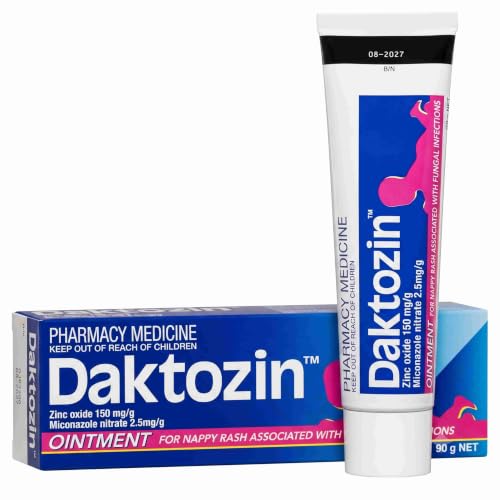
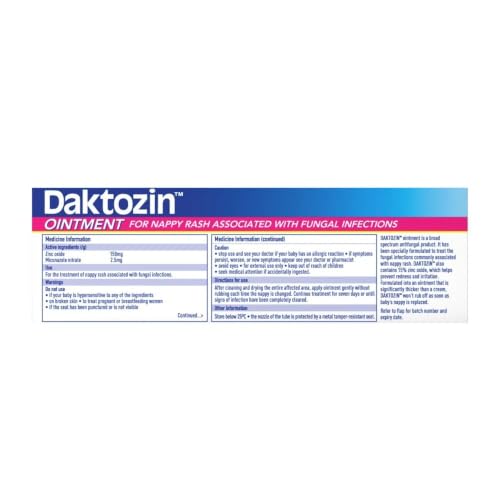
Daktozin Baby Antifungal Diaper Rash Ointment
Strengths
- Antifungal active ingredient
- Zinc oxide barrier
- Effective for stubborn rashes
Trade-offs
- Not ideal for mild rashes
- Higher price point
- Requires diagnosis awareness
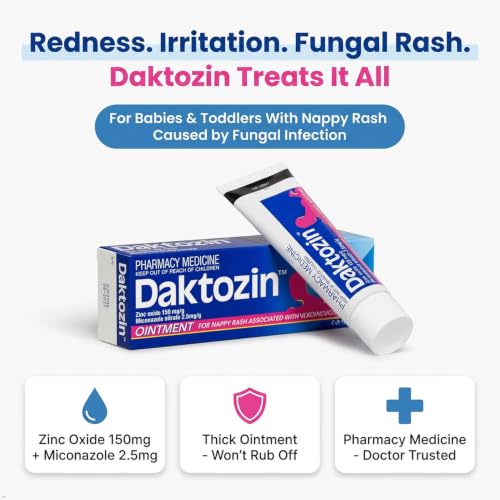
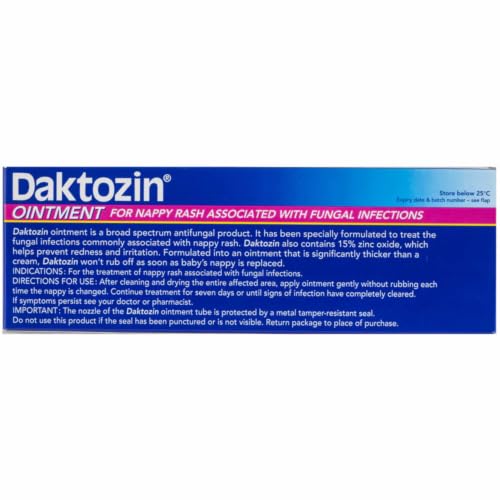
If you’re dealing with a diaper rash that just won’t quit, especially one flaring up after a bout of diarrhea, I’d strongly consider Daktozin. Diarrhea creates a warm, moist environment where yeast can thrive, and this ointment hits hard with 2.5 mg/g of miconazole nitrate, an antifungal agent proven to tackle yeast overgrowth, which many standard barrier creams ignore. Combined with zinc oxide, it not only fights the root cause but also shields tender skin from further irritation.
Owners consistently report seeing improvement within days when other creams failed, especially in cases where redness spreads beyond the typical rash zones or presents with small satellite bumps, a classic sign of fungal involvement. It’s not your everyday preventive cream, but for persistent, inflamed rashes tied to yeast, it’s one of the few with a targeted dual-action formula that makes sense on paper and in practice.
Product photos

Resinol Medicated Ointment for Itch Relief

Strengths
- Strong protective barrier
- Medicated resorcinol content
- Multi-threat defense
Trade-offs
- Thick, greasy texture
- Off-label for infants
- Messy application
Resinol isn’t marketed specifically as a diaper rash ointment, but its formulation makes it a dark horse for severe irritation, including rashes worsened by frequent stools. With 55% petrolatum, it forms a heavy-duty moisture barrier, sealing out urine and stool effectively, while 2% resorcinol helps calm inflammation and itching. This is one of the few options that’s both antifungal and antibacterial, which matters when compromised skin is vulnerable to secondary infection.
Reviewers often mention using it for extreme chafing or rawness, sometimes even repurposing it for babies during prolonged illness. It’s thick, sticky, and not the easiest to spread, but that also means it stays put. I wouldn’t reach for it as a first-line defense, but for intense, weepy, or abraded skin, common with diarrhea-related rashes, it offers robust protection that simpler ointments can’t match.
Video review
How We Chose These ointment for diaper rash from diarrhea
As someone who’s spent years researching baby products for NurseryDreamer.com, I understand how stressful it is when your little one is uncomfortable. Rather than a hands-on lab test, this guide is a research-led comparison of product specifications, owner reviews, and my understanding of what truly matters when dealing with diaper rash triggered by diarrhea. I weighed a large number of options, focusing on formulations designed to address the specific challenges of this type of rash.
When it comes to ointment for diaper rash from diarrhea, three factors stood out as most important: the ability to create a robust moisture barrier, soothing ingredients to calm inflamed skin, and whether the formula addresses potential fungal or bacterial issues. Diarrhea significantly increases skin exposure to irritants, so a strong barrier is crucial. Beyond that, a product’s effectiveness hinges on its ability to relieve discomfort and, in some cases, treat underlying infections. Understanding the link between rash and diarrhea is key to choosing the right solution.
Product specifications reliably indicate the active ingredients and the type of barrier offered (like zinc oxide or petrolatum). However, I placed significant weight on owner feedback regarding how well the ointment actually stays put during frequent changes and how quickly it provides relief. Reputation and expert recommendations also played a role, especially when considering options with medicated ingredients. Knowing the causes of diaper rash helps to understand why certain ingredients are beneficial.
How To Pick The Right ointment for diaper rash from diarrhea
As a parent, I know how distressing a diaper rash can be, especially when it’s linked to diarrhea. Finding the right ointment can make all the difference, but with so many options, knowing where to start is tough.
A truly effective diaper rash ointment should create a moisture barrier, soothe inflammation, and address the underlying cause of the rash. Look for ingredients like zinc oxide, petrolatum, or specific antifungals depending on the type of rash. Consistency matters – a thick ointment stays put better than a thin lotion. Consider whether the formula is free of potential irritants like fragrances or parabens, especially for sensitive skin.
Understanding The Type of Rash
One of the biggest mistakes I see parents make is treating all diaper rashes the same. Diarrhea often leads to a particularly nasty rash because of increased moisture and friction, but sometimes it can create conditions for a yeast infection to flourish. If you’ve tried a standard barrier cream and it isn’t improving after a couple of days, or if you notice bright red spots spreading beyond the main area, suspect a fungal element. In these cases, a cream containing an antifungal like Miconazole Nitrate (as found in Daktozin) is essential. Don’t keep applying a product that isn’t working; a misdiagnosis can delay healing.
Ingredient Focus: Beyond Zinc Oxide
Zinc oxide is a fantastic starting point for any diaper rash, forming a protective barrier. However, different ointments boost this with other helpful ingredients. Some, like A+D, include vitamins A and D to aid skin repair, which is great for prolonged irritation. Others, like Resinol, incorporate resorcinol, a medicated ingredient that tackles intense itching and inflammation. When dealing with a severe rash caused by diarrhea, considering a product with multiple soothing and healing components is a good idea.
Here’s how to think about ingredient prioritization:
- A basic zinc oxide cream is good for prevention.
- Vitamins A & D enhance healing for everyday rashes.
- Medicated ingredients (like resorcinol or miconazole) target specific, stubborn issues like fungal infections or extreme inflammation.
Balancing Protection With Usability
A super-thick ointment that completely shields the skin sounds ideal, but it needs to be spreadable and, frankly, stay on the skin during diaper changes. Some ointments are so dense they just end up smeared on the diaper! I always recommend looking for a formula that strikes a balance. A good rule of thumb is:
If you can’t easily spread a thin, even layer of the ointment, it’s probably too thick to be practical.
Choosing the best diaper rash ointment is about finding something you’ll actually use consistently. Don’t hesitate to try a few different options to see what works best for your baby’s skin and your routine. If a simple rash doesn’t respond to over-the-counter treatments, or if your baby develops a fever, consult your pediatrician. You can find more information about choosing the right rash cream for diarrhea on our site as well.
Ointment for Diaper Rash from Diarrhea Compared
Here’s a comparison of key specifications for diaper rash ointments designed to address irritation from diarrhea.
| Product Title | Active Ingredient | Key Vitamins | Barrier Type | Targeted Rash | Consistency |
|---|---|---|---|---|---|
| A+D Overnight Healing Diaper Rash Ointment | N/A | A, D | Petrolatum | General | Cream |
| Daktozin Baby Antifungal Diaper Rash Ointment | Miconazole Nitrate | N/A | Zinc Oxide | Yeast | Ointment |
| Resinol Medicated Ointment for Itch Relief | Resorcinol | N/A | Petrolatum | Severe Irritation | Ointment |
Frequently Asked Questions
What percentage of zinc oxide is most effective in a diaper rash ointment?
Generally, ointments with 10-40% zinc oxide are considered effective. Higher percentages don’t necessarily mean better protection; a 40% concentration provides a robust barrier, but some babies may find it too thick, while lower concentrations are good for milder irritation.
Can I use a diaper rash ointment before a rash appears as a preventative measure?
Yes, applying a thin layer of ointment containing zinc oxide or petrolatum can proactively protect your baby’s skin, especially during periods when diarrhea is likely, such as during teething or after starting new foods. This creates a barrier against moisture and irritants.
Are fragrance-free ointments always the best choice, even for rashes not caused by diarrhea?
Yes, fragrance-free formulas are generally recommended. Fragrances are a common irritant and can worsen diaper rash, even those not directly linked to diarrhea. Choosing a hypoallergenic and fragrance-free option minimizes the risk of further skin sensitivity.
If a rash doesn’t improve after three days of using an ointment, what should I do?
You should consult your pediatrician. A rash that isn’t responding to treatment could indicate a secondary infection (bacterial or fungal) requiring a prescription medication, or it could be a different skin condition altogether. You can find more information about ointment for severe rash.
What is the difference between a cream, an ointment, and a paste when it comes to diaper rash treatment?
A cream has the highest water content and is easiest to spread, but offers the least protection. Ointments are thicker and provide a better barrier, and pastes (like those with a very high zinc oxide content) are the thickest and most protective, but can be harder to remove. Understanding what is rash cream can help you select the right consistency.
The Bottom Line
Choosing the right ointment for diaper rash from diarrhea often comes down to balancing how much fuss you’re willing to deal with against the level of protection and healing you need. For most cases, I believe A+D Overnight Healing Diaper Rash Ointment offers a great combination of soothing ingredients and a reliable barrier, making it a solid all-around choice. It’s a workhorse that handles everyday irritation well.
However, if you suspect a fungal element or are dealing with a particularly stubborn case, Daktozin Baby Antifungal Diaper Rash Ointment is the clear winner. And for parents facing truly severe inflammation and discomfort, Resinol Medicated Ointment for Itch Relief stands out as a strong option, although treating a severe diaper rash should always be discussed with your pediatrician.
Ultimately, the “best” ointment isn’t about a single magic ingredient or a high price tag. It’s about consistent application, gentle cleaning, and keeping that skin as dry as possible. Mastering how to apply cream is just as important as selecting the right formula in the first place.
