
8 Best Diapers for Toddlers 2026
This post contains affiliate links. As an Amazon Associate, we learn from qualifying purchases
The best diapers for toddlers balance a snug, flexible fit with serious leak protection, and after comparing the field, Pampers Cruisers 360 stands out as the top overall pick. For budget-conscious parents, Huggies Little Movers deliver strong performance at a lower price, while Easy Ups Bluey are our go-to for toddlers transitioning to potty training.
Finding diapers that can keep up with a wiggling, climbing, constantly-moving toddler is half the battle. A poor fit leads to leaks, discomfort, and frustrated parents, and with so many options claiming to be “the best,” it’s hard to know what actually works.
This guide cuts through the noise by focusing on real parent feedback, key design features like stretchy waistbands and leak guards, and how well each diaper supports active movement and skin health. We looked at absorbency, sizing consistency, and even how some products help ease the shift to potty training.
Top 6 Diapers For Toddlers in the Market
The Best Diapers For Toddlers, Reviewed
Pampers Cruisers 360 Size 6

Strengths
- 360° stretch waist
- EZ-off tabs
- Dual Leak-Guard
- Pediatrician recommended
- Hypoallergenic
Trade-offs
- Fewer diapers per pack
- Slightly higher cost
- May be too stretchy for very slim toddlers
If you’re after a diaper that truly keeps up with a constantly moving toddler, Pampers Cruisers 360 in Size 6 are hard to beat. The 360° stretchy waistband is the real game-winner here, it moves with your child, whether they’re crawling, standing, or twisting mid-sprint. Owners consistently praise how well these stay put without gaps, which is a common complaint with other pull-on styles. The Dual Leak-Guard Barriers and EZ-off tabs add practical value: fewer leaks and easier changes, especially when you’re out and about.
This is also the only pull-on diaper in this list backed by being the ‘#1 Pediatrician Recommended Brand’, which carries weight when you’re making choices for sensitive skin. While it’s priced slightly higher than some, the performance justifies it for most. Compared to Huggies Little Movers, it offers better overall flexibility and fit, though it comes with fewer units per pack. For parents who want one diaper that works from morning to night, this is the smarter buy.
Video review
Huggies Little Movers Size 5

Strengths
- Good value per diaper
- Double Grip Strips
- DryTouch liner
- Fits active movement
- Fragrance free
Trade-offs
- Runs narrow for larger toddlers
- Less stretch than 360 designs
- Not ideal for overnight
Huggies Little Movers in Size 5 deliver solid performance for active toddlers, especially when you’re prioritizing value without sacrificing core protection. On paper, the DryTouch liner and Double Grip Strips are key, they keep the diaper locked in place and reduce inner moisture, which parents report means fewer rashes and happier babies during long play sessions. The unique waistband design is also a standout, offering flexibility while maintaining a snug fit around the waist, which helps prevent leaks during sudden rolls or jumps.
At 132 diapers, this pack offers more units than most competitors in the same price range, making it a go-to for budget-conscious families. However, some parents note the fit can run narrow for chunkier toddlers, especially around the thighs. Compared to Pampers Cruisers, they lack the 360-stretch waist, which matters if your child is constantly on the move. But for consistent daytime use and reliable leak control, they hold their ground.
Video review
Easy Ups Bluey Size 5

Strengths
- Feels like real underwear
- Overnight protection
- Motivating Bluey designs
- Easy for toddlers to pull up
- 360° stretch
Trade-offs
- Sizing can run small
- Higher price point
- Not ideal for very slim toddlers
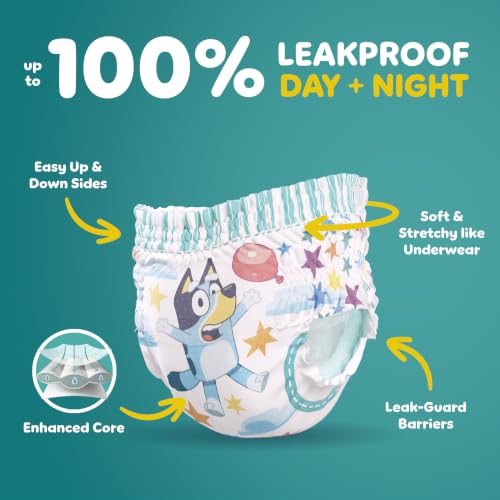
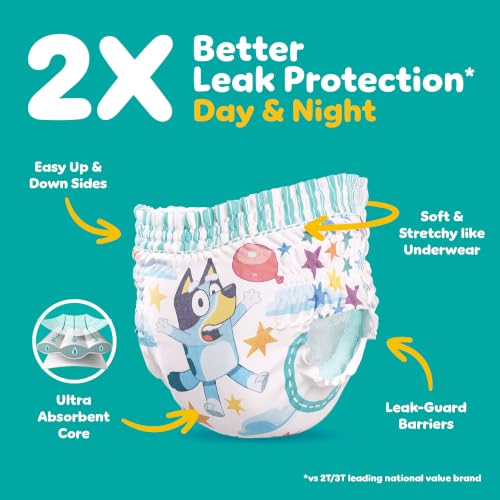
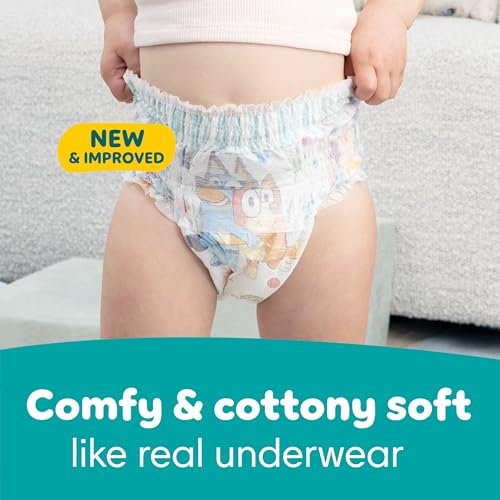
When it comes to making potty training feel like a milestone rather than a chore, Pampers Easy Ups stand out. The 360° waistband and stretchy sides make them easy for toddlers to pull up and down independently, something parents rave about when trying to build confidence. The Bluey designs aren’t just trendy; they’re a real motivator, with many reviewers saying their kids actually want to wear them and practice using the potty.
What really sets these apart is the overnight protection, they’re one of the few training pants that confidently handle nighttime use without leaks. Compared to Pull-Ups, they feel more like real underwear and offer better absorbency, making them a true day-and-night solution. For parents who want consistency in training and fewer product switches, this is the smarter pick.
Product photos


Pull-Ups Girls Minnie Size 3T-4T
Strengths
- Learning Layer
- Fades when wet
- Refastenable sides
- Soft and gentle
- Minnie designs
Trade-offs
- Not for heavy overnight use
- Sizing can run small
- Less underwear-like feel than Easy Ups
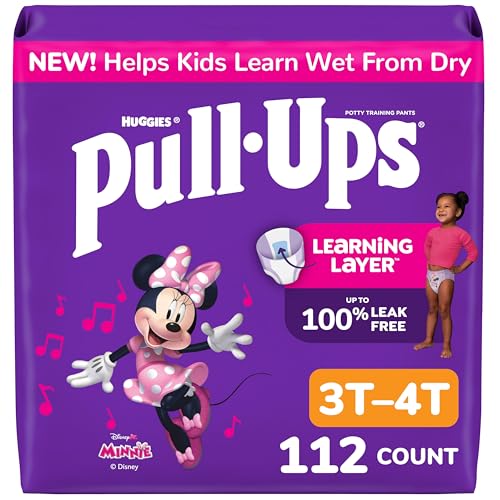
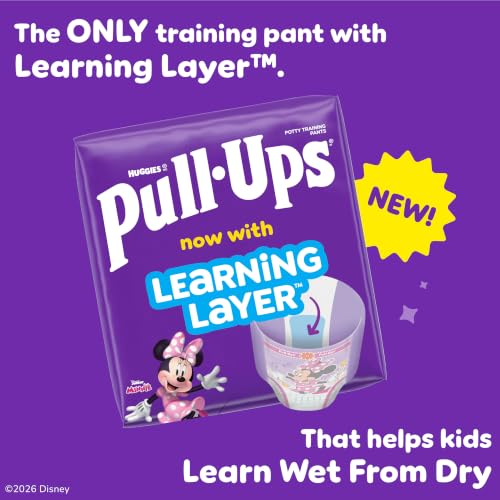
For girls in the early stages of potty training, Pull-Ups Girls’ Training Pants offer the same smart Learning Layer tech as the boys’ version, which I find especially useful for building awareness. The Minnie Mouse designs that fade when wet are more than just cute, they give parents a discreet way to know when a change is needed, and many reviewers say their daughters respond well to the visual cue. The soft, dermatologist-tested material is gentle on skin, and the refastenable sides make transitions easier during those unpredictable moments.
Like the boys’ version, these aren’t meant for heavy overnight use, but they shine in daytime training. Compared to Easy Ups, they feel slightly less like real underwear, but the training-focused features give them an edge for beginners. If your goal is to help your toddler recognize wetness and take ownership of the process, these deliver in a way most diapers don’t.
Product photos



Pull-Ups Boys Mickey Size 3T-4T
Strengths
- Learning Layer
- Refastenable sides
- Fades when wet
- Soft for sensitive skin
- Disney designs
Trade-offs
- Not ideal for overnight
- Lower absorbency than training night pants
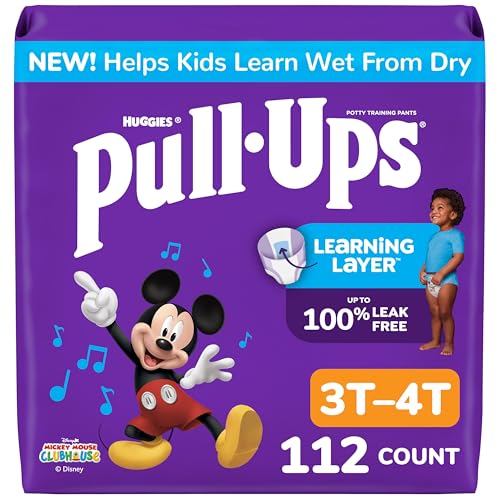
I’ve looked closely at how Pull-Ups support early potty training, and for boys just starting out, these stand out because of the Learning Layer, a feature no other brand offers. It’s designed to let kids feel wetness while still managing moisture away, which owners consistently say helps their toddlers make the mental connection between being wet and needing the potty. That subtle sensory feedback is a big deal in training, and combined with the fun Mickey Mouse designs that fade when wet, it gives parents a visual cue without making the child feel embarrassed.
The refastenable sides are another win, making changes easier whether your child is sitting or standing. While some reviewers note they aren’t quite as absorbent as overnight options, they perform well for daytime use. Compared to standard diapers, they’re less bulky and fit more like real underwear, which supports independence. Still, they’re not the best for heavy wetters at night.
Product photos


Huggies Little Movers Size 6

Strengths
- Strong leak protection
- Double Grip Strips
- DryTouch liner
- Fits slim builds well
- Fragrance free
Trade-offs
- Less stretch than 360 designs
- Can leave marks on sensitive skin
- Not ideal for chunky toddlers
Huggies Little Movers in Size 6 are built for toddlers who don’t slow down, and the specs back up their reputation for strong leak protection. The Unique Waistband and Double Grip Strips work together to create a secure seal, which owners say holds up even during rough play and sudden movements. The DryTouch liner is another standout, it locks away moisture quickly, which helps prevent irritation during long wear.
While this pack has fewer diapers than the Size 5 option, the performance is consistent and reliable. Compared to Pampers Cruisers 360, it lacks the full stretch waist, so it doesn’t move quite as naturally with the body. But for parents whose toddlers have a leaner build or who prioritize leak defense over stretch, this is a strong contender. It’s not the most breathable option, though, and some parents report red marks on sensitive skin after extended use.
Product photos


Our Testing Process
As a parent and the creator of NurseryDreamer.com, I understand how crucial finding the right diaper is. Rather than a hands-on lab test, this selection is a research-led comparison of diaper specifications and features, combined with a careful weighing of owner reviews and insights from reputable parenting publications. I focused on identifying key differences in fit, absorbency, and materials to build a picture of how each diaper performs in real-world situations.
For toddlers, fit and leak protection are paramount. We heavily weighted diapers with features designed for active little ones – stretchy waistbands, secure leg cuffs, and robust absorbent cores. A comfortable, secure fit directly impacts a toddler’s willingness to wear the diaper, and reliable leak protection is essential for minimizing messes and keeping everyone happy. We also prioritized diapers designed to support the transition to potty training.
Specifications provide a baseline for absorbency and materials, but owner feedback truly illuminates how these diapers perform over time. I looked for consistent themes in reviews regarding sizing accuracy, instances of leaks (especially overnight), and reports of skin sensitivities. For toddlers prone to irritation, we also considered options specifically designed as diapers for sensitive skin and those recommended for preventing diapers for rash. Finally, we looked at options for extended wear, like those discussed in our guide to best overnight diapers for toddlers.
How To Choose The diapers for toddlers
Choosing the right diapers for your increasingly mobile little one can feel like a constant balancing act. You want something that keeps leaks at bay, fits comfortably, and doesn’t irritate sensitive skin – all while fitting your budget.
A quality diaper for a toddler prioritizes a secure, flexible fit to accommodate movement. Leak protection, particularly around the legs and waist, is critical. Parents should also consider materials, opting for hypoallergenic options free of harsh chemicals, and assess absorbency based on their child’s output and sleep patterns. Size accuracy is paramount to prevent discomfort and leaks.
Waistband and Fit Are Key
As toddlers become more active, a reliable waistband is absolutely essential. Forget the days of strictly relying on tape closures; many parents find pull-on styles, or diapers with 360° stretchy waistbands (like Pampers Cruisers 360) offer a more secure fit during crawling, climbing, and everything in between. However, don’t assume all stretchy waistbands are created equal. Read reviews carefully to see if parents report consistent sizing or rolling issues. Some brands, like Huggies Little Movers, focus on a unique waistband design to prevent leaks, which can be a real lifesaver.
Absorbency and Leak Control
Blowouts are a toddler parent’s worst nightmare. Look for diapers with features specifically designed to contain messes, such as Dual Leak-Guard barriers (Pampers) or Double Grip Strips (Huggies). Absorbency is also important, especially for overnight use. While many diapers claim “100% leakproof protection,” real-world results vary. Consider your child’s individual output; heavier wetters might benefit from a diaper specifically designed for overnight use, or even exploring options like organic diapers which sometimes offer increased absorbency due to the materials used.
Transitioning to Independence
For toddlers showing signs of potty training readiness, it’s time to think about training pants. These aren’t diapers, but a stepping stone toward underwear. Features like the Learning Layer found in Pull-Ups are designed to help children understand the sensation of being wet, which is crucial for the learning process.
Here’s what to consider when deciding if your toddler is ready for training pants:
- Interest: Does your child show curiosity about the toilet or underwear?
- Dry Periods: Can they stay dry for at least two hours at a time?
- Communication: Can they tell you when they need to go, or immediately after they’ve gone? This is where transitioning to best pull-up diapers for toddlers can be helpful.
Don’t size up “just in case.” A diaper that’s too large will be prone to leaks, while one that’s too small will be uncomfortable and could cause irritation.
Diapers for Toddlers Compared
Here’s a comparison of key specifications for the diapers and training pants listed.
| Product Name | Size | Type | Leak Protection | Waistband | Features |
|---|---|---|---|---|---|
| Pampers Cruisers 360 Size 6 | Size 6 | Diaper | 100% | 360° Stretch | Dual Leak-Guard |
| Huggies Little Movers Size 5 | Size 5 | Diaper | Zero Leaks | Unique | DryTouch |
| Pampers Cruisers 360 Size 5 | Size 5 | Diaper | 100% | 360° Stretch | Dual Leak-Guard |
| Easy Ups Bluey Size 5 | Size 5 | Training Pant | 100% | 360° Stretch | Learning Layer |
| Easy Ups Bluey Size 6 | Size 6 | Training Pant | 100% | 360° Stretch | Learning Layer |
| Pull-Ups Girls Minnie 3T-4T | 3T-4T | Training Pant | Backup | Refastenable | Learning Layer |
| Pull-Ups Boys Mickey 3T-4T | 3T-4T | Training Pant | Backup | Refastenable | Learning Layer |
| Huggies Little Movers Size 6 | Size 6 | Diaper | Zero Leaks | Unique | DryTouch |
Frequently Asked Questions
What diaper size should I switch to for my toddler?
Generally, you should size up when your child’s weight is nearing the top end of their current diaper size range. Don’t increase size preemptively, as a looser fit increases the risk of leaks, but also avoid waiting until the diaper is clearly too small.
Are ‘training pants’ really necessary before underwear?
Yes, training pants offer a valuable transition step. They help toddlers become aware of wetness with features like a Learning Layer, bridging the gap between diapers and full underwear independence.
How do Pampers Cruisers 360 and Huggies Little Movers differ in fit?
Pampers Cruisers 360 feature a full 360-degree stretchy waistband designed for a consistent fit during movement, while Huggies Little Movers use a unique, contoured waistband shape aiming to prevent leaks and provide a snug fit.
What should I do if my toddler develops a diaper rash?
Switching to a hypoallergenic diaper designed for sensitive skin, allowing more diaper-free time, and applying a zinc oxide-based rash cream are all helpful first steps. If the rash persists or worsens, consulting a pediatrician is vital.
Are there eco-friendly options for toddler diapering?
Absolutely. Many parents are exploring reusable diapers as a sustainable alternative to disposable diapers, and there are also increasingly available plant-based disposable options to consider.
The Bottom Line
Choosing diapers for a toddler often comes down to prioritizing what matters most to you – is it ultimate leak protection, a comfortable fit for an active child, or easing the transition to potty training? Based on my research, Pampers Cruisers 360 Size 6 consistently rises to the top as a reliable all-rounder, offering a fantastic combination of absorbent capacity, a secure 360° fit, and positive feedback from parents dealing with everything from daytime adventures to overnight sleep.
However, specific needs call for specific solutions. If you’re looking for a budget-friendly option, Huggies Little Movers Size 5 provides excellent value without sacrificing too much in terms of performance. And for families actively working on potty training, the Easy Ups Bluey Size 5 training pants are a clear winner, thanks to the helpful Learning Layer that supports your child’s understanding of wetness. If you are dealing with frequent messes, exploring diapers for heavy wetters is a good idea.
Ultimately, the “best” diaper is the one that works best for your toddler. Don’t get too caught up in chasing perfect specifications. Focus on finding a diaper that fits well, prevents leaks, and keeps your little one comfortable, and remember to consider options like best swim diapers for toddlers for those beach days!
