
Is Diaper FSA Eligible? The Medical Necessity Clause Explained
This post contains affiliate links. As an Amazon Associate, we learn from qualifying purchases
Diapers are only eligible for Flexible Spending Account (FSA) reimbursement with a doctor’s prescription diagnosing a medical condition causing incontinence. They are not eligible for a Dependent Care FSA, which explicitly excludes childcare supplies like diapers. The IRS defines eligible expenses under Code §213(d) as costs for “medical care,” which for diapers requires documented medical necessity, not convenience.
That distinction between a health expense and a childcare supply is where most claims get denied. A diaper for a healthy baby is a convenience item. A diaper for an adult or child with a diagnosed incontinence condition is a medical supply. Your plan’s administrator and the IRS draw that line with specific paperwork.
What follows: the exact medical criteria that turn a diaper into a qualified expense, the hard difference between your two possible FSA accounts, and the step-by-step documentation you need to submit a clean claim that gets paid.
Key Takeaways
- Diapers require a Letter of Medical Necessity from a doctor diagnosing incontinence to be FSA-eligible; baby diapers for convenience are never eligible.
- A Dependent Care FSA explicitly excludes “childcare supplies (e.g., diapers)”, only a Health FSA can reimburse diapers for medical reasons.
- Insurers like Geisinger enforce strict criteria, including failure of other treatments and a 300-unit monthly maximum for combined diapers and pull-ups.
- You must save itemized receipts even when using an FSA debit card, as all transactions require substantiation per IRS rules.
- Reimbursement claims must be processed within 60 days of receipt, but missing documentation can suspend your card for 30 days or more.
The Medical Necessity Clause That Decides Everything
The IRS doesn’t have a simple “yes” or “no” list for diapers. Eligibility hinges on the definition of “medical care” in IRS Code §213(d). This turns the question from “is it a diaper?” to “is it treating a diagnosed medical condition?”
For a Health FSA to cover diapers, the expense must be for incontinence supplies. That’s the key phrase. Incontinence is a medical symptom with several recognized types, stress, urge, mixed, overflow, or total. The diaper becomes a medically necessary device to manage that symptom.
A diaper purchased for a healthy infant or toddler for routine childcare is a convenience item. A diaper purchased for an individual three years or older with a physician-documented diagnosis of urinary or fecal incontinence is a qualified medical expense.
This isn’t a gray area. Major health plan policies spell it out. Geisinger Health Plan’s coverage policy, for example, states diapers are covered only when there is a physician’s prescription with a specific diagnosis, and documentation that pharmacologic therapy or surgical intervention have failed or are contraindicated. They are not covered for “nocturnal enuresis not addressed by other treatments” or for “convenience.”
The takeaway is blunt. Without a diagnosed medical condition causing incontinence, diapers are not an FSA-eligible expense. The burden of proof is on you, and it starts with a conversation with a doctor.
What Your Doctor’s Letter Must Include
A simple prescription that says “diapers” won’t cut it. Plan administrators and substantiation teams look for specific elements that link the product directly to the medical care defined by the IRS.
Your Letter of Medical Necessity should include: 1. Patient’s name and diagnosis (e.g., “Stress urinary incontinence” or “Neurogenic bladder”). 2. A statement that the diapers/incontinence supplies are medically necessary to treat this condition. 3. Confirmation that other standard treatments (like medication or physical therapy) have been tried, are unsuitable, or have failed. 4. The specific product type needed (e.g., “disposable absorbent briefs”). 5. The physician’s signature, date, and contact information.
Skip any one of these, and you risk a denial. The administrator’s job is to ensure the expense complies with IRS regulations, they will ask for the documentation that makes that link explicit.
Health FSA vs. Dependent Care FSA: The Critical Split
This is the most common point of confusion, and it’s a costly one. You might have access to two different FSAs, and they operate under completely different IRS rules.
A Health Care FSA is for medical expenses as defined under IRS §213(d). A Dependent Care FSA is for expenses that allow you (and your spouse) to work, like daycare or eldercare. The government’s own guides make the distinction painfully clear.
The State of Georgia’s Dependent Care FSA qualifications document explicitly lists “Childcare supplies (e.g., clothing, diapers, formula)” as not eligible. That’s because those are considered normal costs of raising a child, not expenses that enable you to work.
| Account Type | Purpose | Diaper Eligibility | Governing Rule |
|---|---|---|---|
| Health FSA | Reimburse qualified medical expenses. | Eligible ONLY with a Letter of Medical Necessity for incontinence. | IRS §213(d) – Medical Care |
| Dependent Care FSA | Pay for care so you/spouse can work. | NEVER eligible. Explicitly excluded as a “childcare supply.” | IRS Child and Dependent Care Credit rules |
Common mistake: Assuming a Dependent Care FSA can cover diaper costs. That account is for the service of care, not the supplies used during care. Buying diapers at a daycare center doesn’t make them eligible.
If you only have a Dependent Care FSA, the door is closed. Your path is through a Health FSA and the medical necessity route. Check your plan documents or ask your HR department which accounts you are enrolled in before you start gathering receipts.
The Step-by-Step Guide to Getting Reimbursed
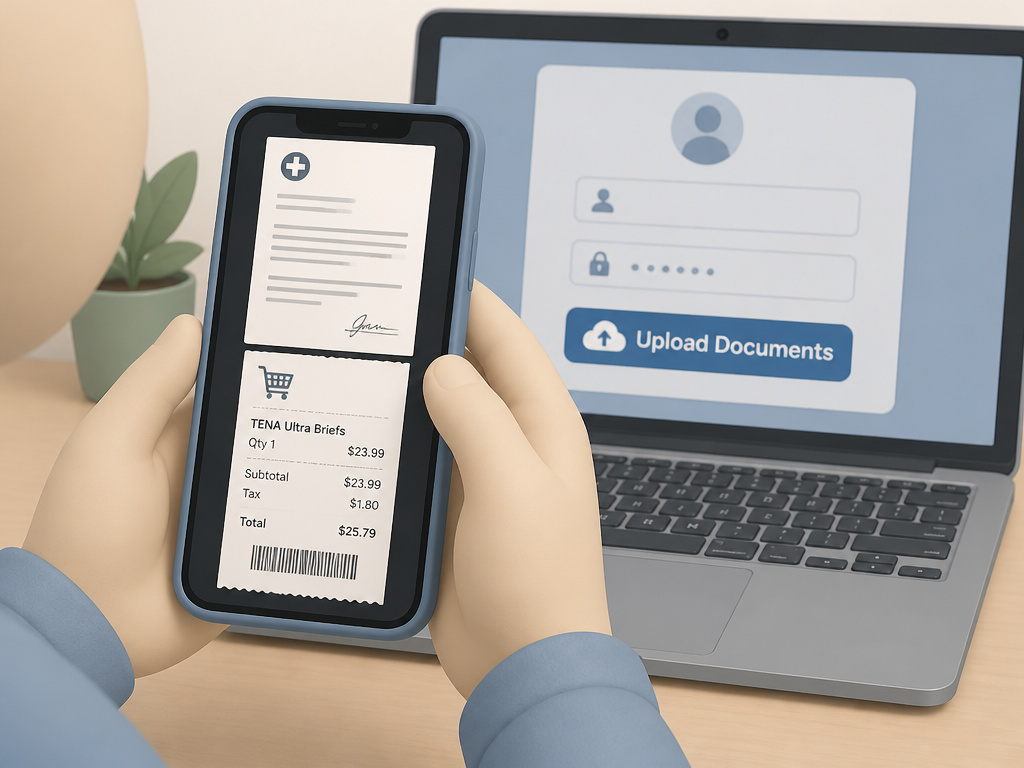
Once you have the required medical documentation, the process is straightforward but detail-oriented. Missing a step means delays.
Step 1: Obtain and Secure Your Documentation.
This is your doctor’s Letter of Medical Necessity. Get the original, signed copy. Also, keep the itemized store receipt showing the date, the product name (e.g., “TENA Ultra Briefs“), and the amount paid. A credit card slip is not enough, it needs to show what you bought.
Step 2: Make the Purchase.
You can use your FSA debit card if you have one, or pay out-of-pocket and submit for reimbursement. Using the card doesn’t mean you skip step 3.
Step 3: Submit for Substantiation.
If you used your debit card, the charge will likely be flagged for review. Log into your FSA administrator’s portal (like Wex Health or Fidelity) and upload a clear scan or photo of both the itemized receipt and your Letter of Medical Necessity. If you paid out-of-pocket, submit a manual claim form with these documents attached. Consequence of skipping: If documentation isn’t received, your FSA debit card will be suspended. According to administrator guides, you’ll get a first request, then a second request 30 days later. If you don’t respond to the second, the card is suspended until you repay the amount or provide the docs.
Step 4: Track the Claim.
By law, the administrator must reimburse you or deny your claim within 60 days of receipt. Watch your portal for status updates. If denied, they must tell you why, often it’s missing or insufficient documentation.
Step 5: Address Any Issues.
If denied, you can usually appeal by providing more information. This is where a thorough Letter of Medical Necessity pays off.
Limits, Exclusions, and Plan-Specific Rules
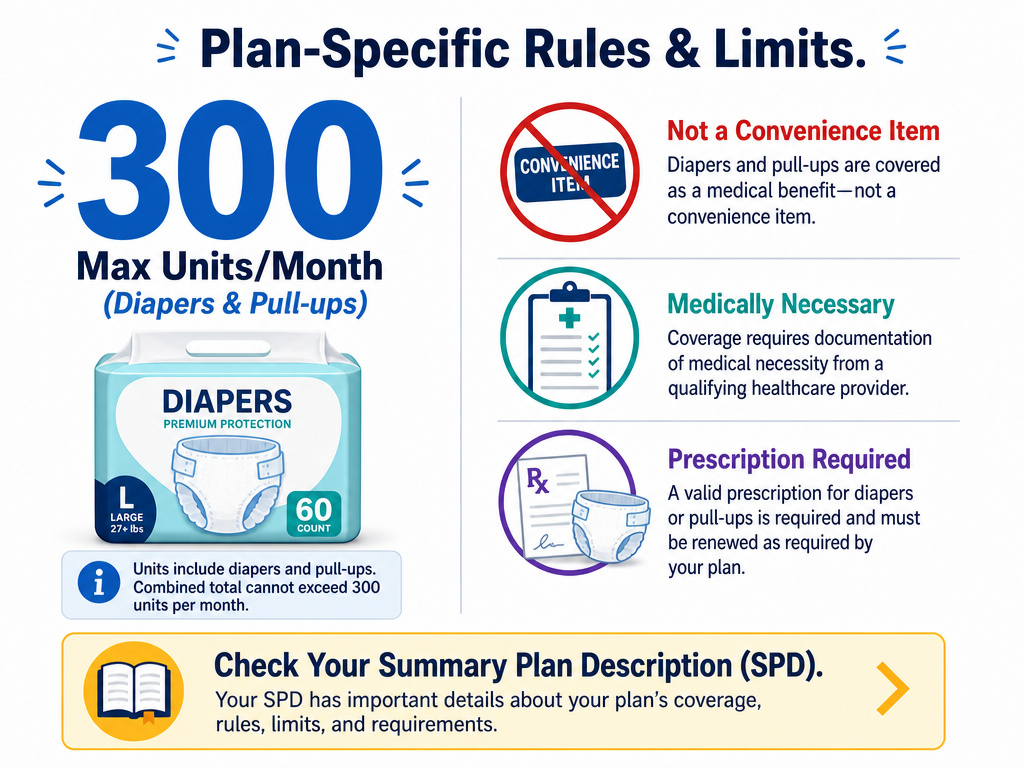
Even with a perfect Letter of Medical Necessity, your plan may have its own ceilings. You are subject to both the IRS’s broad rules and your specific plan’s provisions.
The most concrete limit found in the research is a 300-unit per month maximum for combined diapers and pull-up briefs, as stated in the Geisinger Health Plan policy. If an individual uses both, the total cannot exceed 300 per month. Requests beyond that require additional review. This same limit applies if someone uses a combination of different sized diapers.
Other common exclusions include: * Convenience: Products provided “solely for the convenience of the member.” * Untreated Conditions: If a reversible cause of incontinence is identified but no treatment plan is initiated. * OTC Without Prescription: While the CARES Act made many over-the-counter medicines eligible without a prescription, incontinence supplies like diapers still typically require that medical necessity documentation.
Where this goes sideways: Assuming your plan’s rules are the same as your friend’s. One employer’s Health FSA might have a $640 carryover, another might offer a grace period. One insurer might auto-approve certain brands, another might require pre-authorization. Always check your Summary Plan Description (SPD).
These plan-specific rules are why you must treat your FSA administrator’s website and documents as the primary source of truth. The New Jersey Treasury FSA essential guide is an example of official plan documentation that outlines specific rules like limited COBRA options for FSAs.
What Else to Know: OTC Eligibility and Documentation Traps
The CARES Act permanently made over-the-counter (OTC) drugs and medicines eligible without a prescription. This is great for aspirin or allergy meds. It does not change the rules for medical equipment or supplies like diapers and incontinence products. Those still require a prescription or Letter of Medical Necessity.
The biggest trap is debit card substantiation. There’s a widespread misconception that if the card goes through, the expense is approved. The IRS requires every single FSA transaction to be substantiated. Your debit card is just a payment method, not an approval.
As Fidelity’s substantiation guide notes, not all services from a medical provider are eligible (e.g., cosmetic dentistry), so itemized receipts are always required. For diaper purchases, the receipt must match the product type on your Letter of Medical Necessity.
Frequently Asked Questions
Can I use my FSA for baby diapers?
No. Disposable diapers for a healthy baby are considered a childcare supply, not a medical expense. They are not eligible for a Health FSA and are explicitly excluded from a Dependent Care FSA. Eligibility only applies to diapers used to manage a medically diagnosed condition of incontinence.
What is the difference between a Health FSA and a Dependent Care FSA for diapers?
Health FSA can reimburse for diapers if they are medically necessary for incontinence, supported by a doctor’s letter. A Dependent Care FSA is for daycare, preschool, or adult daycare costs that enable you to work; it cannot be used for any supplies, including diapers, as confirmed by documents like the Georgia dependent care FSA qualifications guide.
What qualifies as incontinence for FSA purposes?
Major insurers define it as a documented medical condition, such as stress, urge, mixed, overflow, or total urinary incontinence, or fecal incontinence. The patient must typically be three years or older, and other treatments must have failed or be unsuitable. A doctor must diagnose this in writing.
Do I need a prescription for incontinence supplies like diapers?
Yes. You need a Letter of Medical Necessity from a physician that includes the patient’s diagnosis, a statement that the supplies are medically necessary, and details on the product required. A simple prescription slip may not be sufficient.
Can I use my FSA debit card to buy diapers?
You can use the card to pay, but the transaction will almost certainly be flagged for substantiation. You must then submit your itemized receipt and Letter of Medical Necessity to your plan administrator. Failure to do so will result in your card being suspended until you provide the documents or repay the amount.
Are diaper rash creams FSA eligible?
Yes, but with a caveat. Over-the-counter diaper rash creams like Desitin or Aquaphor are typically eligible without a prescription because they treat a specific medical condition (rash). However, some administrators may still ask for a receipt showing the purchase. For more details, see our guide on FSA rules for diaper cream.
Before You Go
The answer to “is diaper FSA eligible” is a conditional yes, locked behind a gate of medical documentation. Forget about using a Dependent Care FSA, that path is closed. Your only route is through a Health FSA, with a doctor’s letter that transforms a diaper from a childcare item into an incontinence supply.
Start by confirming which FSA you have. Then, if you have a qualifying medical need, talk to your doctor about getting the precise documentation required. Save every receipt, understand your plan’s specific limits (like that 300-unit monthly cap), and never assume your debit card transaction is final. The IRS rules are strict, but they are also clear. Follow them to the letter, and you can use your pre-tax dollars for this necessary expense.
