
Is Diaper Rash Cream FSA Eligible? The IRS Rule You Need
This post contains affiliate links. As an Amazon Associate, we learn from qualifying purchases
Diaper rash cream is FSA and HSA eligible because the IRS classifies it as a treatment for a medical condition—diaper dermatitis. The rule hinges on intent: a cream formulated to treat an existing rash qualifies, while a general moisturizer for prevention does not. You can use your debit card at specialized retailers or submit receipts for reimbursement.
That distinction between treatment and prevention is the line the IRS draws. It’s not about the product category. It’s about the diagnosis.
What follows is the breakdown of that IRS rule, the specific ingredients that signal eligibility, and the straightforward way to spend your pre-tax dollars without a receipt hassle. You’ll also see where the system fails parents who can’t afford these creams at all.
Key Takeaways
- The IRS allows FSA/HSA spending on expenses you wouldn’t have “but for” a medical need. Treating a rash qualifies; preventing one usually doesn’t.
- Creams with active medicinal ingredients like zinc oxide, petrolatum, or antifungals are almost always eligible. Simple lotions are not.
- You can use your FSA/HSA card directly at stores like BuyFSA that pre-verify eligibility, bypassing receipt submissions.
- An estimated $1 billion in FSA funds is forfeited annually. Diaper cream is a valid way to use expiring balances.
- For families in need, local diaper banks provide essential supplies, including rash cream, regardless of insurance or tax status.
The IRS Rule That Makes It Eligible
The eligibility doesn’t come from the store or the brand. It comes from the Internal Revenue Service. IRS Publication 502 defines eligible medical expenses as those primarily for the “diagnosis, cure, mitigation, treatment, or prevention of disease.”
A diaper rash cream formulated to mitigate or treat diaper dermatitis (a medical condition) is a qualified medical expense. A general-purpose baby moisturizer used for prevention is not, unless a doctor diagnoses the child with a condition requiring its use.
Diaper rash is a diagnosed skin condition—dermatitis. When a cream’s purpose is to treat that condition, it crosses the line from general health to medical care. This is the “but for” test: you wouldn’t incur this expense but for the medical need. You buy the cream because there’s a rash.
This is why ingredient labels matter. A cream with 40% zinc oxide is a treatment. A light lotion with aloe is often just a protectant. The IRS rule is applied by third-party administrators who maintain eligibility lists. If you buy from a retailer like BuyFSA, which claims a 100% FSA Eligibility Guarantee, they’ve done this verification for you.
Where This Goes Sideways: The “Prevention” Gray Area
This is where parents get tripped up. Using cream at every change to prevent a rash is a best practice, not a medical treatment. Under a strict reading, those purchases aren’t eligible. However, if a pediatrician diagnoses your baby with exceptionally sensitive skin or a chronic condition and recommends a specific cream as a preventive measure, you can get a Letter of Medical Necessity (LMN). With an LMN, that preventive cream becomes eligible.
Without that letter, you’re relying on the administrator’s interpretation. Some may allow it; others will reject it. The safe route is to stock up when a rash is present or use retailers that pre-approve.
How to Buy Diaper Cream with FSA/HSA Funds
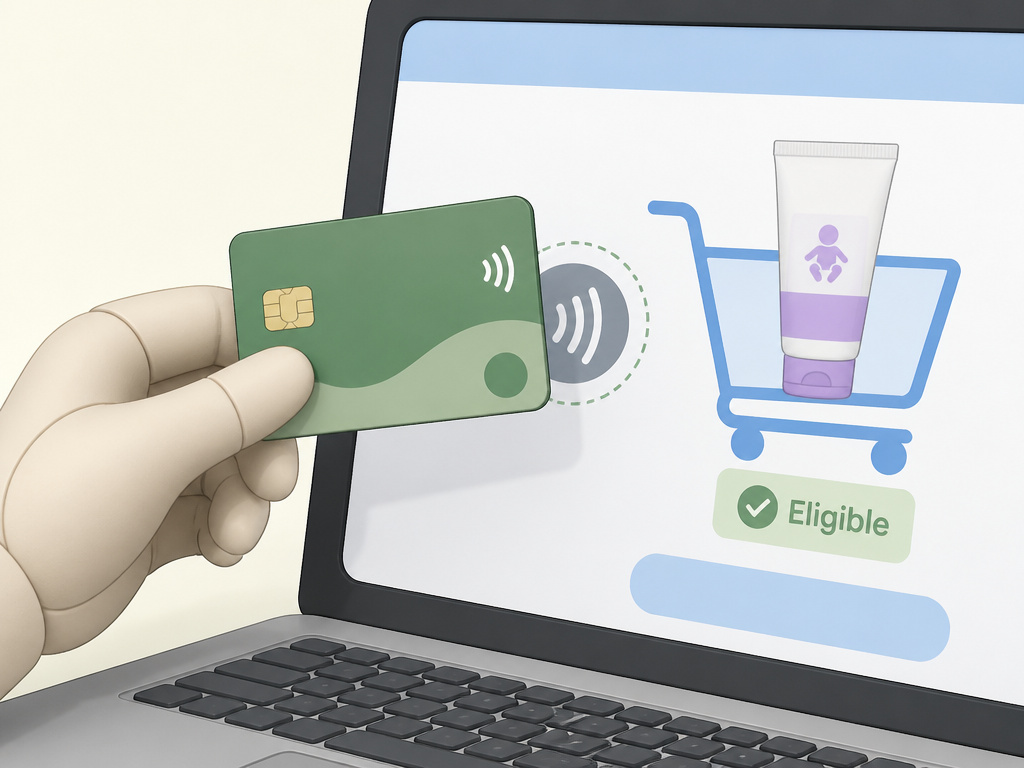
You have two paths: the easy way and the hard way. The hard way is buying at a regular store, saving receipts, and submitting claims. The easy way is using your FSA/HSA debit card at a specialized retailer.
Online stores like BuyFSA and HSA HomeMed exist because, as one source notes, “Nobody discovers FSA-eligible products at the doctor’s office… Or at Target, mid-aisle, squinting at a label.” They solve a discovery problem. You can shop their 4,000+ eligible products, add diaper cream to your cart, and check out with your tax-advantaged card. No forms, no receipts.
Common mistake: Assuming your FSA card will work anywhere. Most cards have merchant category code (MCC) restrictions. They only work at pharmacies, medical suppliers, and approved online retailers. Swiping at a grocery store for diaper cream will likely be declined.
If you buy elsewhere, you must submit for reimbursement. Keep the receipt and the product packaging that shows the medicinal ingredients. Your administrator needs to see it’s a treatment cream, not baby lotion.
The Deadline That Wastes $1 Billion
FSAs have a “use-it-or-lose-it” rule. Some plans offer a small rollover or a grace period, but the core deadline is December 31st. One industry estimate suggests an estimated $1 billion remains in FSAs across the country each year, waiting to be spent. Diaper rash cream, alongside other eligible baby care items, is a practical way to use those funds before midnight on the 31st.
Which Ingredients and Brands Are Eligible?
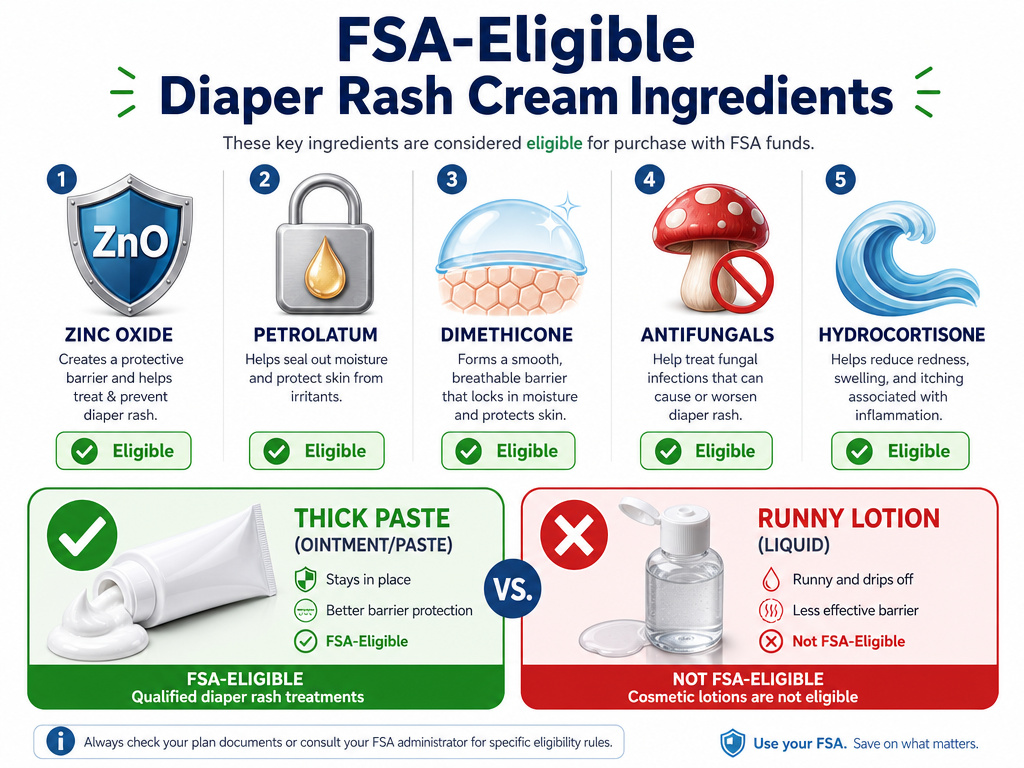
Not all creams are created equal under IRS rules. Eligibility leans on active, medicinal ingredients.
| Ingredient | Primary Function | Typical Eligibility |
|---|---|---|
| Zinc Oxide (10-40%) | Forms a protective barrier; soothes and dries | Almost always eligible |
| Petrolatum | Occlusive barrier to lock out moisture | Usually eligible |
| Dimethicone | Silicone-based moisture barrier | Usually eligible |
| Antifungals (e.g., Clotrimazole) | Treats yeast-based diaper rash | Always eligible |
| Hydrocortisone (1%) | Mild steroid for inflammation | Always eligible (short-term use) |
Creams that are mostly water, aloe, or light emollients without these barrier-forming or active ingredients are in a gray zone. They’re often classified as general health products.
For a severe, bleeding rash, you need a strong cream. I keep a tube of Triple Paste or Bordeaux’s Butt Paste Maximum Strength on hand. Both are high in zinc oxide and consistently approved. For a yeast infection, a cream like Lotrimin AF is FSA-eligible because it contains the antifungal clotrimazole.
The bottom line: Look for the thick, white, paste-like creams. The runny, clear lotions are less likely to pass.
FSA for Diaper Rash Cream vs. Other Baby Supplies
Diaper rash cream gets a “yes,” but other essentials get a “maybe” or a “no.” It’s a frustrating patchwork.
- Diapers Themselves: Generally NOT eligible. The IRS views diapers as a general hygiene product, not a medical expense, even though they are essential. Some states, like Texas, have removed sales tax on diapers to help families, but that doesn’t affect FSA rules.
- Baby Wipes: Usually NOT eligible, unless they are medicated wipes specifically formulated for treating a rash (e.g., with aloe or benzethonium chloride).
- Breast Pumps: YES, eligible. These are considered medical equipment.
- Baby Thermometer: YES, eligible. Diagnostic equipment always qualifies.
- Diaper Bags: NOT eligible. This is considered a convenience item.
The inconsistency highlights a gap. A family can use pre-tax dollars for a breast pump but not for the diapers the baby will need once the milk is pumped. This is where community resources like the Austin Diaper Bank website become critical, providing essentials outside the insurance and tax systems.
What If You Can’t Afford Diaper Rash Cream?
The FSA system assumes you have disposable income to set aside pre-tax. For millions of families, that’s not the reality. 47% of families with small children experience diaper need, which includes access to rash treatments.
Never block a wool-acrylic blend above 60°C. By 70°C the acrylic deforms permanently and the garment will not recover its shape, even after re-blocking.
This is where diaper banks operate. Organizations like the Greater DC Diaper Bank homepage and Over the Moon Diaper Bank site distribute diapers, wipes, and period supplies free to families. Many also include tubes of diaper rash cream in their distributions. They accept donations of opened packs and loose, clean diapers—an edge case most charities won’t touch.
If you’re struggling, a local diaper bank is your first stop. If you can give, these organizations turn every dollar into direct aid. The community diaper distribution information they provide is often more immediately useful than navigating IRS publications.
Frequently Asked Questions
Is all diaper rash cream FSA eligible?
No. The cream must be formulated to treat a diagnosed diaper rash, not just prevent it. Creams with high percentages of zinc oxide, petrolatum, or antifungal ingredients are typically eligible. General moisturizers or lotions are not.
Can I use my FSA card at Target or Walmart to buy it?
Usually not. Most standard FSA cards are restricted to merchants coded as pharmacies or medical suppliers. The physical Target pharmacy might work, but the main store aisles likely will not. Using a dedicated FSA online retailer is more reliable.
What documentation do I need if I buy it at a regular store?
Save your itemized receipt and the product box. If audited, you may need to show that the product contains eligible medicinal ingredients. For large purchases or if your claim is rejected, a Letter of Medical Necessity from your pediatrician will override any dispute.
Are prescription diaper rash creams eligible?
Yes, absolutely. Any prescription medication for a medical condition is FSA and HSA eligible. This includes stronger steroid creams or prescription-strength antifungals.
What happens if I buy a non-eligible product with my FSA card?
If your card payment goes through, your plan administrator may later flag it as ineligible. You will have to repay that amount into your FSA account, or it will be counted as taxable income. It’s cleaner to verify eligibility before you buy.
Before You Go
Diaper rash cream passes the FSA test because it treats a medical condition. Remember the ingredient list—zinc oxide is your friend. Use your funds at a dedicated retailer to skip the receipt hassle, and keep an eye on that December 31st deadline.
For families who find this system out of reach, local diaper banks provide a crucial safety net. The eligibility rules are a tax code quirk, but the need for a clean, healthy baby is universal.
