
What Is a Diaper Spatula? Your Guide to Mess-Free Changes
This post contains affiliate links. As an Amazon Associate, we learn from qualifying purchases
A diaper spatula is a small, handheld tool designed for the hygienic application of diaper rash cream without using your fingers. It’s typically made from silicone or plastic, features a flexible head to spread cream evenly, and often includes a suction base or travel case. Using one keeps your hands clean, prevents cream from getting under your nails, and reduces the risk of transferring bacteria to your baby’s skin or the cream jar.
The core benefit isn’t just cleanliness—it’s about breaking a contamination chain. Every time a finger dips into a cream jar, it introduces bacteria that can multiply and potentially cause skin irritation on the next application. A dedicated applicator stops that cycle.
What follows is a breakdown of why this simple tool has become a nursery staple: the material science behind it, the safety regulations that govern it, and the real-world choice between a one-dollar plastic stick and a silicone tool that lasts through hundreds of diaper changes.
Key Takeaways
- A diaper spatula’s primary job is hygiene—it prevents cross-contamination between your hands, the cream jar, and your baby’s skin.
- Silicone is the default choice for most parents because it’s non-porous, dishwasher-safe, and won’t absorb stains or odors like plastic can.
- Safety certifications matter. Look for mentions of FDA food-grade standards (21 CFR 177.2600 in the US) or EU food-contact regulations, especially for silicone models.
- The tool is recommended by pediatricians for applying medicated creams containing ingredients like zinc oxide or hydrocortisone, where precise, clean application is crucial.
- Cheap plastic spatulas have a limited lifespan of about 100-200 uses before they can become scratched and harbor bacteria, making silicone a more economical long-term buy.
What a Diaper Spatula Is (And Isn’t)
A diaper spatula is a single-purpose tool. It is not a kitchen utensil repurposed for the nursery. The design is specific: a broad, flexible, rounded tip that mimics the pad of a finger but without the nail. The handle is ergonomic, often with a slight curve or grip, because you’re using it at an awkward angle during a diaper change. Many include a suction cup base to stick to a changing table or a compact travel case.
A diaper cream spatula is defined as a small, handheld tool designed for the hygienic and precise application of diaper cream or ointment, typically made from silicone or plastic. It is treated as a branded consumer category within baby-care accessories, distinct from medical applicators or general-purpose spatulas.
The “spatula” name is a bit of marketing. It doesn’t flip pancakes. It glides. The goal is to apply a thin, even layer of cream over the diaper area without dragging or irritating the skin. If the skin is already broken or rashy, the soft edge is less abrasive than a fingertip.
What it replaces is the finger-scoop method. That method works, but it has downsides. Cream gets packed under your nails. It takes longer to wash off your hands. Most importantly, it introduces microbes from your skin into the cream jar. Those microbes have a warm, moist environment to grow, turning your rash treatment into a potential source of reinfection.
Why Parents Actually Use Them (Beyond the Mess)
The obvious reason is to keep your hands clean. No one enjoys scrubbing thick, pasty zinc oxide cream from their knuckles. But the reasons run deeper once you talk to parents who’ve adopted the tool.
First, it’s about consistency and coverage. A spatula applies the cream in a smooth, uniform layer. Fingers tend to glob it on in some spots and miss others. An even layer provides a better moisture barrier, which is the whole point of most diaper creams.
Second, it’s crucial for medicated treatments. If your pediatrician prescribes a cream with an antifungal or steroid, they often recommend an applicator. This ensures the active ingredient goes only where it’s needed and isn’t diluted or contaminated by finger bacteria. One parent in an online forum put it bluntly: “When my son had a yeast rash, the doctor said to stop using my fingers immediately. The spatula became part of the treatment plan.”
Third, there’s a speed and routine factor. For parents changing 8-12 diapers a day, small efficiencies add up. Having the spatula stuck to the changing table means no fumbling. It becomes a one-handed operation: wipe, dry, grab spatula, apply cream, diaper on. It shaves seconds, but more importantly, it creates a calmer, more controlled process, especially during a midnight diaper change.
Common mistake: Assuming any small spatula will do. Kitchen silicone or cosmetic tools aren’t designed for the thickness of diaper cream or the hygiene needs of infant care. They can be too stiff or have seams that trap residue.
Material Differences: Silicone vs. Plastic vs. Hybrid
The material dictates everything about the tool’s performance, safety, and lifespan. This isn’t a cosmetic choice.
Silicone spatulas are the market leader for a reason. Medical-grade or food-grade silicone is non-porous. Bacteria and oils cannot seep into the material. This is why they are dishwasher-safe and can be sterilized with steam or boiling water. A quality silicone spatula is rated for over 500 wash cycles. The surface stays smooth, so cream releases cleanly. It doesn’t absorb the scent of the cream or develop a permanent stain. Brands like the Bumco Baby Bum Brush built their reputation on this specific material advantage.
Plastic spatulas are the budget option. They work, but they have a finite life. Hard plastics can develop micro-scratches over 100-200 uses. These tiny grooves become reservoirs for cream residue and bacteria that regular washing won’t reach. They can also absorb certain dyes and odors from creams, eventually looking dingy. They’re fine as a disposable option for travel or as a backup, but they aren’t a long-term hygiene solution.
Hybrid designs combine a silicone applicator head with a rigid plastic or bamboo handle. This tries to offer the best of both: the hygienic, flexible application surface with a sturdier, more ergonomic grip. They are often the premium tier in a brand’s lineup.
| Material | Best For | Lifespan | Key Limitation |
|---|---|---|---|
| Silicone | Everyday home use, daycare settings | 500+ washes | Higher upfront cost |
| Plastic | Travel, emergency backup, tight budgets | 100-200 uses | Absorbs stains/odors, scratches |
| Hybrid (Silicone/Bamboo) | Parents wanting a premium feel & grip | Long (depends on handle) | More parts, harder to clean seams |
The choice often comes down to a simple question: are you buying a tool or a consumable? If it’s a tool, silicone wins.
The Safety and Regulation Landscape
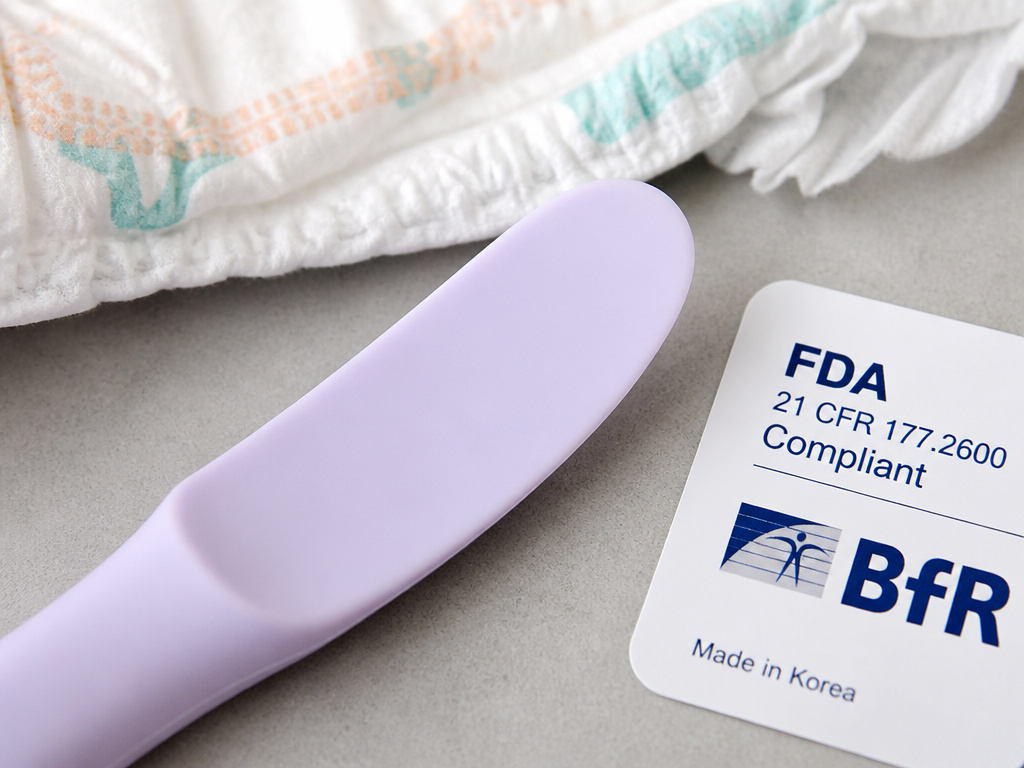
This is a product that touches your baby’s skin and a product you’ll clean repeatedly. The materials must be safe. Several regulations around the world govern this, though enforcement varies.
In the United States, the relevant standard is FDA 21 CFR 177.2600. This covers rubber articles intended for repeated food-contact use. Since silicone is a type of rubber and the spatula touches skin (and could indirectly contact a baby’s mouth), reputable manufacturers certify their silicone against this standard. The Consumer Product Safety Improvement Act (CPSIA) also applies, governing lead and phthalate content.
In Europe, the EU Framework Regulation EC 1935/2004 for food-contact materials is key. The German BfR (Federal Institute for Risk Assessment) recommendations are often treated as the de facto gold standard for silicone baby products. Compliance here is a strong signal of quality.
In China, the national standard is GB 4806.7–2023 for food-contact plastics and resins. For any spatula manufactured or sold in the Chinese market, this is the benchmark.
What does this mean for you? Look for these mentions on product packaging or listings. A brand that states compliance with FDA or EU food-contact rules has at least done the basic material safety homework. A product with no safety claims, especially a cheap plastic import, is a gamble. That gamble might mean the plastic contains plasticizers that leach out over time or colors that aren’t skin-safe.
Where this goes sideways: Using a spatula with a cracked or heavily scratched head. Breaks in the surface integrity defeat the entire purpose of a non-porous barrier, creating places for bacteria to hide that sterilization can’t reach. Toss it.
How to Use a Diaper Spatula Correctly
The technique is straightforward, but a few details make it more effective.
- Clean the Area First. Gently pat your baby’s skin dry after using a wipe. A spatula applies cream; it doesn’t clean. Trying to spread cream over wet skin dilutes it and makes a mess.
- Dispense Cream onto the Spatula. Squeeze or scoop the desired amount of cream directly onto the center of the spatula’s head. Avoid dipping the spatula directly into the jar every time to keep the main supply pristine.
- Apply in Smooth, Gentle Strokes. Use the flexible edge to spread the cream in a thin, even layer over the entire diaper area that needs protection. The goal is coverage, not a thick paste.
- Wipe and Store. Immediately wipe any excess cream off the spatula with a tissue or diaper wipe. Rinse it under warm water or place it in a designated container until you can wash it properly. Use the suction base to stick it to your changing station.
The cleaning step is non-negotiable. Wash it with warm, soapy water after every use. For a deeper clean, you can toss silicone models in the dishwasher (top rack) or sanitize them in a steam sterilizer. This regular cleaning prevents a buildup that could transfer to the next diaper cream application.
Who Buys Them and How the Market is Growing
This isn’t just a niche gadget. Industry analysis shows the global market for these tools was valued at about $0.1 billion in 2025, with steady growth projected. Adoption is climbing as hygiene becomes a bigger part of the parenting conversation.
The primary buyer is, of course, a parent or caregiver of an infant. But there are distinct segments: * First-time parents are the most likely early adopters, often discovering the tool through baby registry sites or social media. * Daycare centers are a growing institutional segment. They use them to maintain hygiene protocols, ensuring each child has a clean application method and preventing cross-contamination between infants. * The gifting market is significant. Spatulas are common in baby shower gift bundles and new-parent kits from hospitals.
Regionally, the Asia-Pacific market is growing fastest, driven by high birth rates and adoption of premium baby care routines. North America and Europe are mature markets where growth comes from brand innovation and replacement purchases. The data suggests that about 25-35% of new parents in the US now use one, up from 15-20% just five years ago.
This growth is fueled by a clear value proposition: a small, low-cost tool that solves a specific, messy problem. It fits the modern parenting trend of seeking out specialized, convenient products that make daily routines smoother and safer.
Frequently Asked Questions
Are diaper spatulas really necessary?
They are not medically necessary, but they are highly recommended for hygiene. If you use diaper cream regularly, a spatula keeps your hands clean, prevents contamination of the cream jar, and can provide more even application. For medicated creams, many pediatricians consider them necessary.
Can I just use a regular kitchen spatula?
It’s not advised. Kitchen spatulas are not designed for the thickness of diaper cream or the hygiene standards of infant care. They may be too rigid, have seams that trap bacteria, or be made from materials not certified for repeated skin contact.
How often should I wash my diaper spatula?
Wash it with soap and warm water after every use. For a weekly deep clean, silicone spatulas can go in the dishwasher or a steam sterilizer. Plastic ones should be washed by hand and inspected regularly for scratches.
Do daycare centers use these?
Yes, increasingly so. Many daycare facilities incorporate them into their hygiene policies to prevent the spread of germs between children. They often prefer silicone models for their durability and ease of sanitization.
What should I do with a old or damaged spatula?
If it’s silicone and in good condition, you can repurpose it for crafts or as a toddler-safe spreading tool. If it’s plastic, cracked, or deeply scratched, recycle it if possible in your local plastic recycling program. Do not donate a used personal care item.
Can a diaper spatula help prevent diaper rash?
It can help as part of a good routine. By enabling a smooth, even layer of barrier cream, it ensures complete coverage. Its hygienic use also prevents introducing bacteria to already irritated skin, which can worsen a rash.
The Bottom Line
A diaper spatula is a simple tool with a clear job. It exists to make a messy task cleaner and more controlled. The value isn’t in the gadget itself, but in the habit it creates—a barrier between bacteria and your baby’s skin.
If you’re considering one, start with a silicone model from a known brand like Bumco or Dr. Talbot’s. The few extra dollars over a plastic version buy you a tool that will last through hundreds of diaper changes, won’t hold stains, and can be properly sanitized. Skip the novelty shapes and cheap multi-packs. Get one good one, stick it to your changing table, and let it do its one job well.
It won’t change your life. But it will keep zinc oxide out from under your fingernails, and sometimes that’s enough.
