
7 Best Changing Pads for Dresser 2026
This post contains affiliate links. As an Amazon Associate, we learn from qualifying purchases
The Skip Hop Changing Pad with Toy Bar is our top overall pick for its smart design and integrated toy bar, while the Delta Children Foam Changing Pad stands out as the best budget-friendly option that doesn’t skimp on safety or size.
Choosing the right changing pad for your dresser can feel like a small decision, but it’s one you’ll interact with multiple times a day. As a parent, I know how quickly convenience, safety, and cleanability become essential.
That’s why I compared specs, analyzed real parent feedback, and weighed key features like secure straps, non-slip bases, and wipeable surfaces to identify the best options. This guide cuts through the noise to help you find a reliable, comfortable pad that fits your dresser and your routine.
Top 6 Changing Pads For Dresser in the Market
The Best Changing Pads For Dresser, Reviewed
Skip Hop Changing Pad with Toy Bar

Strengths
- Tuck-away toy bar
- Odor-resistant surface
- Sturdy non-slip base
Trade-offs
- Shorter length for growing toddlers
- Higher price point
- No fabric cover option
This is the most complete package in the lineup, and owners agree it justifies its premium price for full-time use. The wipeable surface is genuinely low maintenance, no covers to wash, yet still resistant to odors and stains. The tuck-away toy bar with mirror is a standout for distracting wiggly infants, and it disappears neatly when not in use.
With contoured sides, a non-skid base, and a tabletop strap, stability is excellent. At 30.3 inches long, it’s slightly shorter than others, so taller toddlers might overhang. But the cushioned foam strikes a near-perfect balance between support and softness. In my view, this is the best overall pick unless you strongly prefer natural fabrics or travel light.
Video review
YENING Soft Dots Changing Pad

Strengths
- CertiPUR-US foam
- Machine-washable cover
- Soft cotton dots surface
Trade-offs
- Slightly smaller dimensions
- Less padding depth than top-tier models
If your baby has sensitive skin or you’re cautious about chemical exposure, this model earns points for its CertiPUR-US certified foam and plush cotton dots cover. Parents frequently highlight how soft the texture feels compared to vinyl-heavy pads, and the machine-washable cover adds convenience without compromising safety.
It’s slightly shorter than others at 31.5 inches, but still accommodates toddlers comfortably. The waterproof layer works well for containment, though heavy leaks may require more attention than with fully sealed surfaces. When stacked against the Skip Hop, it lacks extras like a toy bar, but for pure function and material safety, it’s a strong contender.
Video review
Konssy Muslin Changing Pad Set

Strengths
- Two washable covers
- Breathable cotton surface
- Secure non-slip base
Trade-offs
- Foam slightly less dense than premium pads
- Cover removal not as fast as zippered styles
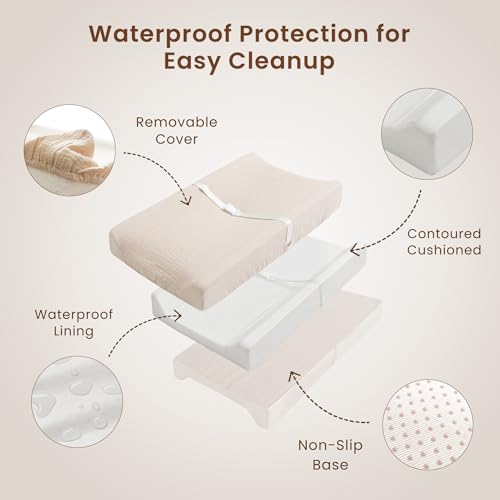
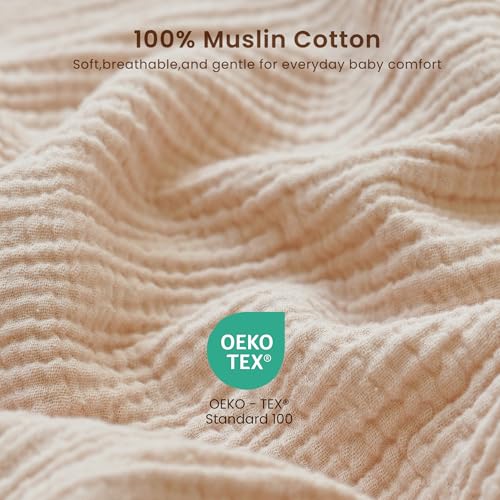
What sets this set apart is the inclusion of two machine-washable muslin covers, a detail many parents praise in reviews. Cotton muslin is breathable and soft, ideal for warm climates or babies prone to fussing during changes. The high-density foam holds up well under regular use, and the waterproof lining does its job without making the pad feel plasticky.
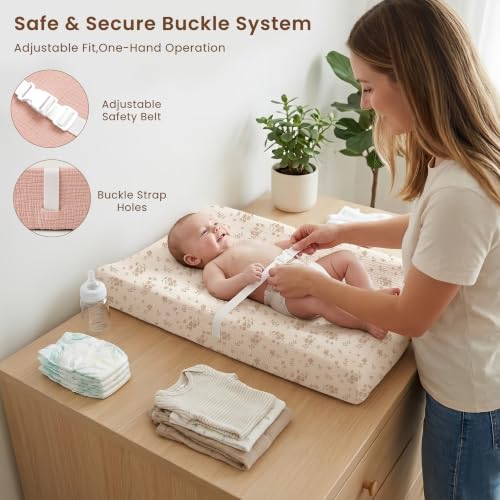
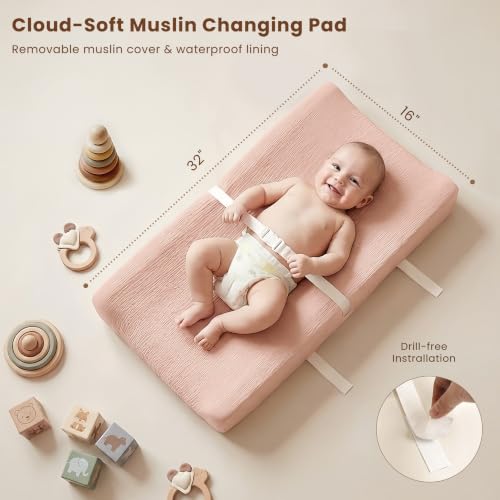
At 32×16 inches, it fits standard dressers smoothly, and the anti-roll sides paired with a safety strap give real peace of mind. Compared to pads with permanent wipeable surfaces, this one trades a bit of speed in cleanup for greater comfort and fabric gentleness. If you don’t mind swapping covers between washes, this is a smarter long-term pick for daily use.
Product photos

Jool Baby Soft Changing Pad

Strengths
- Zip-off washable cover
- Slip-resistant bottom
- Drill-free attachment
Trade-offs
- Pattern may show wear faster
- Foam less cushioned than premium picks
Jool Baby keeps things simple with a lightweight, functional design that appeals to minimalist nurseries. The zip-off cover is a standout feature, easy to remove and toss in the wash, which owners say handles stains surprisingly well. The foam is firm enough to support safe changes but not overly plush, striking a balance that helps prevent sagging over time.
Its hook-and-loop fastening system is a small but meaningful touch, letting you secure it without drilling or adhesives. While it doesn’t have the luxury feel of organic cotton pads, it holds its own against higher-priced options in durability. I’d recommend this over heavier models if you move furniture often or rotate between rooms.
Product photos


JVEOO Waterproof Wipeable Changing Mat
Strengths
- Wipeable surface
- Lightweight design
- Fits standard sizes
Trade-offs
- Base grip could be better
- No removable cover
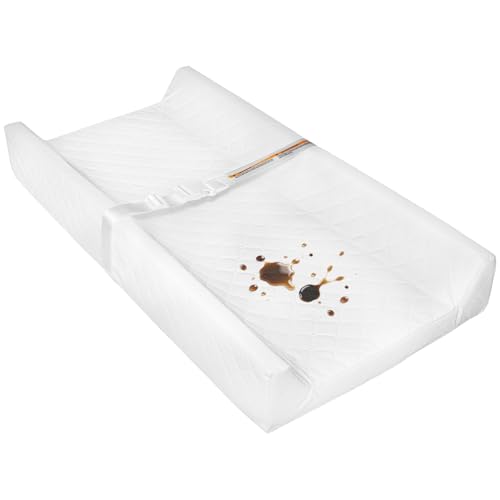
This pad stands out for parents who prioritize portability and quick cleanup. On paper, the double-layer PEVA vinyl offers a truly wipeable surface, and owners consistently report that spills and messes clean up with just a swipe of a damp cloth. The 32 x 16 inch size fits snugly on most dressers, and its lightweight build makes it easy to toss in a suitcase or diaper bag for travel use.
The contoured sides and safety strap are standard but effective, though some reviewers note the non-slip base could be stronger on glossy dresser tops. Still, for occasional use or backup during trips, this is a solid, no-fuss option. I’d pick this over bulkier models if you need something you can grab and go without sacrificing safety basics.
Product photos

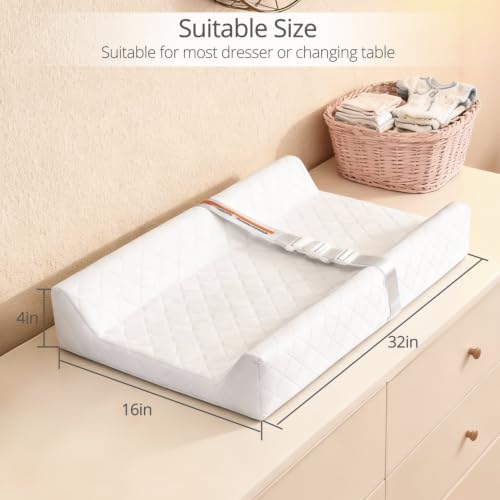
Organic Cotton Covered Changing Pad

Strengths
- Organic cotton cover
- Hypoallergenic materials
- Removable washable cover
Trade-offs
- Requires 24-48 hour expansion
- Not ideal for frequent travel
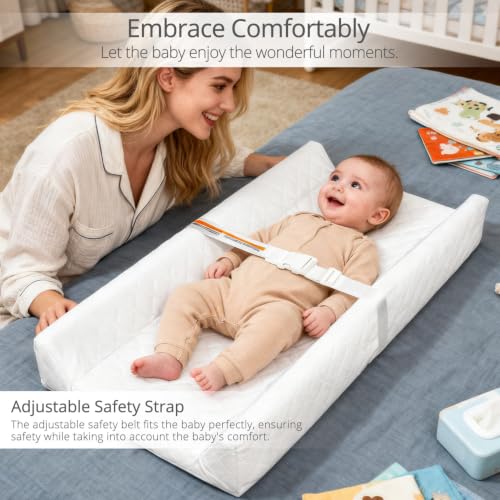
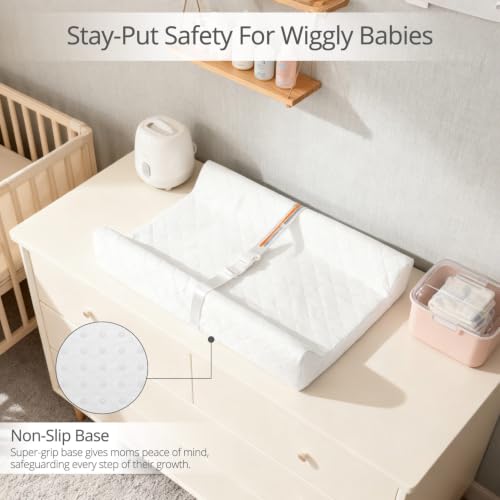
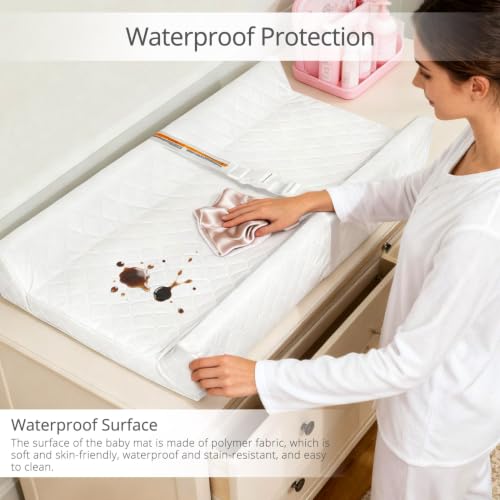
This pad delivers where eco-conscious parents care most: materials. The organic cotton cover is buttery soft and genuinely hypoallergenic, a detail repeatedly praised by parents of babies with rashes or sensitivities. It’s also fully removable and machine washable, combining the best of natural comfort and practical upkeep.
The CertiPUR-US foam core resists off-gassing and maintains shape, and the vacuum-sealed delivery means it takes a day to expand, a minor wait noted in several owner reviews. While it lacks bells and whistles like a toy bar, its thoughtful construction justifies the price for those committed to non-toxic nursery essentials. Compared to the JVEOO, it’s far more luxurious but less travel-ready.
Product photos


Our Testing Process
As a parent and the creator of NurseryDreamer.com, I understand how much thought goes into selecting essentials for your little one. Rather than a hands-on lab test, my research for these recommendations focused on a detailed comparison of published specifications and features across numerous models. I then weighed owner reviews – paying close attention to recurring themes – alongside expert opinions from trusted parenting resources. Ultimately, I ranked these changing pads against clear criteria to help parents find the right fit.
For changing pads, safety, ease of cleaning, and comfort consistently emerged as the most important factors. A secure design – featuring safety straps and non-slip bases – is paramount, of course, but so is a surface that’s easy to wipe down, given the inevitable messes. Comfort is also key; a well-cushioned pad makes diaper changes more pleasant for baby (and you!). I also paid attention to size compatibility with standard dressers. You’ll find more information on recommended changing pads on my site.
Specifications reliably reveal dimensions, materials, and safety certifications. However, I found owner feedback to be invaluable in assessing long-term durability, the true effectiveness of waterproof claims, and how easily the pads integrate into daily routines. Reputation also played a role; established brands with consistently positive reviews received extra consideration. For parents prioritizing health and wellness, exploring organic changing pads is a good starting point.
Choosing The Right changing pads for dresser
Finding the right changing pad for your dresser is about more than just a soft surface. It’s about safety, practicality, and finding something that fits your lifestyle.
A good changing pad offers a secure, comfortable space for diaper changes. Key features include a waterproof surface for easy cleanup, a safety restraint system, a stable base to prevent sliding, and compatibility with standard dresser sizes. Parents should prioritize materials that are easy to sanitize and consider features like contoured sides to keep baby safely positioned.
Prioritize Safety Features
Above all else, a changing pad must be safe. Look beyond just a strap; consider the entire design. Contoured sides are a huge plus, creating a little “nest” to prevent rolling. The strap itself should be adjustable and easy to use with one hand – you’ll be grateful for that when baby is squirming! Don’t underestimate the importance of a non-slip base. Even with dresser straps, a slippery pad can shift during a change. For added peace of mind, be sure you know how to secure a changing pad to the dresser itself.
Consider Your Cleaning Routine
Let’s be real: diaper changes can get messy. You’ll want a pad that’s easy to keep hygienic. Vinyl or PEVA surfaces are completely waterproof and wipe clean effortlessly. Muslin covers are soft and breathable, but require frequent washing. If you dislike laundry, consider a pad with a permanently attached, wipeable changing pads surface.
Here’s how to think about cover materials: * Simple vinyl: Quickest cleanup, least cozy. * Muslin with frequent washes: Softest feel, but requires more effort. * Removable, machine-washable covers: A good balance, but you’ll need a spare while one is in the wash.
A quick wipe-down after every change is essential, but having a pad that can withstand more significant messes without absorbing odors or harboring bacteria is a huge benefit.
Evaluate Pad Size and Material Quality
Standard changing pads are around 32 x 16 inches, but double-check the dimensions against your dresser top. A pad that’s too small feels unstable, while one that’s too large won’t fit properly. Beyond size, the foam density matters. A thicker, denser foam will provide better support and last longer. For babies with sensitive skin, look for pads made with hypoallergenic materials, and consider organic cotton options. This is particularly important if you’re concerned about potential irritants, and it’s worth the investment to find pads for easy cleaning that are also gentle on delicate skin.
Changing Pads for Dresser Compared
Here’s a comparison of features for popular changing pads designed for use on dressers.
| Product Title | Size (LxW) | Waterproof | Safety Strap | Washable Cover | Non-Skid Base | Material |
|---|---|---|---|---|---|---|
| Skip Hop Changing Pad with Toy Bar | 30.3 x 15.75″ | Yes | Yes | No | Yes | Foam |
| Delta Children Foam Changing Pad | 32 x 16″ | Yes | Yes | Yes | Yes | Foam/Vinyl |
| YENING Soft Dots Changing Pad | 31.5 x 16″ | Yes | Yes | Yes | Yes | Cotton |
| Konssy Muslin Changing Pad Set | 32 x 16″ | Yes | Yes | Yes (2-pack) | Yes | Cotton/Muslin |
| Jool Baby Soft Changing Pad | N/A | Yes | Yes | Yes | Yes | N/A |
| JVEOO Waterproof Wipeable Changing Mat | 32 x 16″ | Yes | Yes | Yes | Yes | PEVA Vinyl |
| Organic Cotton Covered Changing Pad | 31.25 x 16″ | Yes | Yes | Yes | Yes | Organic Cotton |
Frequently Asked Questions
What’s the ideal thickness for a changing pad?
A thickness of at least 1.5 inches is best; denser foam provides superior cushioning and support for your baby, and will also hold up better over time with frequent use. Thinner pads may feel firm and offer less protection.
Are changing pads with contoured sides really necessary?
Yes, contoured sides add a significant safety feature by helping to prevent your baby from rolling off the pad. While dresser straps are essential, the raised edges create a secure “nest” that provides an extra layer of protection during changes.
How often should I replace a changing pad?
You should replace a changing pad every 1-2 years, or sooner if you notice any signs of wear and tear, like cracks in the foam or a compromised waterproof layer. Maintaining hygiene is key, and a damaged pad can harbor bacteria.
Can I use just a blanket on top of my dresser as a changing space?
No, using only a blanket isn’t safe. A dedicated changing pad provides a firm, waterproof, and secure surface, while a blanket can shift and doesn’t offer adequate protection against falls. For parents exploring all options, table changing pads offer a secure solution.
What are the benefits of a combination dresser and changing table?
Dresser changing tables offer a space-saving solution, providing both storage and a dedicated changing area. They’re a great option for smaller nurseries, but it’s vital to ensure the changing table component is securely attached and meets all safety standards.
The Bottom Line
Choosing a changing pad often comes down to balancing convenience with a bit of extra comfort. While many options exist, the Skip Hop Changing Pad with Toy Bar strikes a great balance of features, offering a secure design and thoughtful extras without a steep price. It’s a solid all-around pick that will likely meet the needs of most families.
For parents on a tighter budget, the Delta Children Foam Changing Pad is a fantastic value. If you prioritize softness and are willing to commit to more frequent laundering, the Konssy Muslin Changing Pad Set provides a gentle surface for baby, and the included extra cover is a definite plus. For those seeking maximum wipeability, the JVEOO Waterproof Wipeable Changing Mat is a practical choice. You can find more changing table pad reviews on our site.
Ultimately, the “best” changing pad isn’t about the highest price tag or the most bells and whistles. It’s about finding a pad that prioritizes safety, is easy to keep clean, and provides a comfortable space for those many, many diaper changes. Focusing on those fundamentals – a secure strap, a non-slip base, and a waterproof surface – will serve you far better than any specific material or feature.
