
Do You Need a Diaper Pail | The 3 Households That Actually Do
This post contains affiliate links. As an Amazon Associate, we learn from qualifying purchases
You need a diaper pail if you use disposable diapers, change your baby in a room far from the main household trash, and have trash pickup less than twice a week. For cloth diapers, a dedicated wet bag or lined pail works better. If your nursery is steps from the kitchen can and you take the trash out daily, a standard can with a tight lid is enough.
The real question concerns the logistics of smell and convenience in your specific home. A pail is a container with a specialized lid, not a magic box.Its job is to buy you time between diaper changes and trash day.
What follows is a breakdown of the three living situations where the investment pays off, how different pail technologies actually work, and the specific maintenance pitfalls that turn any model into a smell factory within weeks.
Key Takeaways
- A diaper pail is a necessity only if your nursery is on a different floor from your main trash can or your municipal pickup is weekly.
- Odor control depends on the seal, not the bag. Mechanical seals (Ubbi, Momcozy) outperform flimsy plastic lids, but all seals fail if the inner bag isn’t cinched tight.
- Proprietary refill systems (Diaper Genie) cost more but guarantee a fit; universal bag models (Ubbi) are cheaper long-term but leak odor if the bag sags.
- The most common point of failure is user error: overfilling the pail compresses the seal, and using non-drawstring bags in models designed for them lets smells bypass the closure.
- For most two-story homes with infants, the answer is yes. For single-floor apartments where the kitchen is ten feet away, the answer is probably no.
The 3 Households That Actually Need a Diaper Pail
Your floor plan and trash schedule decide this. The marketing says every nursery needs one. The reality is more about geography and municipal services.
First, map the distance from your changing table to the place you empty the kitchen trash. If it’s more than 30 seconds away, think up a flight of stairs, down a long hall, or across a garage, a dedicated diaper pail stops being a luxury. It’s a trip-saver. At eight to twelve changes a day, those minutes add up.
Second, check your trash pickup frequency. If collection is weekly or bi-weekly, a standard kitchen can full of diapers will smell within three days. A sealed pail extends that to five or six, which is the difference between a tolerable nursery and a room you avoid.
The part nobody mentions: A pail’s capacity rating assumes diapers are placed flat. In real use, they’re wadded up. A pail that claims to hold 30 diapers actually holds about 18 before the lid strains against the pile.
Third, consider baby count. Twins or two children in diapers double the output. A kitchen trash can fills in a day and a half. This is the single strongest case for a dedicated container, not just for smell but for volume management. Your regular can can’t handle it.
| Your Situation | Diaper Pail Needed? | Why |
|---|---|---|
| Nursery is adjacent to kitchen | Likely No | Quick trips to the main can are easy; smell concentrates in one place. |
| Nursery is upstairs/downstairs | Yes | Prevents 10+ daily trips; contains smell to the nursery zone. |
| Weekly trash pickup | Yes | Sealed pail bridges the gap between day 3 (smell) and day 7 (pickup). |
| Using cloth diapers | No (Get a wet bag) | Diaper pails are designed for dry storage; wet bags handle moisture. |
If you’re in the “yes” column, the next decision is what type of diaper pail systems you want to manage.
How Diaper Pails Actually Control Odor (And Where They Fail)
Odor control is a simple physical principle: a barrier against air exchange. The better the seal, the less smell escapes.Pails use three main methods, and each has a predictable breaking point.
Mechanical Compression Seals: Models like the Ubbi Steel Diaper Pail and the Momcozy Triple-Seal use a rubber gasket and a closing mechanism that presses the lid onto the body. The Ubbi uses a sliding lid that snaps shut; the Momcozy uses a rotating inner ball that closes a channel.
The Ubbi’s steel body doesn’t absorb smells, but the gasket is the failure point. If you don’t snap the lid shut firmly, the seal is incomplete. You’ll smell a faint odor within hours.
Proprietary Bagging Systems: The Diaper Genie series uses a mechanism that twists a long plastic film around each diaper, creating individual pods. This is effective at containment but introduces two new variables: the cost of refills and the mechanism’s mechanical complexity. A jammed cutter blade means the whole system is down.
Active Systems: The Munchkin UV Diaper Pail adds a UV-C light inside the lid, intended to kill odor-causing bacteria. This addresses the source, not just the container. However, it requires power (USB-C) and the UV LED has a finite life, the manual rates it for 3000 hours. Leave it on continuously, and the light degrades in about four months.
The universal failure mode across all types is overfilling. When the inner bag is too full, it presses against the underside of the lid. This breaks the seal’s contact. Odor has a direct escape path. The fix is simple: empty the pail before it reaches the “full” line. Most people don’t. That’s why a pail smells.
Head-to-Head: The 3 Main Pail Types Compared
You’re choosing between a commitment to proprietary bags or a fight with universal bag fit. There is no perfect option, only a best fit for your tolerance for hassle and ongoing cost.
The Universal-Bag Standard (Ubbi Steel Diaper Pail)
This model accepts any standard tall kitchen bag. The long-term cost is low. The trade-off is that the bag must be secured perfectly around the rim for the seal to work. If the bag slips down inside the pail, odor escapes into the gap between the bag and the steel wall. The steel itself is easy to clean a diaper pail but can rust if cleaned with spray detergents that pool at the seams.
The Proprietary Refill System (Diaper Genie Signature)
The system uses custom refill cassettes that twist and tie each diaper. Odor control is excellent because each diaper is wrapped. The cost is high, refills are a recurring purchase, and you are locked into one brand’s supply. The mechanism itself can jam if a diaper is forced in at an angle.
The Hybrid Approach (Momcozy Triple-Seal Diaper Pail)
This model uses standard drawstring bags but has a patented inner channel and rotating “observation ball” to create a triple airlock. Its manual specifically states the bag closure feature only works with drawstring bags. Use a standard bag without drawstrings, and the automatic cinching feature fails. It also recommends keeping the observation ball open during daily use to isolate the internal chamber, a nuance most users miss.
| Pail Type | Best For | Biggest Hassle | Odor Control |
|---|---|---|---|
| Ubbi (Universal Bag) | Budget-conscious planners | Getting the bag to seal perfectly on the rim | Very Good |
| Diaper Genie (Refill System) | Hands-off, maximum control | Cost of refills; mechanism jams on bulky diapers | Excellent |
| Momcozy (Hybrid) | Those wanting a middle path | Must use drawstring bags; the inner ball can jam | Good |
For most, the Ubbi’s flexibility makes it the default. The Diaper Genie is for parents who want set-and-forget containment and don’t mind the bag cost. The Momcozy is a strong contender if you commit to buying drawstring bags.
What Nobody Tells You: The Maintenance That Makes or Breaks It
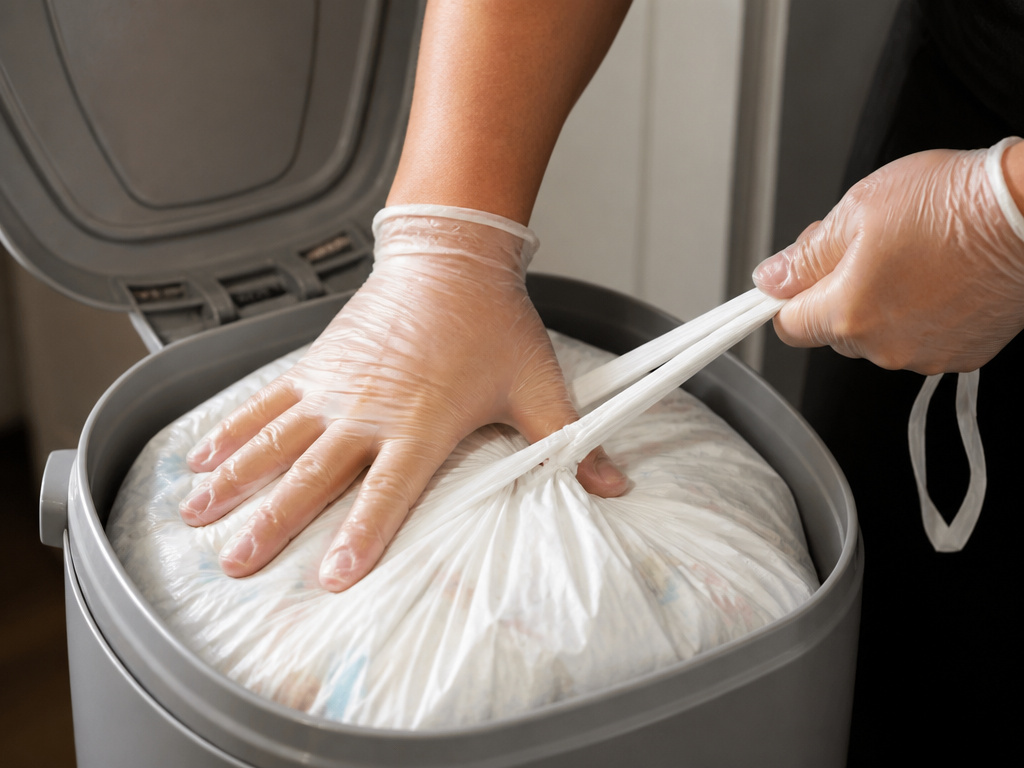
A diaper pail is a container that requires a specific ritual to function. It is not a set-it-and-forget-it appliance. Skip the ritual, and you’ve bought an expensive, smelly trash can.
First, bag installation. For pails designed for them, drawstring garbage bags are non-negotiable. The Momcozy manual is explicit: its automatic bag-lifting feature only works with drawstring types. The drawstring lets you pull the bag tight around the pail’s inner rim, creating the first seal. A standard bag without a drawstring sags. Smell leaks out immediately.
Second, the pre-close ritual. Before you shut the lid, press down on the bag’s contents to remove air pockets. Then pull the drawstrings up and give them a slight twist. This collapses the air volume inside the bag, which is where odor molecules travel. Less air, less smell migration.
Third, cleaning frequency. You should deodorize a diaper pail with a vinegar wipe-down every time you change the bag, at least weekly. Residue and moisture build up on the inner walls and under the rim, creating a permanent odor source. This is the step every owner skips, and it’s why a pail eventually smells even when empty.
Where this goes sideways: Using scented bags or baking soda pucks to mask smells instead of cleaning the pail. The scents blend with the diaper odor into a worse, permanent perfume that soaks into the plastic. Deep smell requires a full wash with soap and water, then a vinegar rinse.
Finally, know the mechanical limits. The Momcozy’s rotating observation ball can jam if a diaper is stuffed in crooked. The fix is to shake the pail gently to redistribute the load. The Ubbi’s sliding lid requires a firm push to engage the rear catch. A soft close isn’t a close.
When a Regular Trash Can Is Actually Better
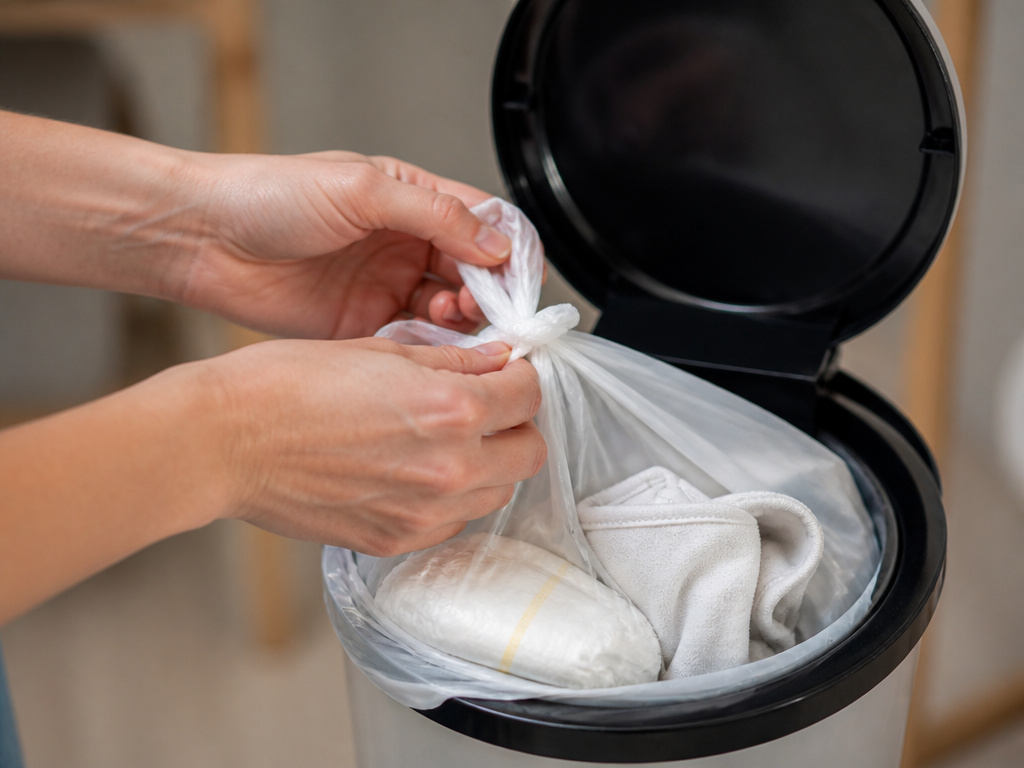
For a significant number of households, a dedicated diaper trash can is overkill. The simpler solution is a standard kitchen can with a tight-sealing lid, placed in the nursery.
This works if you empty your main household trash daily. You simply transfer the nursery bag to the larger can each night. No specialized bags, no mechanisms to break, no extra appliance to clean. The odor never has time to build because it leaves the house every 24 hours.
It also works perfectly for cloth diapers. A diaper pail is designed for dry storage. Cloth diapers need a breathable, washable wet bag or a lined, open pail to prevent mildew. A sealed plastic pail traps moisture and accelerates ammonia formation.
Consider your lifestyle honestly. If you are already diligent about taking the kitchen trash out daily, adding another can to empty is redundant. The Consumer Reports diaper pail guide notes that any secure-lid pail can work, with the main advantage of dedicated models being capacity and specialized odor locks for longer holding periods.
Frequently Asked Questions
Does a diaper pail completely eliminate smell?
No. It contains and reduces smell for a limited time. All pails will eventually let odor through if overfilled, if the bag isn’t sealed, or if the pail itself isn’t cleaned regularly. Think of it as a smell delay system, not an elimination system.
How often do you empty a diaper pail?
Empty it every 2 to 3 days, regardless of how “full” it looks. This prevents overfilling, which breaks the seal, and stops bacterial growth on the inner walls. For newborns with frequent changes, you might empty daily.
Are diaper pail refills worth the cost?
They are worth it only if you value the guaranteed fit and convenience of the proprietary system, like the Diaper Genie’s twist-and-tie. For cost-conscious parents, universal bag models like the Ubbi are far cheaper over the lifespan of diapering. You trade a bit of bag-fitting hassle for significant savings.
Can you use regular trash bags in a Diaper Genie?
No. The Diaper Genie mechanism is designed to work with its specific refill cassette film. A regular bag will jam the cutting and twisting mechanism. Using non-brand refills voids the warranty and usually doesn’t work.
Where should you put a diaper pail?
Place it right next to the changing table, within arm’s reach. The goal is to dispose of the diaper immediately, without walking across the room. If smell is a major concern, avoid placing it in direct sunlight or near a heat vent, as warmth accelerates odor release.
What is the most common mistake with diaper pails?
Overfilling. It compresses the seal, forces the lid open slightly, and gives odor a direct escape route. The second most common mistake is using the wrong bag type for the pail, which defeats the sealing mechanism.
The Bottom Line
You need a diaper pail if your nursery is isolated from your main trash and your pickup is infrequent. For close-quarters living and daily trash duty, a good kitchen can works fine.
If you buy one, commit to its maintenance. Get the right bags, empty it before it’s crammed full, and clean the interior weekly. The best odor-control diaper pails fail with neglect.
For a single child in a one-story home, the Ubbi Steel Diaper Pail offers the best balance of cost and containment. For twins or weekly pickup, the guaranteed seal of a Diaper Genie might be worth the refill tax. Choose based on your geography, not the marketing.
