
How to Get Diaper Cream Out of Carpet With Household Items
This post contains affiliate links. As an Amazon Associate, we learn from qualifying purchases
To get diaper cream out of carpet, you must break its oil barrier first. Immediately scrape off excess cream with a dull knife. Then, apply a degreasing agent like full-strength dish soap or isopropyl alcohol to a clean cloth and blot, never scrub, the stain from the edges inward. Rinse by blotting with a water-dampened cloth and allow the area to dry completely within 12 hours to prevent mold.
The “blot, don’t scrub” rule isn’t just good advice, it’s the official standard from the Carpet and Rug Institute (CRI 205) for a reason. Scrubbing drives the oily, pigment-rich cream deeper into the carpet backing, where it becomes a permanent discoloration. Your goal is to lift the stain out, not mash it in.
What follows is the breakdown of why most DIY attempts fail, the emergency protocol for fresh stains, the advanced tactics for set-in messes, and the one product category you should skip entirely. By the end, you’ll know exactly which ingredient in the cream you’re fighting and how to neutralize it.
Key Takeaways
- Standard carpet cleaners fail on oil-based diaper creams like Desitin and A+D because they’re formulated to repel moisture. You need a degreaser.
- Blotting is non-negotiable. The CRI 205 standard warns that scrubbing changes carpet texture and sets stains. Use a clean, white cloth and press, don’t rub.
- Drying within 12 hours is critical. A wet carpet pad breeds mold. Use fans and dry towels to accelerate drying after any wet cleaning.
- Zinc oxide is the culprit. This white pigment in creams like Desitin leaves a visible stain; dissolving the petroleum jelly carrier with dish soap or alcohol is the first step to removing it.
- For set-in stains, an oxygen-based soak like OxiClean Baby Stain Remover (1-6 hours) can lift discoloration after the oils are removed.
Why Standard Carpet Cleaners Fail on Diaper Cream
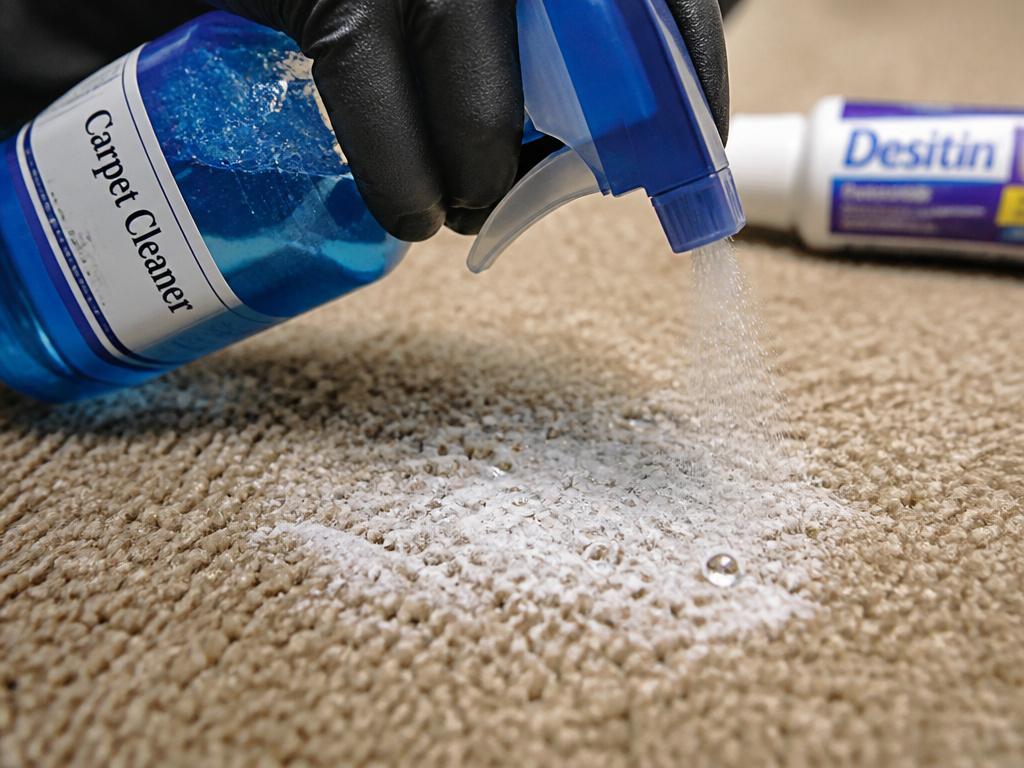
Most store-bought carpet sprays are water-based surfactants. They work on juice, mud, or coffee by surrounding water-soluble particles and lifting them away. Diaper cream is a different beast.
The active ingredients in creams like Desitin are zinc oxide, petroleum jelly, and lanolin. This combination is designed to adhere to skin and repel moisture, exactly what you don’t want in a carpet stain. The petroleum jelly (an oil) coats individual carpet fibers, and the zinc oxide (a fine white powder) stains them.
A parent on BabyCenter reported their standard carpet cleaner made an A+D ointment stain only “a little lighter” because the “butt cream is made to resist liquid.” This is the core problem: you’re fighting a water-repellent barrier.
If you apply a water-based cleaner first, it beads up on the oily surface. Any rubbing works the cream deeper. Your carpet now has a greasy, stained patch that’s harder to reach. The fix requires a solvent or degreaser that can cut through that oil layer before any bleaching or lifting agents can work on the pigment.
This is why your first reach shouldn’t be for the all-purpose carpet spray. It should be for the blue Dawn dish soap or a bottle of rubbing alcohol.
The Three-Step Emergency Protocol (Fresh Stains)
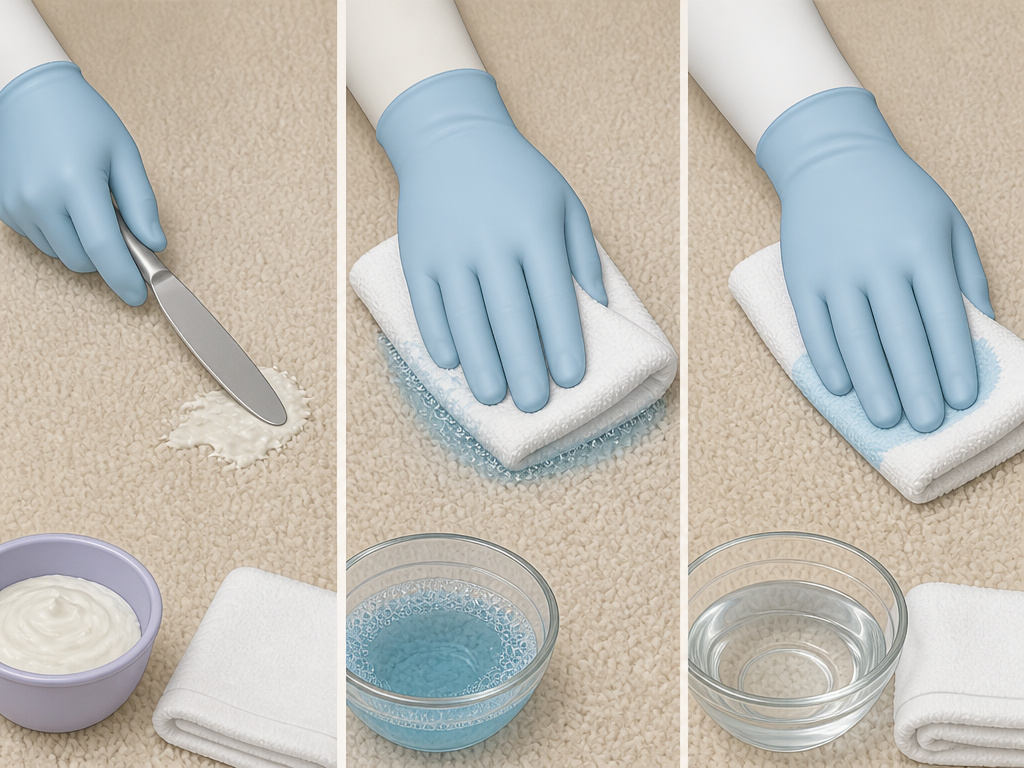
Speed matters. The longer the cream sits, the more the oils wick down into the carpet backing. Follow this sequence the moment you discover the mess.
Before you start: Put on gloves. Assemble a dull knife, clean white cloths or paper towels, a bowl of cool water, and your degreaser (dish soap or 70% isopropyl alcohol).
Step 1: Scrape, Don’t Smear
Use the edge of a butter knife or a spoon to gently lift away the bulk of the cream. Work from the outside of the pile toward the center to avoid spreading it. The goal is to remove unabsorbed product, not to grind it in.
Skip this, and you’ll simply spread the oil around during the next step, enlarging the stain.
Step 2: Apply Degreaser and Blot
This is the critical step. Dampen a corner of a white cloth with your chosen degreaser.
* For dish soap: Use a drop of full-strength blue Dawn. Work it into a slight lather on the cloth.
* For rubbing alcohol: Apply 70% isopropyl alcohol directly to the cloth.
Place the cloth over the stain and press down firmly. Hold for 30 seconds. You should see the cream’s oils and white pigment transfer to the cloth. Lift, rotate to a clean section of cloth, and press again. Never scrub in a circular motion.
Where this goes sideways: Scrubbing with a brush or aggressive rubbing. The CRI 205 standard states that “bristles and scrubbing can damage the carpet” and cause permanent texture change. Blotting lifts; scrubbing sets.
Step 3: Rinse and Dry
Once no more pigment transfers to your cloth, it’s time to rinse. Dampen a new cloth with clean, cool water. Blot the entire area thoroughly to remove any soap or alcohol residue. Follow with a dry towel to absorb as much moisture as possible.
Place a fan over the area. The carpet pile and pad must dry within 12 hours to prevent microbial growth. This 12-hour dry time is a benchmark from carpet maintenance standards.
Advanced Tactics for Set-In or Stubborn Stains
If the stain has dried or you’ve already tried (and failed) with a water-based cleaner, you need a two-phase attack: degrease first, then lift the remaining discoloration.
Phase 1: Re-Solubilize the Oil
A set-in stain means the oils have hardened. You need to re-liquefy them. Apply a small amount of dish soap or rubbing alcohol as before, but cover the dampened area with a plastic wrap for 15-20 minutes. This lets the degreaser penetrate without evaporating. Then, blot aggressively with clean cloths. You may need to repeat this process.
Phase 2: Oxygen-Based Soaking
After the oils are gone, a white or yellow discoloration often remains from the zinc oxide. This is where a powdered oxygen cleaner shines.
| Product Type | Best For | Application Method |
|---|---|---|
| OxiClean Baby Stain Remover | Zinc oxide discoloration | Make a paste with warm water, apply to stain, cover with plastic for 1-6 hours. |
| Krud Kutter Carpet Stain Remover | General greasy stains after degreasing | Spray, wait 1 minute, gently rub with cloth, rinse. |
| Enzymatic Cleaner | Organic residue or odor | Apply, allow to dry fully—enzymes work as they dry. |
Mix the OxiClean powder with warm water to form a thick paste. Apply it only to the stained fibers. Cover with plastic wrap to keep it moist and let it sit for up to six hours. The oxygen bubbles lift the embedded pigment. Finally, rinse thoroughly with a damp cloth and blot dry.
The part nobody mentions: When using a product like Krud Kutter, their spec sheet says to “gently rub.” This is a slight contradiction to the strict “blot only” rule. If you must rub, do so with a cloth, not a brush, and with minimal pressure. The risk of texture change is real.
What NOT to Use on Diaper Cream Stains
Knowing what to avoid is as important as knowing what to do. These common mistakes can make a small problem permanent.
- Hot Water: It can set protein or oil-based stains. Always use cool or warm water for rinsing.
- Vinegar or Ammonia First: Applying these before a degreaser can react with the oils and set the stain. They have their uses, but not as a first step on this type of spill.
- Multiple Cleaners Simultaneously: The CRI standard warns that using multiple products without rinsing between them can create a chemical reaction that permanently sets a stain. Use one method, rinse, then assess before trying another.
- Over-the-Counter “All-Purpose” Stain Removers: As established, most are ineffective against the oil barrier. You’ll waste time and money.
Your toolkit should be simple: a degreaser (dish soap/alcohol), an oxygen booster (OxiClean), clean cloths, and patience. The fancy, marketed “stain removers” often lack the necessary solvent action.
Choosing Your Cleaning Products: A Quick Comparison
Not all degreasers and lifters are equal. Your choice depends on what’s in your cabinet and the stain’s age.
| Agent | Mechanism | Best Used When | One Named Pick |
|---|---|---|---|
| Liquid Dish Soap | Emulsifies oils, breaking the water-repellent barrier. | Fresh, greasy stains. It’s mild and readily available. | Blue Dawn Original. It’s a consistent, strong degreaser. |
| Isopropyl Alcohol | Solvent that cuts through oils and evaporates quickly. | Drier, set-in stains where you need penetration. | 70% Isopropyl Alcohol. Higher concentrations can damage some dyes. |
| Oxygen Cleaner | Releases oxygen bubbles to lift discoloration from fibers. | After degreasing, to remove remaining white/yellow pigment. | OxiClean Baby Stain Remover Powder. Formulated for baby-product stains. |
| Enzymatic Cleaner | Uses bacteria to digest organic matter and odors. | If a stain has an odor after cleaning, or for old, set-in organic residue. | Nature’s Miracle Stain & Odor Remover. A reliable enzymatic option. |
For the vast majority of diaper cream spills, the sequence of Dawn followed by OxiClean will resolve it. Keep both on hand in your laundry area.
Frequently Asked Questions
Can I use a carpet shampooer on a diaper cream stain?
Only after you have completely pre-treated and degreased the stain. Running a shampooer over a fresh, oily stain will emulsify and spread it across a larger area of your carpet. Use it as a final, overall rinse after the spot treatment is successful and fully rinsed.
Why is there still a white mark after cleaning?
This is almost certainly residual zinc oxide powder. The oils are gone, but the white pigment is trapped in the fiber. This is the precise job for an oxygen-based paste soak. Apply an OxiClean paste for several hours to lift this final discoloration.
How do I get diaper cream out of a rug vs. Wall-to-wall carpet?
The protocol is identical. However, with a smaller area rug, you have the advantage of being able to take it outside, treat the stain, and hose it down for a more thorough rinse. Just ensure it dries completely before bringing it back inside.
Will cleaning the stain void my carpet warranty?
Not if you follow industry-standard methods like blotting and using products with the CRT Seal of Approval. The CRI 205 standard is your guide. Aggressive scrubbing or using harsh, unapproved chemicals that damage fibers could cause warranty issues. Always test any cleaner in an inconspicuous area first.
What if the stain still won’t come out?
If you’ve gone through the degreasing and oxygen-lifting steps twice with no improvement, the cream may have penetrated too deeply into the carpet backing. At this point, calling a professional cleaner who uses hot water extraction and industrial-strength solvents is your best chance. It’s also the time to consider a deep cleaning a diaper pail is part of regular nursery maintenance, tackling a persistent carpet stain is a similar hands-on task.
The Bottom Line
Getting diaper cream out of carpet is a chemical puzzle, not a scrubbing contest. You’re fighting zinc oxide and petroleum jelly, not grape juice. The winning move is always to blot with a degreaser first, lift discoloration with oxygen second, and never let the area stay wet.
Keep a bottle of Dawn and a box of OxiClean Baby Stain Remover in your laundry cupboard. When the inevitable smearing happens, you’ll have the right tools to lift the stain out without lifting your spirits down. And if all else fails, a professional carpet cleaner has solvents you don’t, sometimes that’s the most practical answer of all.
